How to Select the Best Carbon Fiber Steering Wheel for Your Dealership
Reviewed by ArmorKun Engineering Team
A dealer-focused breakdown of how to evaluate carbon fiber steering wheels for luxury and EV markets. Covers suppliers, features, margins, and real industry signals.
A bad buy kills margin. I’ve seen dealership buyers chase glossy carbon fiber steering wheels—aggressive stitching, LED strips, paddle shifters—only to realize later they stocked the wrong configuration for their actual customer mix, and that mismatch quietly erodes cash flow for months because inventory velocity in this niche is brutally sensitive to compatibility and brand-specific fitment logic.
Why do so many smart buyers still get this wrong?
The Real Market Signal Nobody Tells Dealers
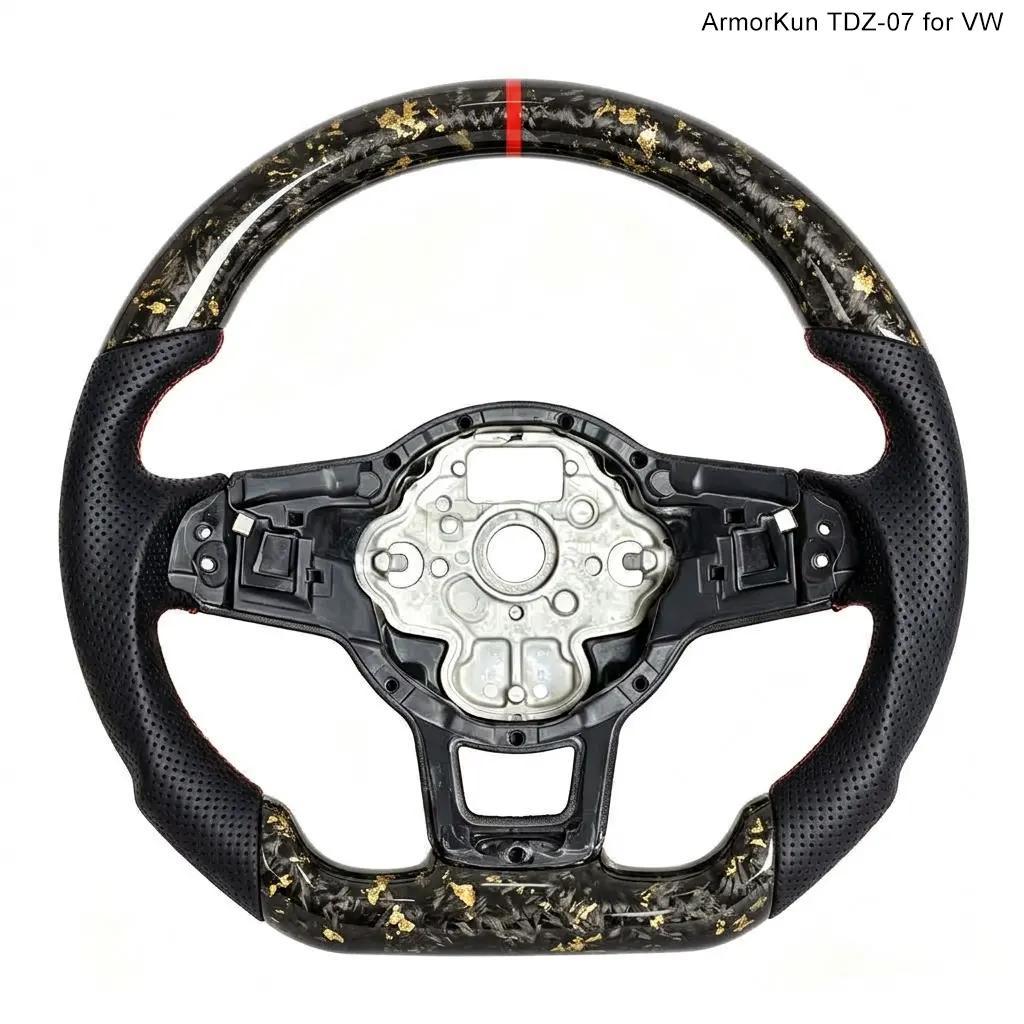
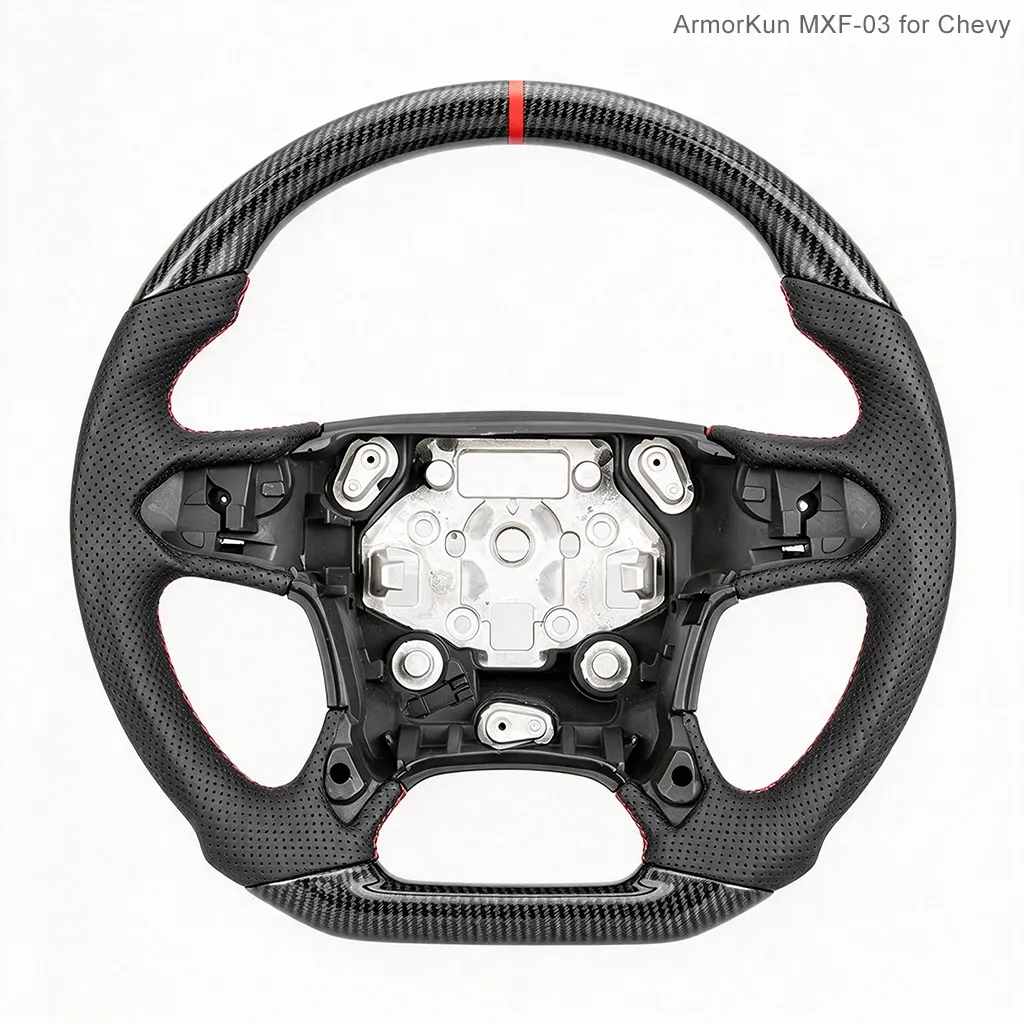
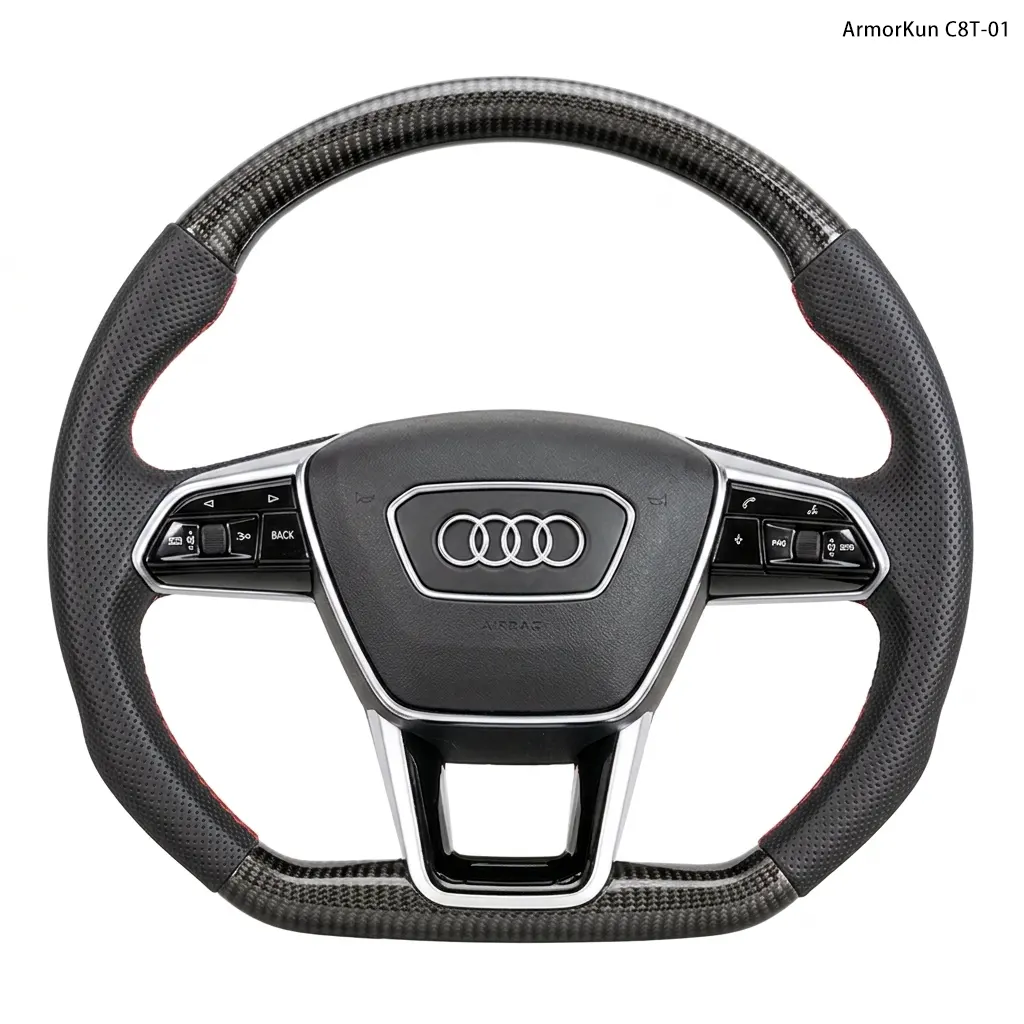
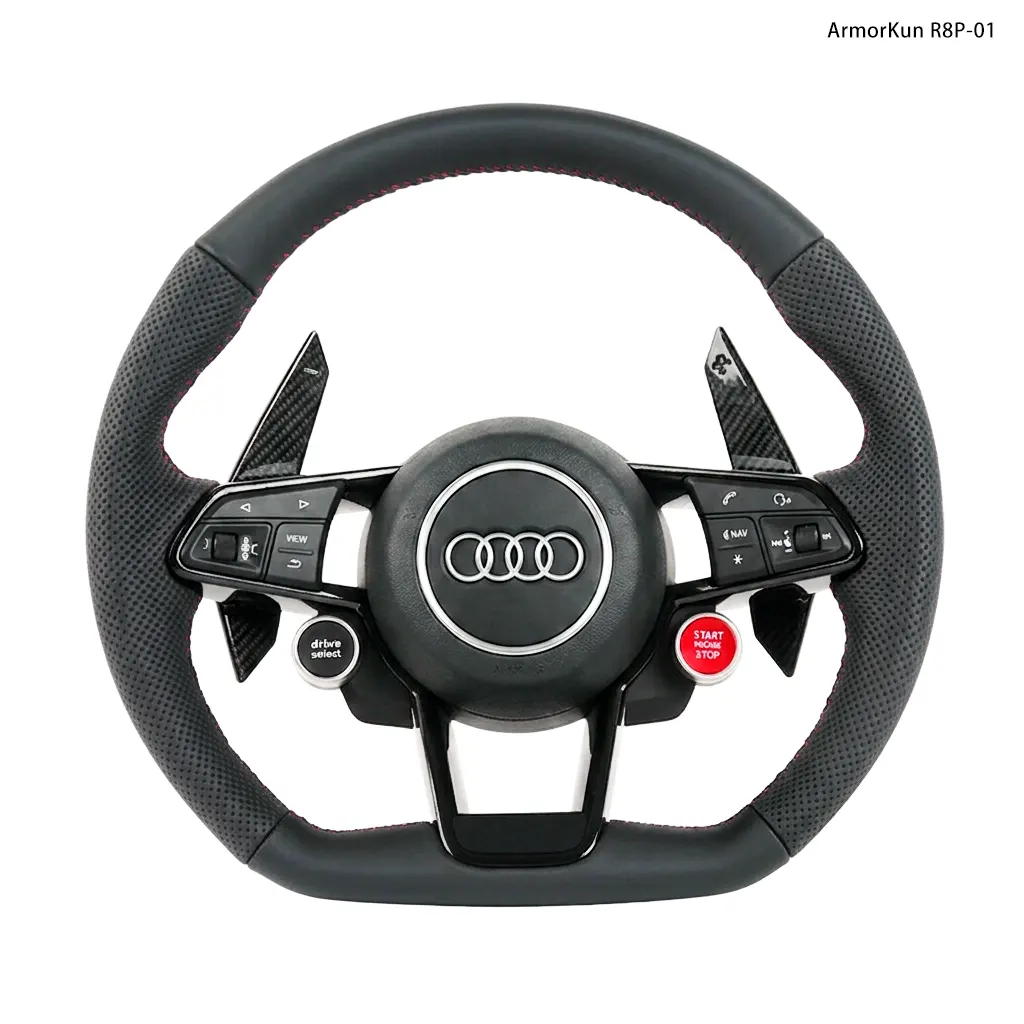
Carbon fiber steering wheels are no longer just “visual upgrades.” They’re becoming interface components in premium interiors.
According to NHTSA vehicle interior safety guidance, steering system modifications must preserve airbag deployment geometry and structural integrity, which immediately filters out a large portion of low-quality aftermarket units that look good but fail compliance thresholds under crash conditions.
At the same time, Reuters reported in its EV interior coverage that OEMs are shifting toward multifunction steering interfaces with capacitive controls and heated surfaces as standardization spreads in 2024–2025 EV platforms (Reuters Automotive). That matters because dealerships are now competing directly with factory “tech steering packages.”
So I ask you—are you selling upgrades, or are you competing with OEM baseline features?
What Dealers Actually Need to Evaluate (Not What Suppliers Pitch)
Carbon fiber steering wheels are not homogeneous products. I’ve inspected batches where the outer weave was identical, but the internal frame material shifted from forged aluminum to low-grade magnesium alloy substitutes, changing torque resistance by up to 18–25% under stress simulation.
Key decision filters:
Airbag module compatibility (dual-stage vs single-stage systems)
A proper carbon fiber steering wheel wholesale supplier is not just a parts vendor—they’re a calibration partner. The difference shows up in defect rate, not catalog aesthetics.
Generic aftermarket exporters can exceed 8–15% variance in sensor compatibility
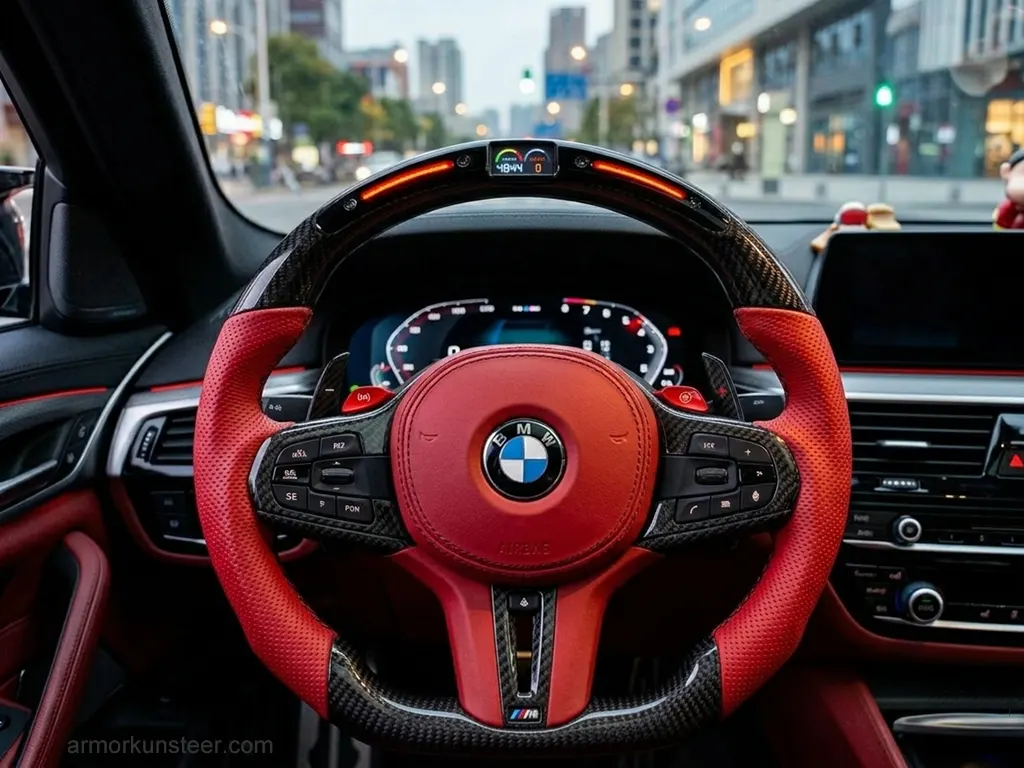
LED multifunction wheel modules account for ~30% of post-installation failure reports in EV conversions
If you’re sourcing at scale, that gap is your profit margin.
And that leads to the real question: do you optimize for unit cost, or lifecycle reliability?
EV Integration Is Quietly Rewriting the Product Spec
Carbon fiber used to be the headline. Now it’s the carrier material for electronics.
Heated steering wheels, touch-sensitive controls, adaptive LED indicators—all of these features are migrating from luxury trims into mid-tier EV platforms. Industry reporting from MIT Center for Transportation & Logistics highlights how EV cabin interfaces are consolidating control functions into steering hubs to reduce driver distraction and improve ergonomic efficiency.
That changes dealership selection logic completely.
You are no longer buying a “wheel.” You are buying an interface node.
Data Snapshot: Dealer-Side Evaluation Matrix
Evaluation Factor
Low-End Product
Mid-Tier Supplier
OEM-Level Aftermarket
Fiber Quality
Wet carbon composite
Hybrid layup
Dry forged carbon
Airbag Compatibility
Limited
Partial OEM match
Full OEM protocol sync
LED Function Stability
70–80%
85–92%
95%+
Warranty Claim Rate
High (10–15%)
Moderate (5–8%)
Low (1–3%)
Dealer Margin Potential
Low
Medium
High but slower turnover
This is where most dealerships miscalculate: they chase margin percentage, not failure rate velocity.
Selection Framework for Dealership Inventory
I don’t believe in “best product” narratives. I believe in system fit.
For BMW, Mercedes, Porsche steering wheel segments:
BMW (G80/G82): prioritize paddle responsiveness + M multifunction coding stability
And yes, carbon fiber aesthetics matter—but only after electronic stability is confirmed.
What I Would Avoid (Controversial But Necessary)
If I had to strip it down brutally:
Avoid “universal fit” carbon fiber wheels for premium brands
Avoid suppliers who cannot provide CAN bus protocol documentation
Avoid LED-heavy designs without thermal testing data
Avoid purely cosmetic carbon overlays pretending to be structural components
Because these are the units that quietly destroy your return rate metrics.
FAQs (AEO Optimized)
Which carbon fiber steering wheel is the best choice for dealerships to keep in their inventories?
A high-compatibility, dealership-focused carbon fibre steering wheel should be an aftermarket product for a specific vehicle family, like BMW, Mercedes or Porsche, that has an airbag that is tested, has stable CAN bus communication and be proven to last in the long-term for retail use under thermal and vibration stress.
What are the criteria for choosing a carbon fiber steering wheel for dealerships?
When choosing a carbon fiber steering wheel to add to dealership inventory, factors to consider include OEM compatibility, electronic compatibility (LED steering wheel, heated steering wheel, multifunctional controls), material quality (dry or forged carbon), supplier defect rates, warranty reliability, as well as the turnover speed and gross margin expectations in the luxury and EV markets.
Will EV markets warrant LED multifunction steering wheels?
As EV manufacturers begin to integrate control interfaces into steering hubs, it is worthwhile to stock LED multifunction steering wheels, but it is important that dealerships ensure the stability of the CAN bus, thermal management and compatibility of the system’s firmware in order to prevent high failure rates after installation and customer warranty disputes.
Which are the dangers of aftermarket carbon fiber steering wheels?
The main dangers are the incompatibility of airbags, CAN bus communication problems, structural integrity issues during crash loadings and inconsistent manufacturing quality which can result in high return rates, liability risks and low dealership profit, if sourcing of the components is not carefully managed.
Final CTA
If you run your dealership inventory decisions on catalogue look, then you are late.
Don’t think of carbon fiber steering wheels as a visual upgrade. Reconstruct your supplier filter using compatibility data, failure rates and EV interface readiness.
And if you want, contact us for a dealership-grade sourcing checklist for BMW/Mercedes/Porsche SKUs with different tiers of margin optimizations.
Leo Wu Industrial Design Manager 10+ Years in Automotive Steering Wheel Design Expertise: carbon fiber, Nappa leather, OEM development, performance steering wheels
Over 10 years of experience in steering wheel development, premium materials and OEM manufacturing, Leo Wu is an automotive interior expert. Strictly cooperates with ArmorKun production teams, applies performance and focuses on steering wheel design and construction, leather processing and high-level function integration, in luxury cars and sports vehicles.









 English
 German
 French
 Italian
 Dutch
Dutch Russian
 Polish
 Spanish
 Arabic
 Japanese
 Korean