Why Are Carbon Fiber Steering Wheels Becoming Popular?
Reviewed by ArmorKun Engineering Team
Why are carbon fiber steering wheels becoming popular? Explore the benefits, drawbacks, materials, costs, and what drivers should know before upgrading.
Why are carbon fiber steering wheels becoming popular? Carbon fiber appears to be speedy. However, looks are merely a small aspect of the equation.
We need to distinguish between the ‘real’ engineering benefits of the material and the ‘aftermarket’ ‘engineering benefits’ that is used by the aftermarket guys to make their stuff look more attractive/expensive. While a carbon fiber steering wheel can help reduce the weight of some components, provide unique finishes, and provide a car a motorsport-inspired interior, the impact on the vehicle will ultimately rely on construction, grip materials, design structure, and compatibility.
But why are there more drivers to think about it, and what’s so much better about it than looks?
The solution is a mix of material technology, customization, enthusiast culture and a market that is making the steering wheel more and more a part of the car’s personality. However, for purchasers, the “popularity prize” is no indication of lightness, safety, or durability of any given wheel.
Carbon fibre is all things and more than a cool racing inspired appearance
This is a no-brainer of a line of vision. There are more varied reasons why.
Carbon fiber reinforced resin (usually an epoxy-based resin) is a type of composite material that is composed of a resin and carbon fibers. Its high stiffness to weight ratio makes it suitable where engineers require to use materials that are strong and rigid, but do not need to use heavier materials.
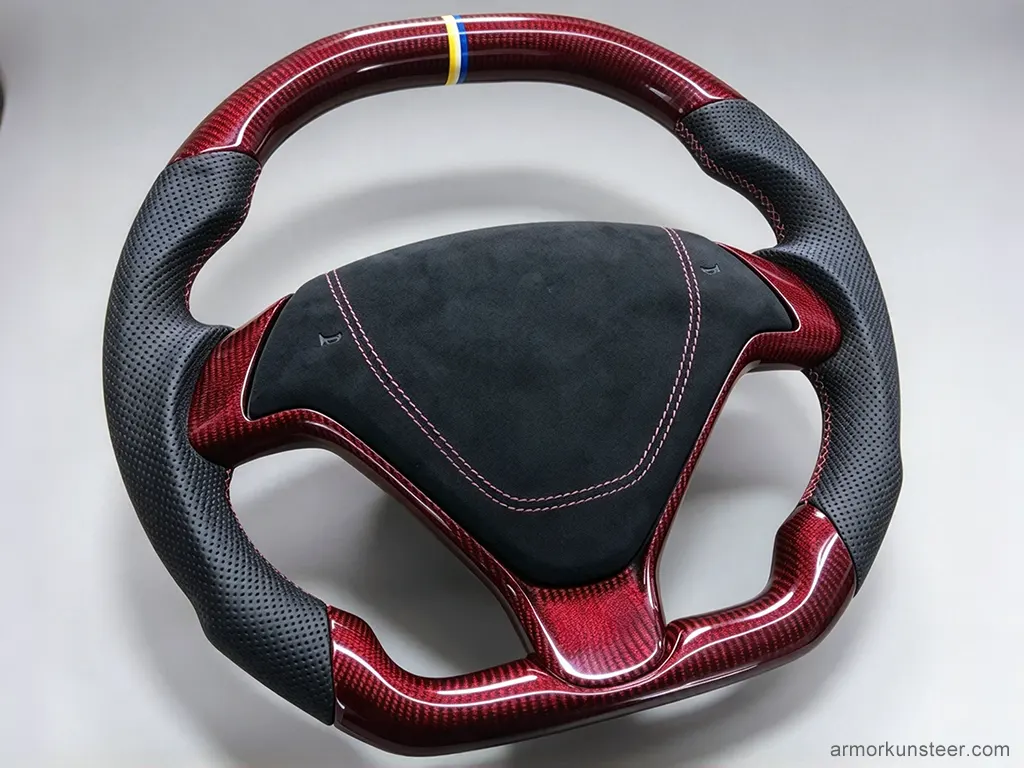
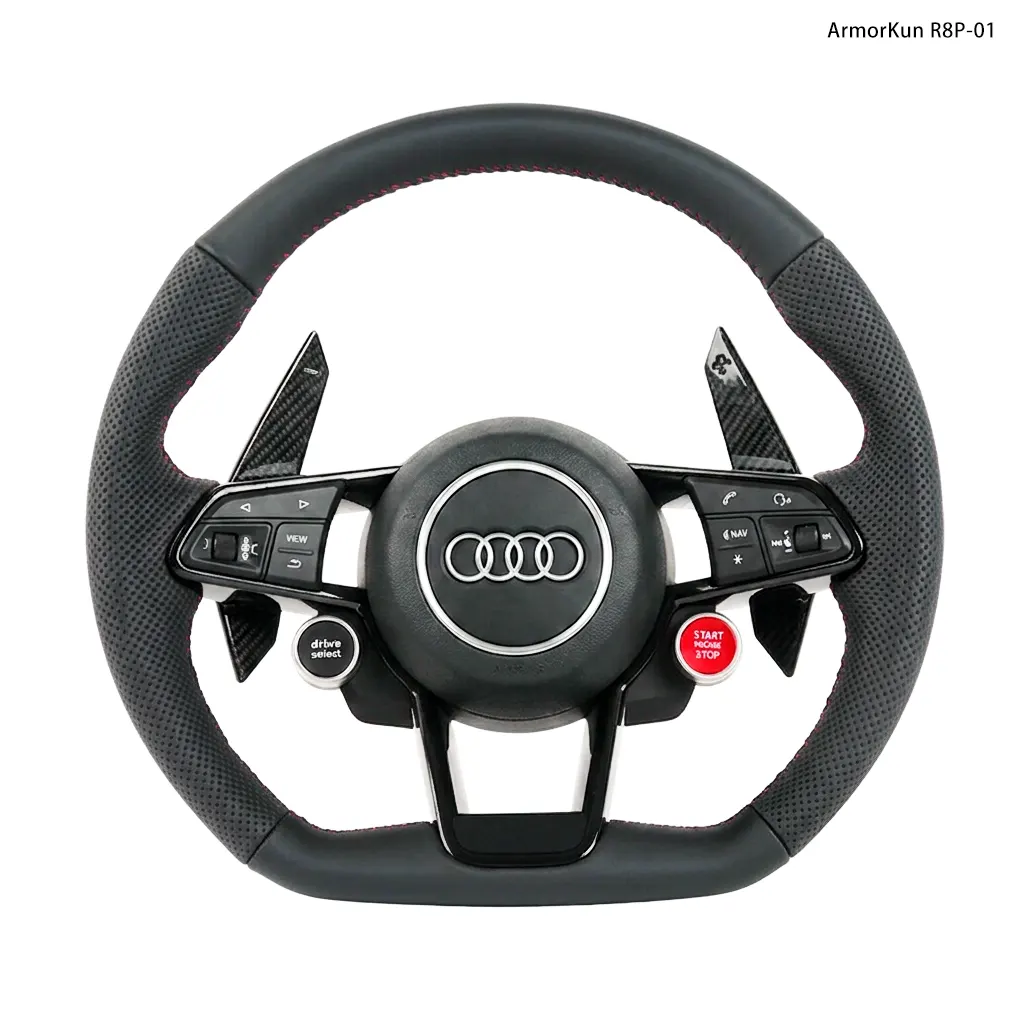
Carbon fiber can be integrated into the design of a steering wheel, either as body, decorative trim or exterior parts. They are not a replacement for each other. Having a carbon fiber surface layer doesn’t mean that the wheel is made of carbon fiber all the way through and a carbon finish alone gives limited information about the structural properties of the wheel.
It is this distinction that is important for comparison of the products.
Fuel Efficiency, Carbon fiber can be power efficient when the components are intended to have the same power output. The weight of the completed wheel isn’t dependent only on the metal components, hub, electronics and padding, but also on the grip materials.
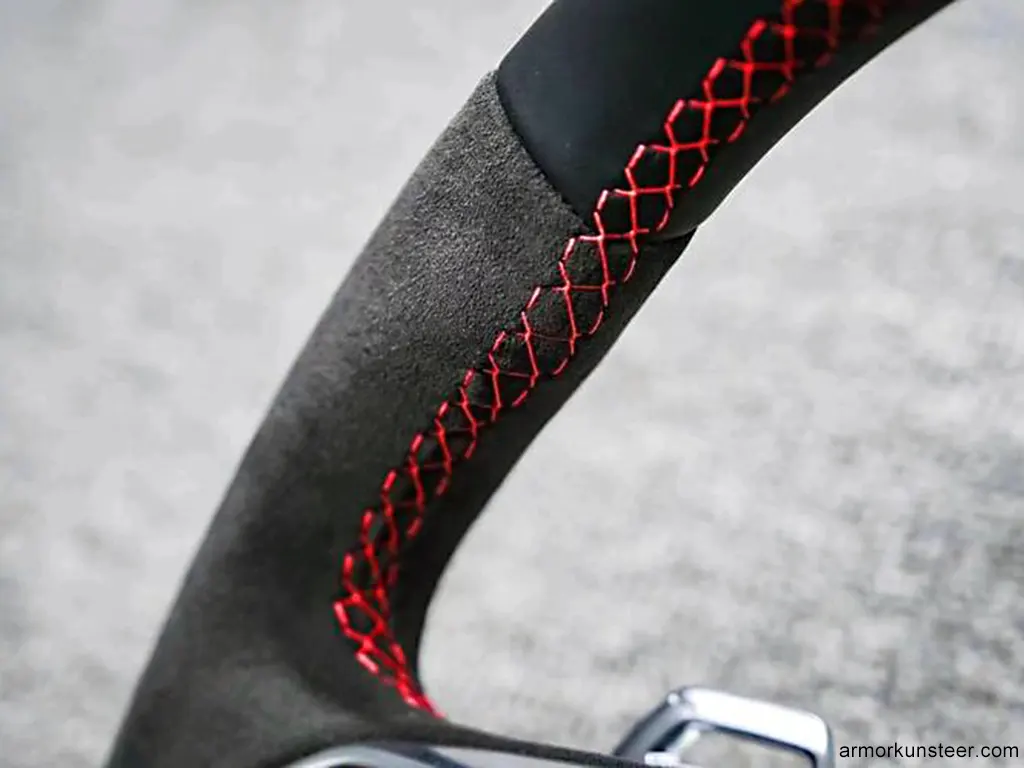
Manufacturers can use carbon fiber, leather, Alcantara-like microfiber, aluminum paddles, contrasting stitching, etc.Design flexibility: Carbon fiber, leather, Alcantara micro-fiber, aluminum paddles, contrasting stitching can all be used.
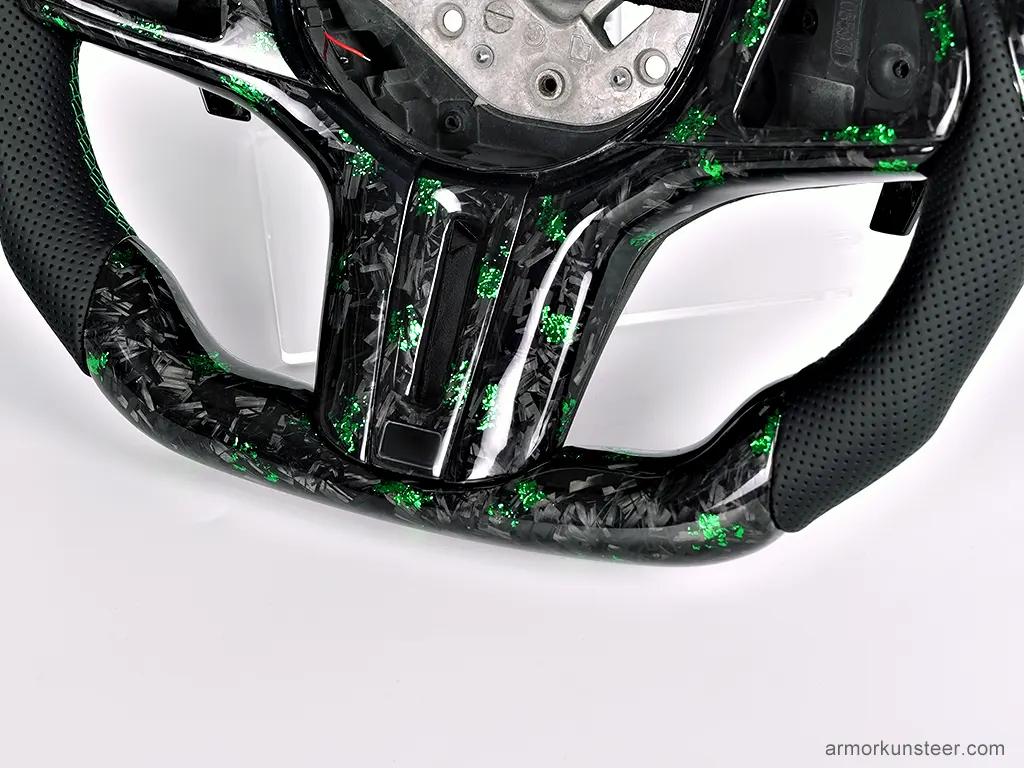
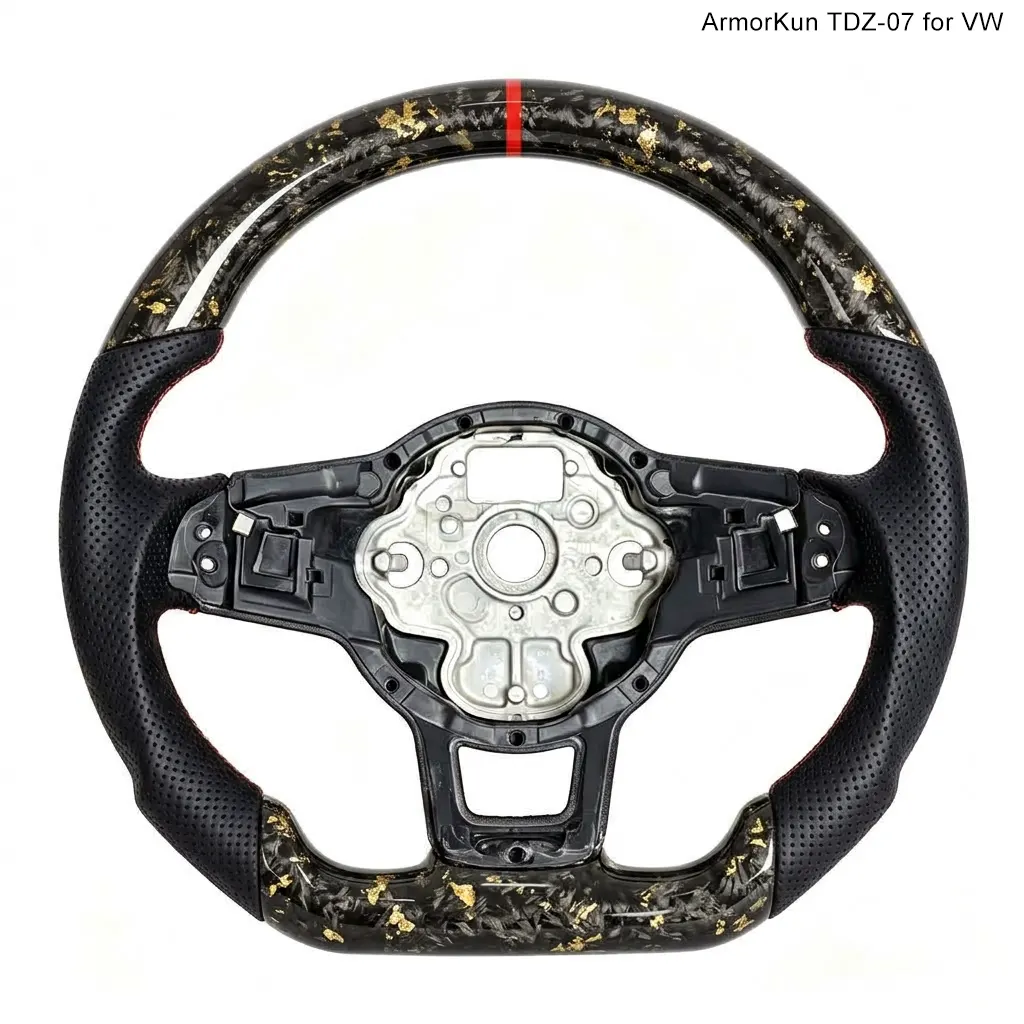
Rather characteristic finishes: The designer has several options when choosing between a glossy or matte carbon finish, or forged carbon and has to be able to set them apart.
The styling cues from performance-inspired vehicles are picked up by the motorsport associations: Flat-bottom profiles, visible carbon sections and colored center markers.
It is important to not be misled—don’t mistake an extra high quality finish for its expected performance boost. With road cars, the most significant disparity could be more physical than mechanical.
Why more drivers are choosing carbon fiber steering wheels
It is not an individual factor. We think there are three changes that account for much of the attraction.
Personalization is now an integral component of the owner experience
They no longer have to sacrifice a standard factory power steering barometer and column for a full race car setup. Combined carbon fiber, leather, microfiber, colored stitching, flat bottoms, paddle shifters, and LED shift indicators are available from the aftermarket.They no longer have to sacrifice a standard factory power steering barometer and column for a full race car setup. Combined carbon fiber, leather, microfiber, colored stitching, flat bottoms, paddle shifters, and LED shift indicators are available from the aftermarket.
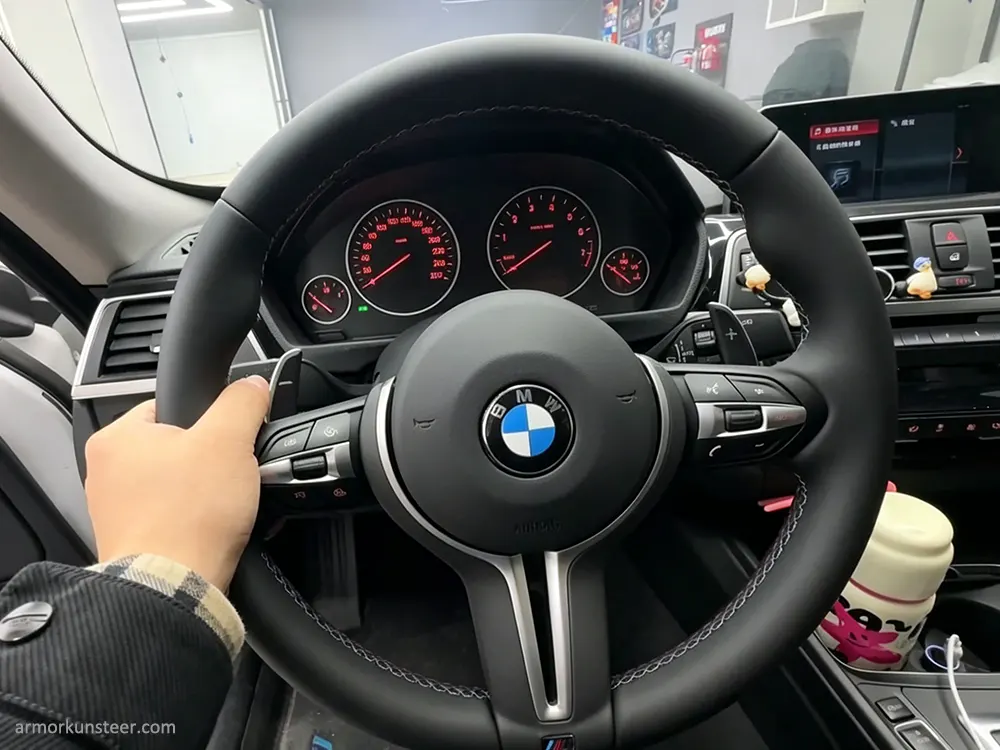
For instance, a carbon fiber wheel, accented in M style with color, is a great option for a BMW owner, while natural carbon, perforated leather grips and aluminum paddle shifters are perfect options for a Mercedes-Benz owner. These options are product variations, rather than just finishes.
This option provides auto parts distributors and retailers with even more flexibility to meet different budget and style needs of their customers.
The steering wheel is readily visible
The driver’s position is directly in front of a steering wheel. Unlike a suspension part, or a light weight bracket protruding behind a body panel, it’s showing its face the first time a person gets into the car.
This is maybe an appealing upgrade for homeowners who desire an interior modification that won’t require replacing the entire dashboard or seats. Carbon fiber also complements other additions such as sport seats, aftermarket trim, and performance interior parts.
Motorsport styling has broad appeal
Large steering wheels with flat bottoms, strong centre markers and carbon surfaces are elements of racing and high performance road cars. The same elements are applied to standard production vehicles in the form of aftermarket designs.
However, the look of racing doesn’t necessarily means that it’s fit for racing. It will depend on the actual suitability of the design of the wheel, vehicle and operating conditions.
carbon fiber vs. leather: which steering wheel is best?
Both materials have their advantages and disadvantages. Its beauty and lightness are often the reasons for selecting the carbon fiber, and leather is selected for familiarity, comfort, and simplicity.
Comparison
Carbon fiber steering wheel
Leather steering wheel
Alcantara-style microfiber wheel
Main appeal
Technical, motorsport-inspired appearance
Classic finish and familiar feel
Suede-like texture and sporty appearance
Typical construction
Composite sections combined with other materials
Leather-wrapped structural core
Microfiber wrapped around a structural core
Weight
Depends on the complete assembly
Depends on the complete assembly
Depends on the complete assembly
Grip and comfort
Often depends on the grip sections rather than the carbon itself
Generally comfortable for everyday driving
Textured feel; performance depends on material and conditions
Maintenance
Smooth surfaces may show fingerprints or scratches
Benefits from appropriate leather care
Can accumulate oils and require more frequent cleaning
Common applications
Custom interiors and performance-inspired upgrades
Daily drivers and luxury interiors
Sport-oriented road cars and enthusiast builds
Potential drawback
Premium price; carbon surfaces may be less comfortable to hold directly
Can wear, crack, or become shiny over time
Can become matted or dirty with repeated use
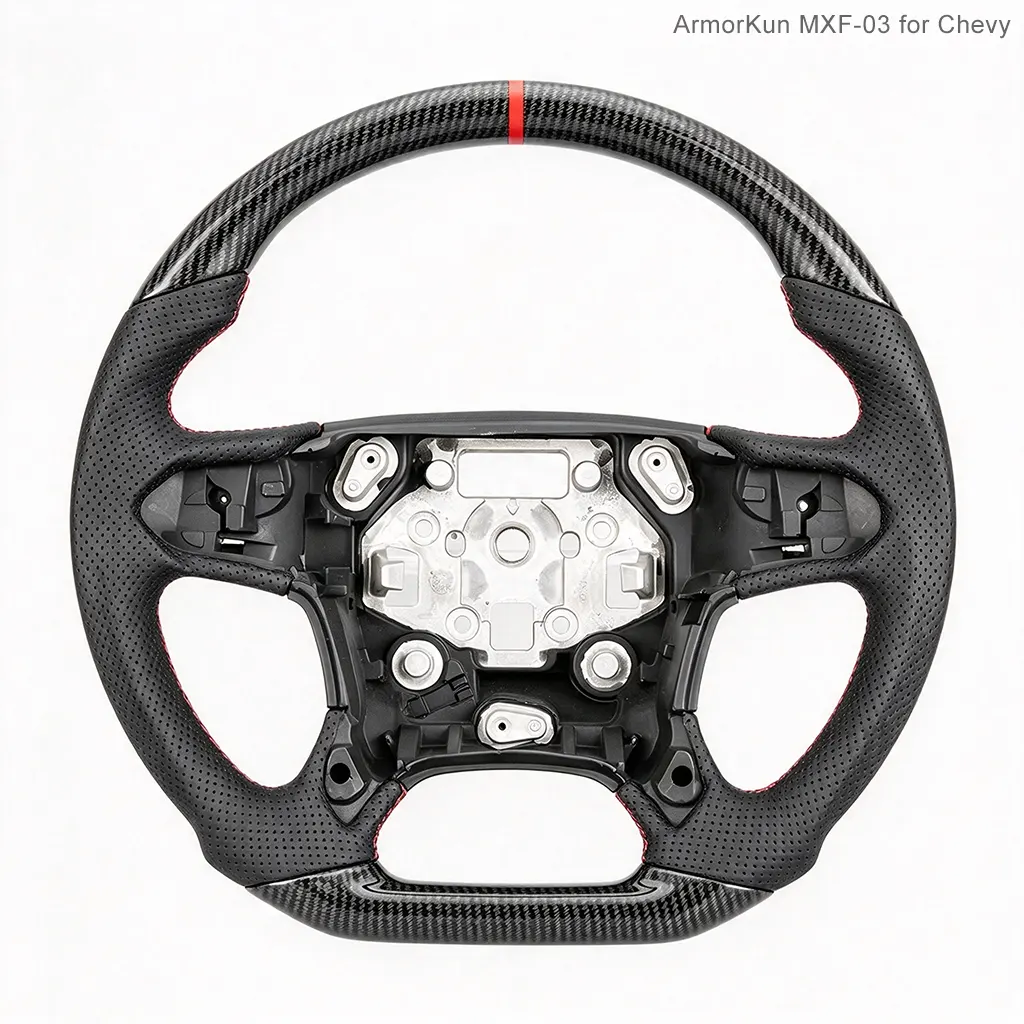
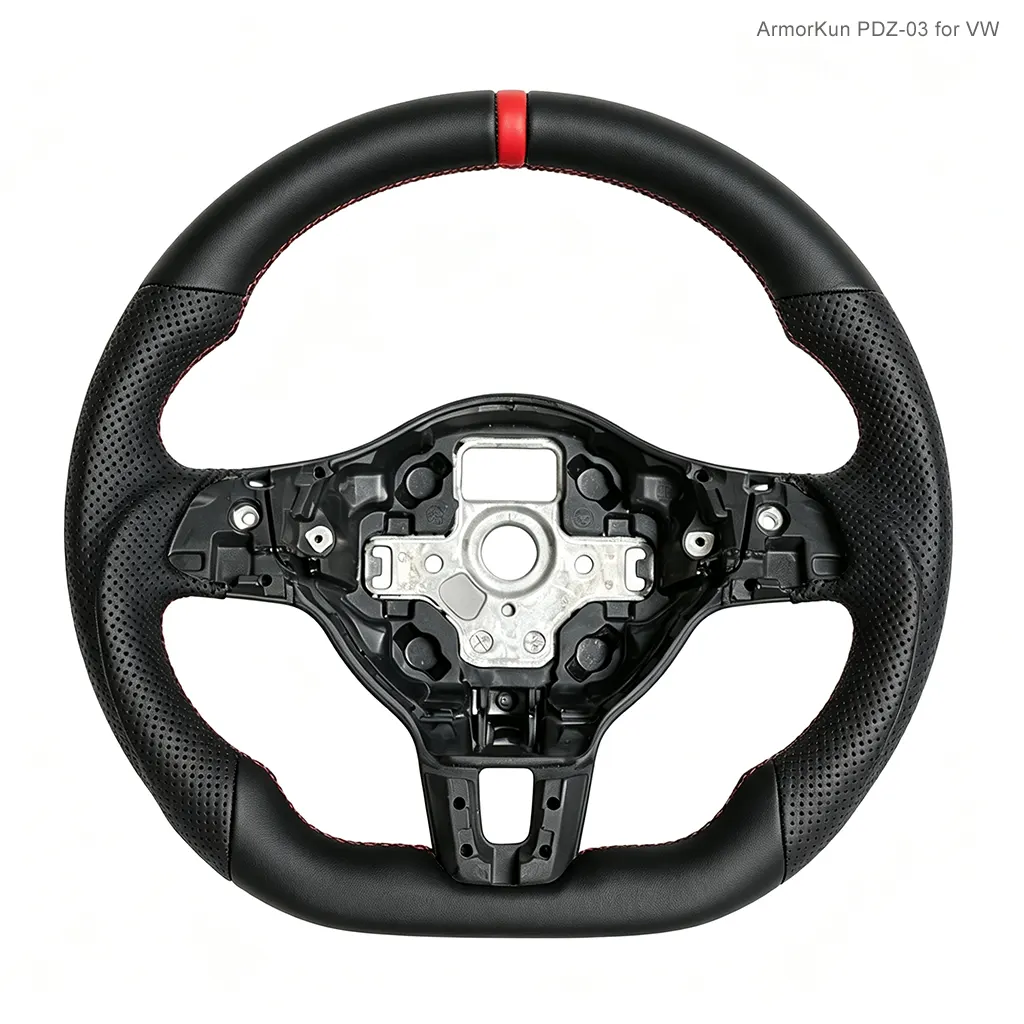
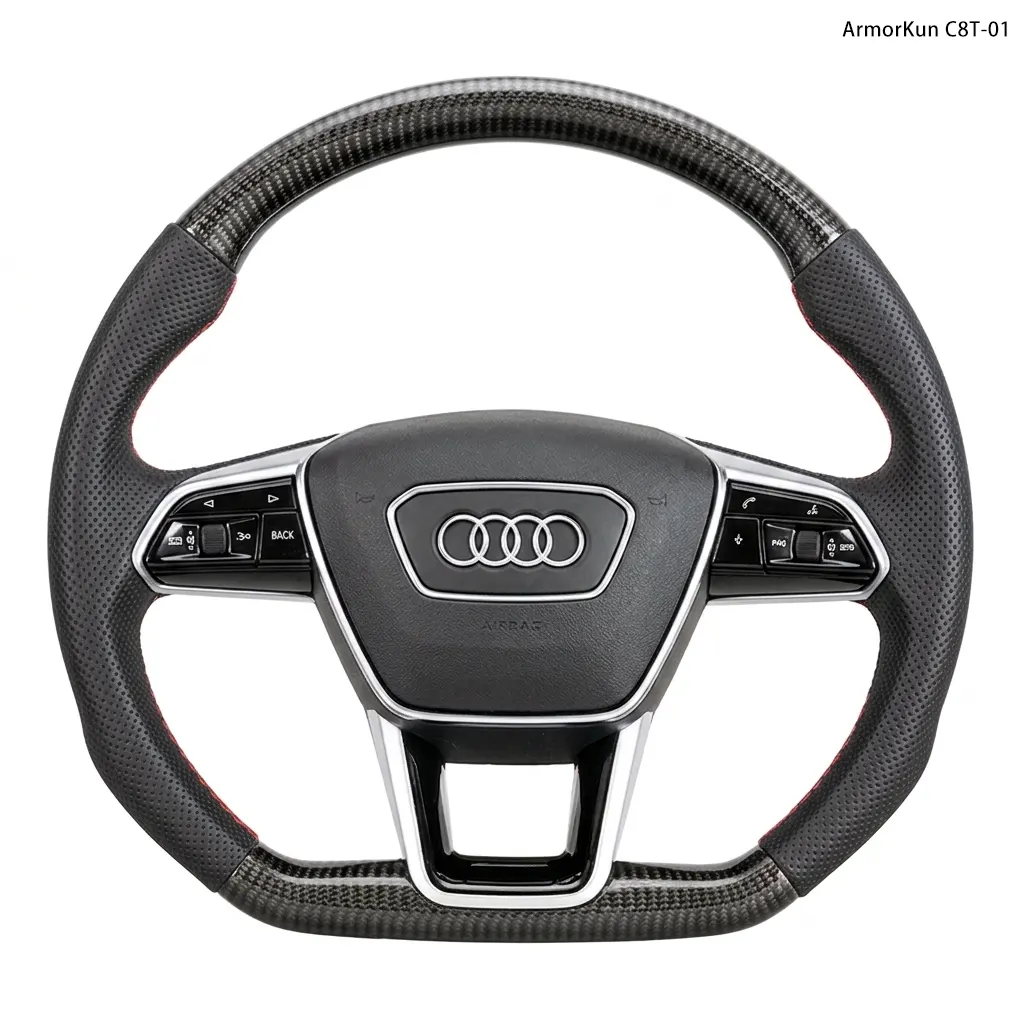
There’s one thing that’s easy to overlook: Carbon fiber doesn’t necessarily mean “the carbon fibre that you touch with your hands. Aftermarket wheels often feature a layer of carbon fiber on the top and the bottom, and perforated leather or microfiber in the side sections.
That hybrid material may be more practical with a wheel that has a carbon surface on it all day long for everyday use. The grip portions will make a real distinction when riding lengthy periods, a lot of cornering, and alter in temperature.
are carbon fibre steering wheels a performance booster?
Though, sometimes but the improvement can be easily overstated.
The strength-to-weight ratio of carbon fiber composites is very high. The U.S. Department of Energy provides this lightweight materials overview that addresses lightweight materials and how they could be used in vehicles. A standalone federal workshop report on automotive lightweighting reports that in appropriate component designs, carbon fiber composite materials offer significant weight savings over steel. The figures are in reference to material and component potential and not a guaranteed saving for a completed steering wheel.
That distinction is significant for three reasons.That distinction is significant for three reasons.
Firstly, a steering wheel is a part of something much bigger than itself. A modest drop in wheels’ weight will make little difference to even an ordinary road going vehicle.
Second, the final assembly can include a module for an airbag, switches, wiring, metal inserts, paddles and decorative trim. The quantity of carbon fibre in the assembly doesn’t tell us the weight of the complete assembly.
Third, wheel weight alone doesn’t necessarily determine steering response. Steering-system design, assistance calibration, tyre characteristics, suspension geometry and the driver’s input all impact the experience.
Claiming performance gains, therefore, we would request manufacturers for real product weight and similar specifications.
How about control feel? The diameter, thickness, grip shape and texture of a wheel can alter the perceived control and comfort of the experience to the driver. However, these benefits need to be considered in the absence of the properties of the actual carbon fiber.
what does a carbon fiber steering wheel cost?
There’s no consistent, accurate price for all carbon fiber steering wheels. Cost will differ depending on the vehicle platform, material construction, customization, electronic specifications and the sales category, either as a complete vehicle assembly or a wheel for re-use of original components.
Here’s a practical approach to the product tiers as compared to market price rather than a verified survey.
Product tier
Typical configuration
What buyers should check
Entry-level cosmetic upgrade
Carbon-look finish or limited carbon sections
Whether the surface is real carbon fiber or a printed imitation
Mid-range custom wheel
Carbon fiber sections with leather or microfiber grips
Stitching, finish consistency, fitment, and component reuse
Premium custom wheel
More extensive carbon fiber, forged-carbon options, custom grips, paddles, or LED features
Material specifications, electronics compatibility, testing, and warranty
Vehicle-specific performance build
Custom geometry or specialist motorsport configuration
Intended use, structural validation, and applicable safety requirements
Lots of people think that a low advertised price means a bargain, but it doesn’t, and a high price doesn’t mean that this is a good engineering job.
The relevant comparison for wholesale buyers is the overall cost of an appropriately specified, installed product. This encompasses fitment verification, needed hub or adapter (if necessary), matching electronics, shipping, rework possibility, and warrant liability.
When ordering the materials in bulk, request pictures of the same materials, if there is one, a detailed bill of materials, vehicle application information, and that the materials be confirmed as transfers of the original components. These inspections can eliminate the seemingly affordable product from turning into an expensive inventory nightmare.
while some risk may be unavoidable, it is important to be aware of the risks that buyers should avoid.
But we must be direct about it: A nice, fancy steering wheel is not a good steering wheel.
Compatibility with airbags is the first consideration
Today, a variety of modern vehicles combine into one the driver’s airbag, horn, steering wheel controls and electronic components. If it is not designed and installed right, it can impact these systems when it is replaced.
Federal law is designed to prevent repair shops from knowingly removing safety equipment mandated by applicable motor vehicle safety standards, the U.S. National Highway Traffic Safety Administration (NHTSA) says. It’s guidance on aftermarket steering wheels talking about these issues directly.
In addition, NHTSA released a 2024 Consumer Warning for the use of defective replacement airbag inflators, which caused deaths and serious injuries. The warning is not about carbon fiber steering wheels, but it does show why it’s not just about looks, brand or price when it comes to integrity of safety components.
Before purchasing, confirm:
Whether or not the original airbag module can be saved.
Are buttons on the steering wheel, paddle-shift and heating features compatible?
If an adaptor for the vehicle is required or extra components are needed.
The ability of the supplier to offer substantiating evidence of the safety-related assertions made for the design and compatibility.
A wheel cannot be considered safe just because it fits in the steering column.
Whether the material is used in a claim must be substantiated
Ultimately, there are some very different constructions under the carbon fiber steering wheel name. There are also some that employ a real carbon fiber composite panel and others that use carbon-look films or a printed finish on another substrate.
It is not possible to determine the actual composition from either appearance or product photos.
Take up after-sales from supplier and clarify between and amongst real carbon fiber materials, forged-carbon composite and carbon-look finishes. Pay attention to the quality resin finish, edges, changes of grip, and even stitching consistency as well.
Fitment problems can erase the savings
A car that was advertised for a given year, trim level, controls layout, airbag system, and electronic functions for a specific model of a specific manufacturer (BMW, Mercedes-Benz, and Volkswagen) might also still have restrictions.
A detailed fitment statement is helpful for distributors and repair shops more than a general “fits” statement. Ask for a list of what vehicles are supported, what isn’t supported, installation requirements, and if any functions will be lost.
choosing the best carbon fiber steering wheel is no easy task
It comes all the way down to the car, the owner’s priorities and the intended use of the car. We recommend the following order of evaluation for the wheel:
Confirm vehicle compatibility
Same trim, make, model and model year, and same steering-wheel design. Visits the airbag and wiring and examines control and heating functions before comparing finishes.
Determine the materials that are being studied.
Inquire about the real carbon fibre, forged carbon or carbon-look surface of the wheel. If the wheel has a carbon/leather or microfiber combination, check the grip material separately.
Map the design to the use case
For a daily driver, it might be more advantageous to have comfortable leather grips and factory controls. Enthusiast builds may feature a flat bottom, forged-carbon, custom stitching or compatible paddle shifters.
Review User Manuals and follow-up support
Check for specifications of materials used, instructions for installation, warranties, and clear directions for reused parts. In commercial orders, document quality-control practices and the process for addressing fitment issues.
The other concern for the retailer/distributor is product range. You can reach more customers with multiple materials and finishes, carbon options, and options for customization than with a single expensive option you assume will work for everyone.
frequently asked questions
Why are carbon fiber steering wheels becoming popular?
Motorsport-style carbon fibre steering wheels are gaining traction due to their customization features, aerodynamic power saving and their aesthetics. For those who prefer the interior to be unique, the combination of carbon fiber, leather, microfiber and contrasting stitching and flat bottom profiles offers something for drivers to appreciate, but the performance gain will rely on the actual wheel design.
Carbon fiber steering wheels can last longer than leather steering wheels?
Not all steering wheels are made from carbon fibre – and not all of them are better than leather steering wheels since they cater for different priorities. Carbon fiber can give you the option of unique styling and weight reduction, while leather can give you an existing, familiar and comfortable handle throughout your day. Leather grips and carbon fiber wheel may be a practical combination.
Those carbon fiber steering wheels – do they really sell at a premium price?
Drivers who appreciate how carbon fiber looks or have been customized to include lesser weight can be willing to pay for a carbon fiber steering wheel. The purchase does not make much sense, however, if the material is simply used for ornamentation, if the fitment is not guaranteed, or if the price difference does not justify the additional functionality, reliability, and/or construction quality.
Do carbon fiber steering wheels make a car faster?
Carbon fibre steering wheels do not necessarily make a car faster as just decreasing steering wheel weight will have only a marginal effect on the car performance. While carbon fiber can contribute to the reduction of mass of given components, it takes the total effect of the design – the total carbon fiber mass saving, the complete assembly, and the overall engineering design of the vehicle – to produce measurable vehicle level benefits.
How do you maintain a carbon fiber steering wheel?
A carbon fiber steering wheel can be kept clean by wiping a carbon fiber steering wheel with a microfiber cloth and using a cleaner that is made for the exact finish on a carbon fiber steering wheel. Do not use materials or strong chemicals and follow the special care steps for leather or microfiber grips. Look at the surface and, at the stitching often to see if there is any wear or damage.
Are aftermarket carbon fiber steering wheels safe?
When properly designed and installed so as not to prevent compliance with necessary safety equipment, aftermarket carbon fiber steering wheels might be appropriate. Do not assume that airbags fit, are compatible with columns, perform electronic functions, or meet regulatory requirements based on the appearance or generic statements of universal fitment.
What is the difference between real carbon fiber and forged carbon?
The aligned or woven carbon-fiber reinforcement is generally bound in a resin matrix to form a real carbon fiber, while forged carbon is generally bound with a resin matrix, but only includes sections of carbon fiber that are oriented in a random direction. While they can be actual carbon fiber composites, the appearance, strength and durability will be determined by the materials used and the production method.
would it be best to upgrade to a carbon fiber steering wheel?
Also for a good reason, carbon fiber steering wheels are a popular choice: they have a unique appearance, lots of customization options and proven engineering potential. However, we should not compare each product based on the carbon pattern itself but rather upon the actual material, construction, fitment and compatibility of the products.
For single motorists, it is the right one for them and their driving style. It’s a product which offers consistent quality, well documented fitment and manageable after-sales risk to automotive distributors, auto parts stores, and repair shops.
For aftermarket steering wheel replacement, always keep an eye out for the specifications and compatibility so you can avoid wasting money on a purchase that will not fit. A good-looking high-quality product is readily promoteable, and a well-fitted product that performs as promised is repeat business!
Leo Wu Industrial Design Manager 10+ Years in Automotive Steering Wheel Design Expertise: carbon fiber, Nappa leather, OEM development, performance steering wheels
Over 10 years of experience in steering wheel development, premium materials and OEM manufacturing, Leo Wu is an automotive interior expert. Strictly cooperates with ArmorKun production teams, applies performance and focuses on steering wheel design and construction, leather processing and high-level function integration, in luxury cars and sports vehicles.











 English
 German
 French
 Italian
 Dutch
 Russian
 Polish
 Spanish
 Arabic
 Japanese
 Korean