An Alcantara steering wheel is one of those upgrades that looks simple until you try to source it at scale.
Two wheels can both be advertised as “Alcantara,” look nearly identical in photos, and feel completely different after three months of use. One may use genuine Alcantara® from Italy. Another may use a high-quality automotive microfiber. A third may actually be natural suede—or simply an inexpensive synthetic suede sold under a convenient marketing name.
That difference means more for performance cars, with regard to grip and durability. The same applies to distributors, tuning companies and repair shops, for example, for repeat orders, customer complaints, colour matching and to see if the next production batch is the same as the initial sample that was previously accepted.
In this guide, you’ll learn about some of the top Alcantara steering wheel manufacturers and specialty builders as well as the materials concerns that are most important to consider when dealing with performance steering wheels.
Which is the top quality steering wheel manufacturer Alcantara?
No particular manufacturer is best to all buyers.
A distributor that requires repeat batches must have manufacturing capacity, material traceability, OEM compatible fitment, sample control and repeatable colors. A Porsche or BMW owner commissioning one wheel may care more about genuine OEM cores and hand-finishing. A tuning shop may sit somewhere between the two.
Based on publicly available product and manufacturing information reviewed in August 2026, the following companies are worth evaluating.
Alcantara, suede, leather, microfiber and carbon configurations; exact branded material can be specified
Factory manufacturing
CARBONE
California, USA
BMW performance upgrades
Products specifically advertised with authentic/Italian Alcantara
OEM-core performance wheels
Hellgate Carbons
Florida, USA
Premium individual and boutique builds
Carbon fiber and Alcantara combinations
Hand-rebuilt OEM cores
Miami Carbon Designs
Florida, USA
Exotic and performance-car customization
Alcantara or Nappa leather with extensive customization
In-house bespoke rebuilding
Rendition Design & Manufacturing
Taiwan
Enthusiast, custom and small-batch engineering
Genuine Alcantara offered on selected steering-wheel builds
Design/manufacturing and custom projects
Dafox Design
Poland
European custom retrimming
Multiple Alcantara, leather and thread-color choices
Custom steering-wheel specialist
A qualification is necessary here: not every company in this comparison operates as a high-volume steering wheel factory. Some are specialist builders. That distinction is important when comparing suppliers for repeat wholesale production.
ArmorKun — Best for Wholesale and Private-Label Steering Wheel Programs
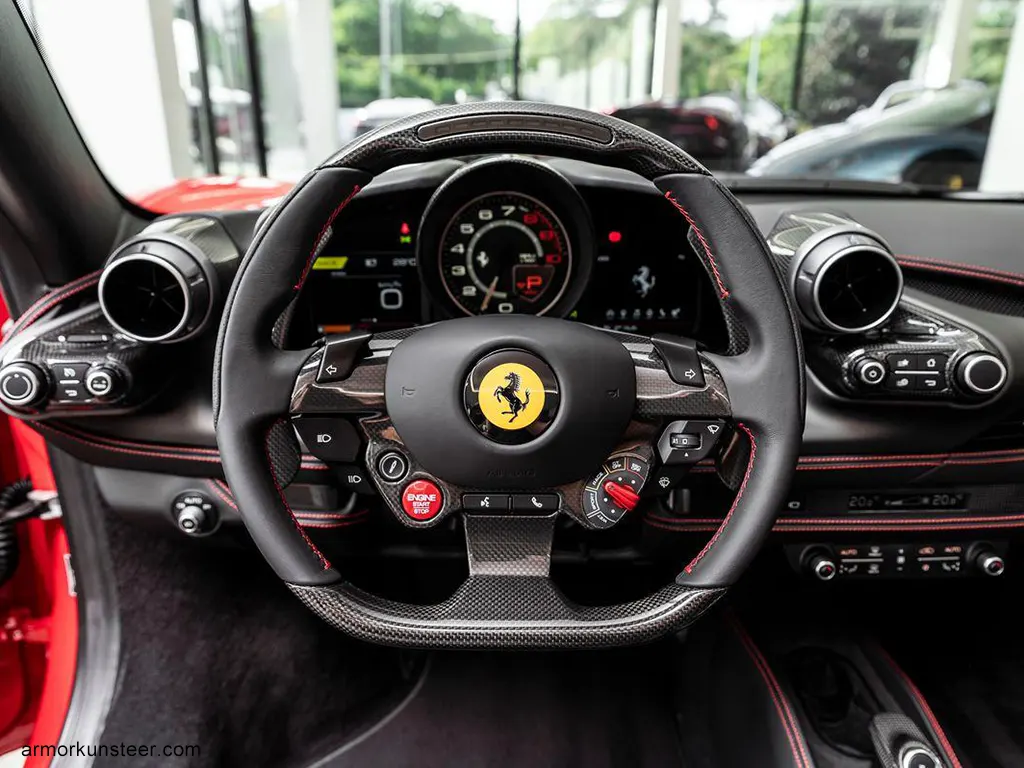
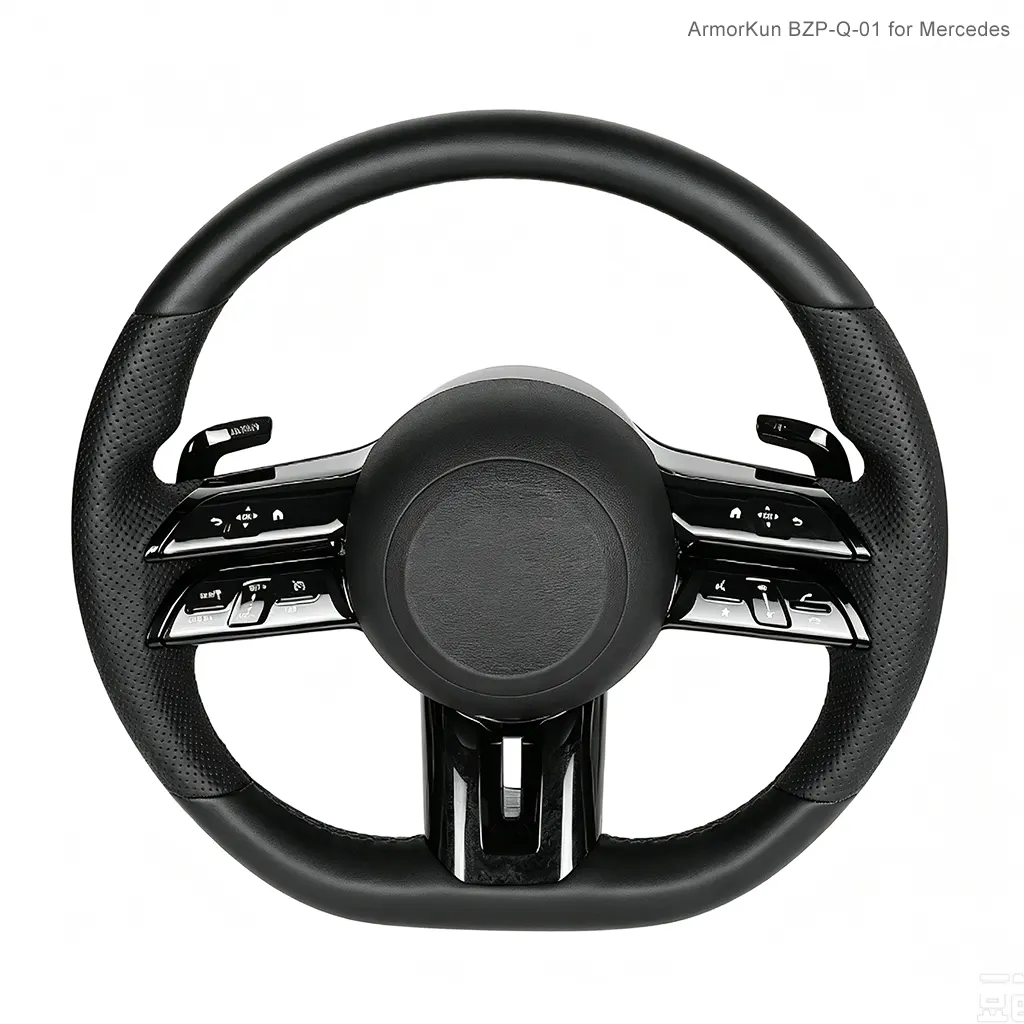
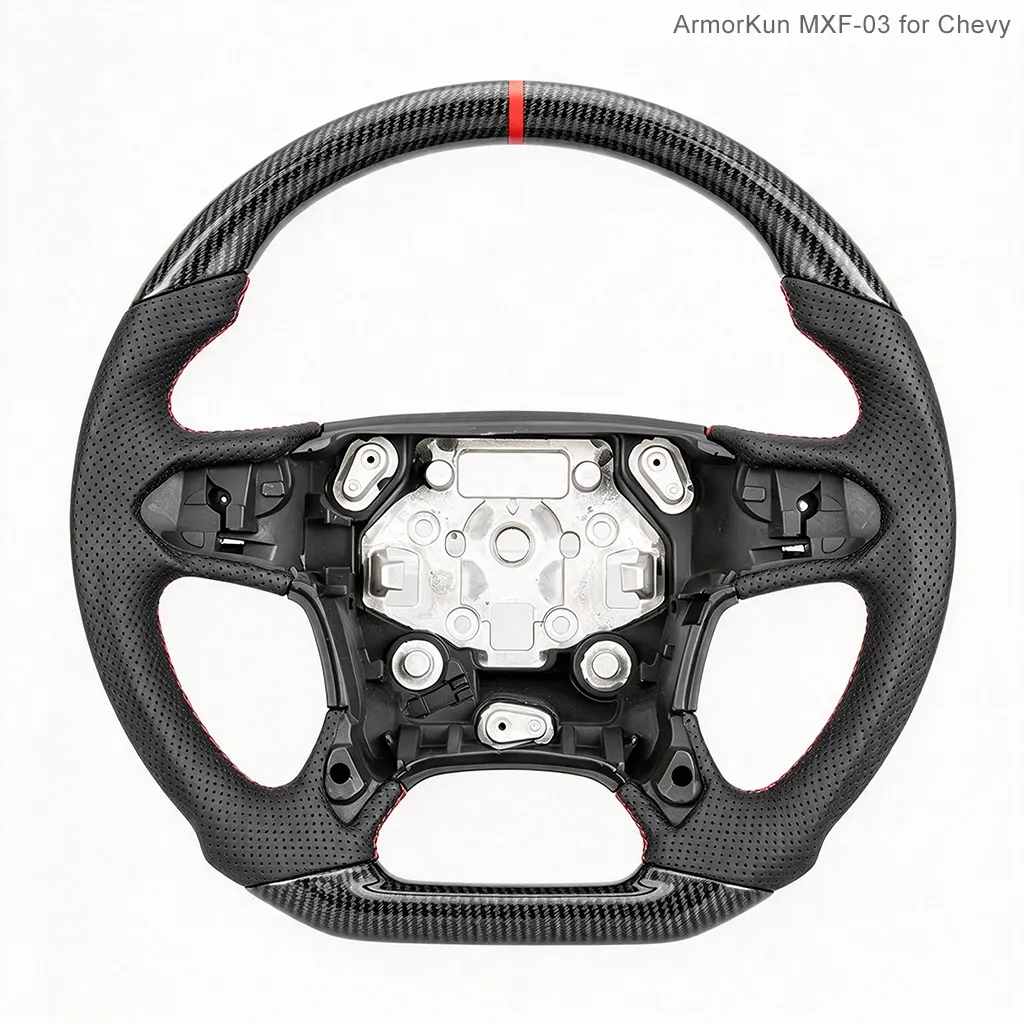
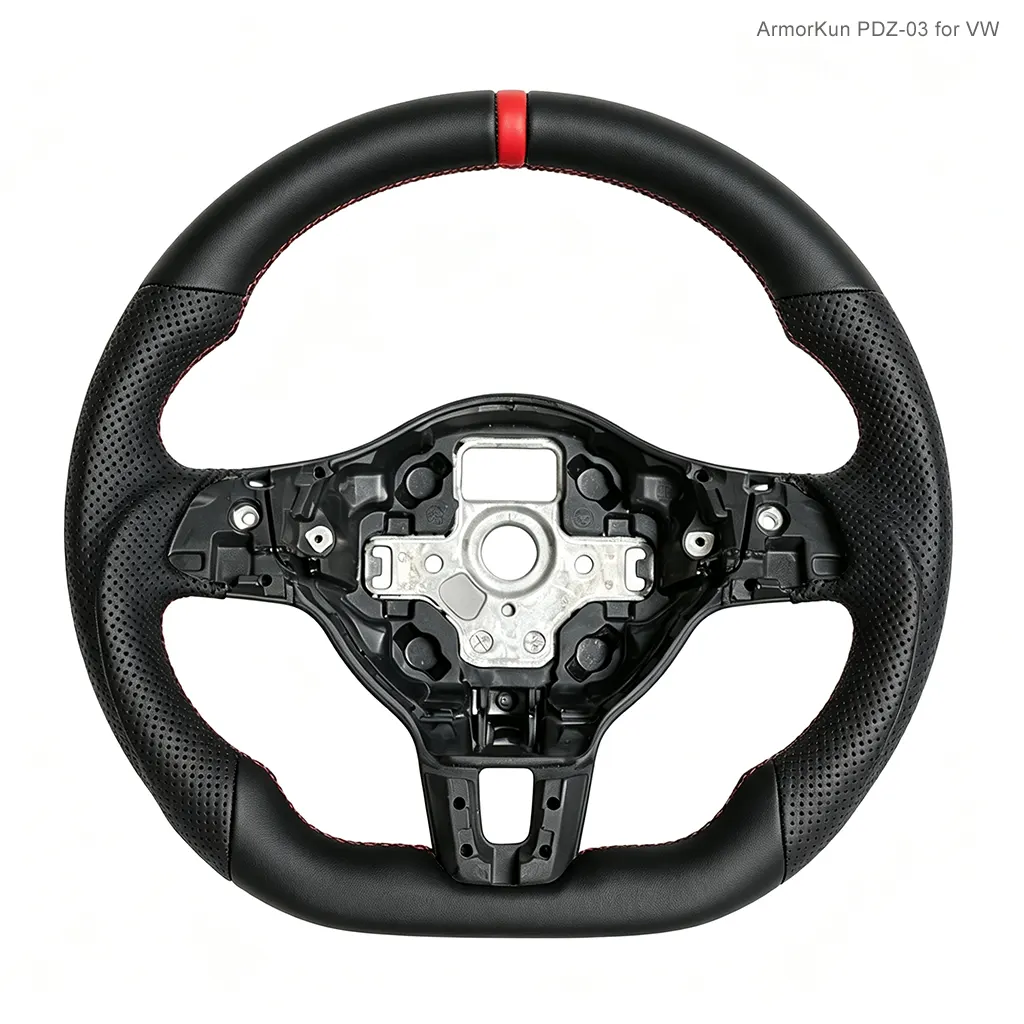
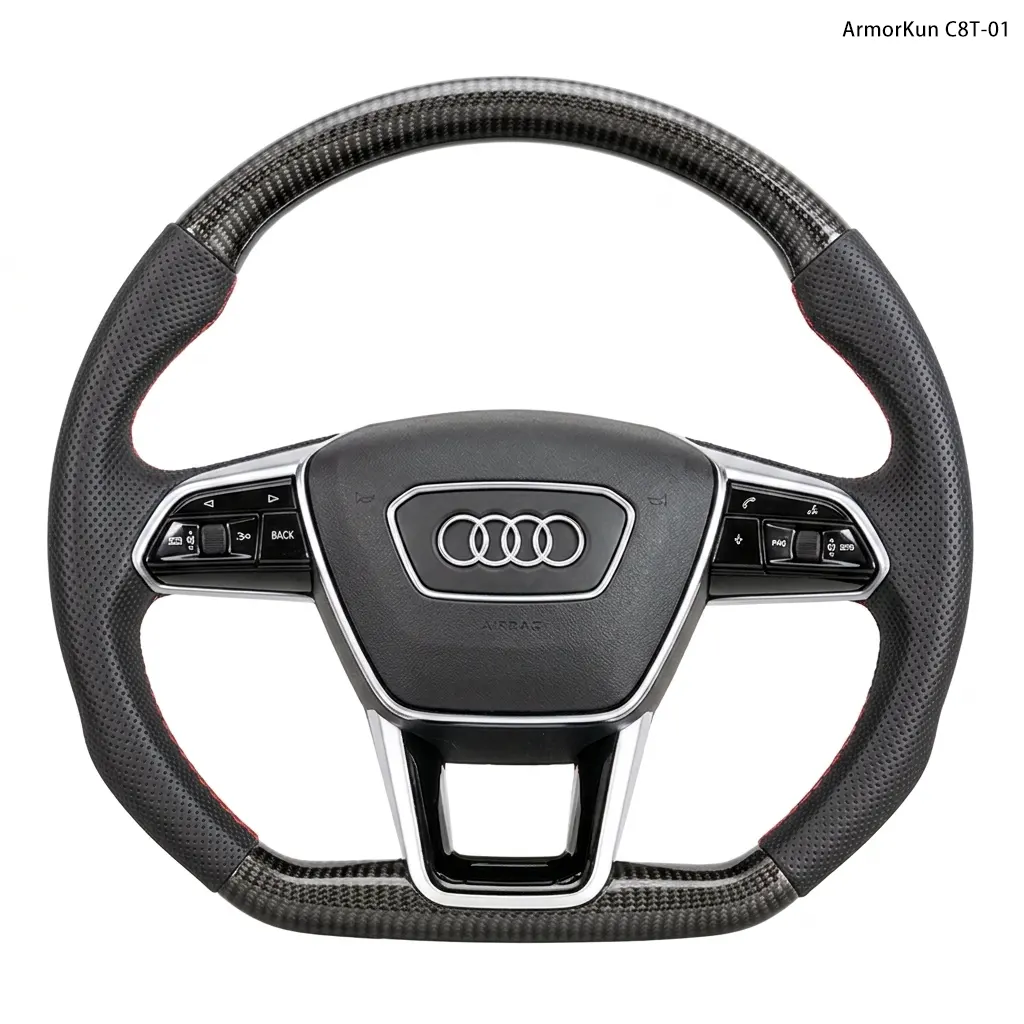
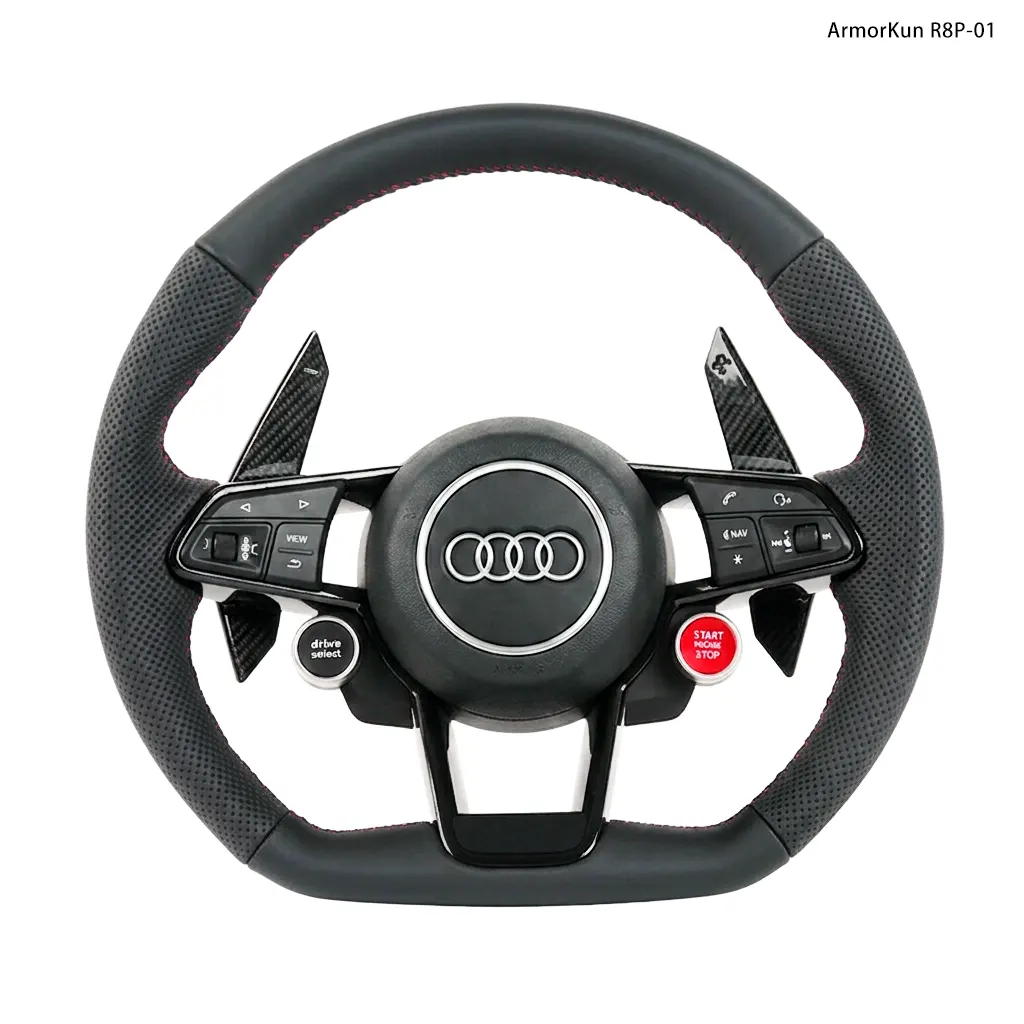
ArmorKun is an OEM steering wheels custom manufacturer supplying aftermarket steering wheels to steering wheel distributors, automotive brand, tuning works and repair shops in Xuzhou, China.
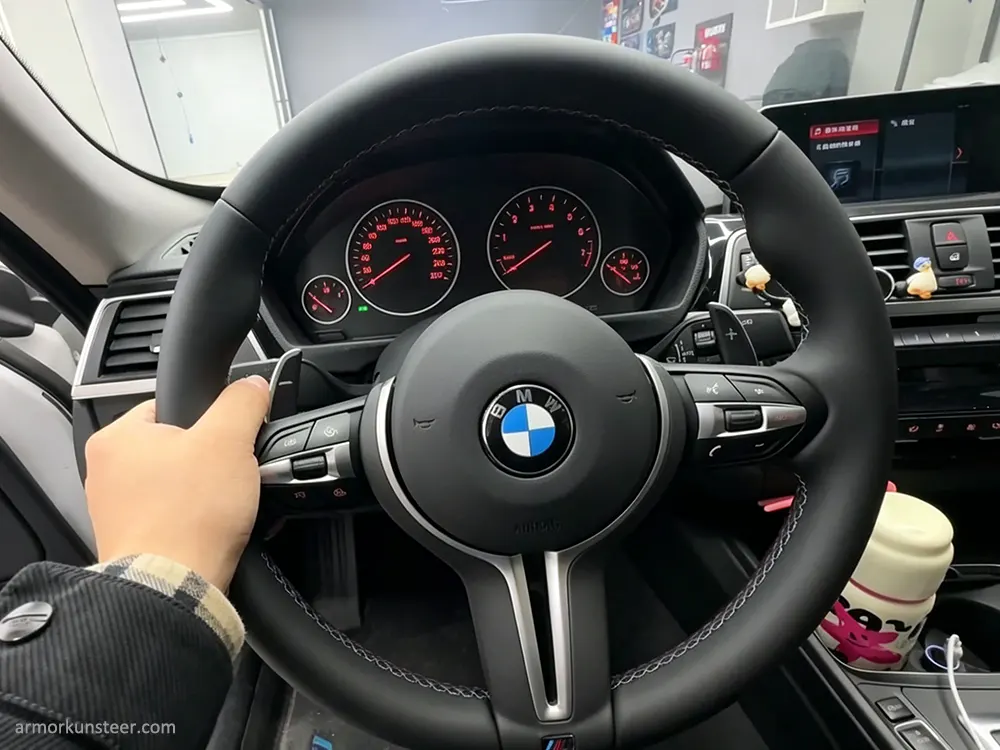
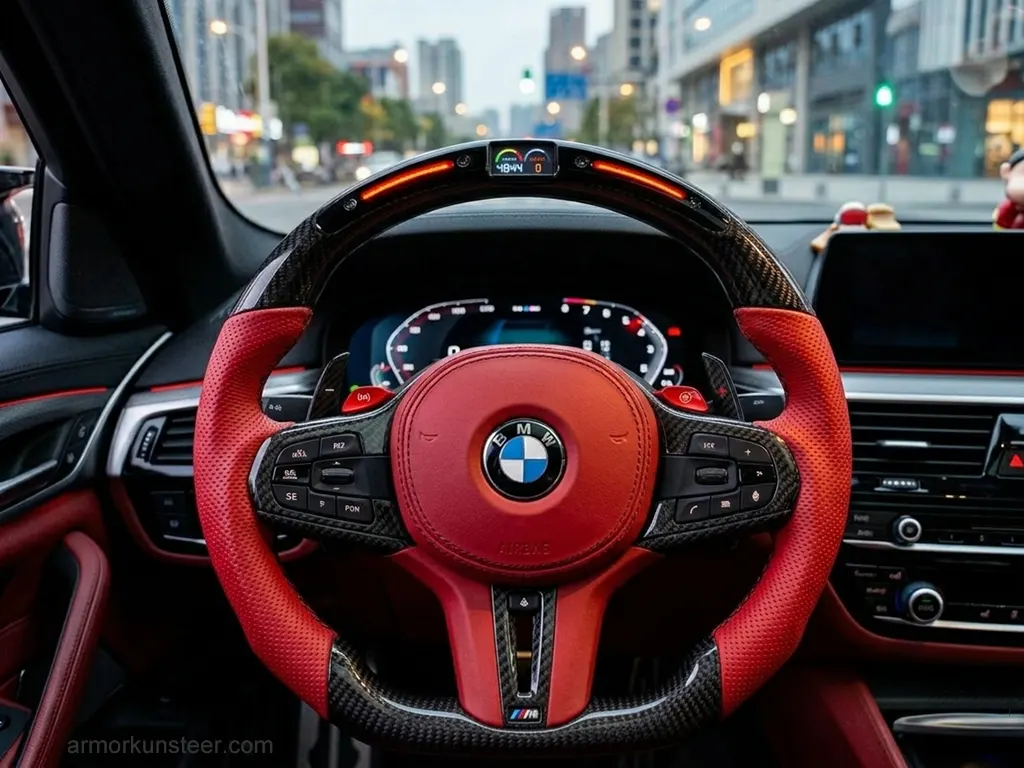
It’s manufactured in carbon fiber, leather, suede, Alcantara-like configurations, LED displays, heating, paddle shifter and flat-bottom designs, and vehicle-specific OEM fitment. According to the company, it produces thousands of wheels every month, with functional inspections carried out prior to shipping.
One detail is particularly relevant to serious Alcantara buyers: ArmorKun does not necessarily describe every suede-textured steering wheel as genuine Alcantara. On one BMW performance-wheel page, for example, the standard material is identified as suede, with buyers specifically requiring branded Alcantara advised to confirm the material grade during quotation.
That distinction is valuable in wholesale sourcing. “Looks like Alcantara” and “manufactured using genuine Alcantara®” should be two different specifications.
ArmorKun is consequently a stronger candidate when the project involves several vehicle platforms, repeated production, private-label packaging, material choices, prototypes followed by bulk orders, or combinations such as carbon fiber with high-grip side sections.
CARBONE — Strong Choice for BMW Alcantara Steering Wheels
CARBONE operates from California and has a particularly strong presence in BMW F- and G-chassis steering-wheel upgrades.
Its product catalog includes full-Alcantara and carbon-fiber/Alcantara steering wheels, and several products explicitly specify authentic, real, or Italian Alcantara rather than simply using the generic term “suede.” The company also emphasizes OEM-core compatibility for its BMW steering wheels.
That makes CARBONE worth considering when material identity and BMW-specific styling are higher priorities than large-volume private-label manufacturing.
It is especially relevant for BMW M2, M3, M4, M5 and other performance models where buyers often expect an M Performance-inspired combination of Alcantara, carbon fiber, center markers and more aggressive rim geometry.
Hellgate Carbons — Best for Hand-Rebuilt OEM-Core Wheels
Florida-based Hellgate Carbons takes a different approach.
Of making copies of the steering wheels the manufacturer takes the real factory steering-wheel cores and puts them inside a carbon fiber shell. The shell is finished with Alcantara and other premium materials. The company clearly says it works with brands. It lists RAM, Dodge, Jeep, Mercedes-Benz and even BMW and Tesla as supported brands.
The architects of this OEM-core rebuild can be appealing to the customer for those who wish to keep the steering-wheel architecture the same, but considerably alter the grip shape and materials.
It is less comparable with a high-capacity overseas factory for container or recurring wholesale programs, but very relevant to premium custom builds where craftsmanship and preservation of the original core are central to the purchase decision.
Miami Carbon Designs — Best for Highly Bespoke Performance Builds
Miami Carbon Designs’ portfolio is rich with car performance and luxury brands such as BMW, Porsche, Mercedes-Benz, Audi, Ferrari, Lamborghini and McLaren, to name a few.
It has a customisation system with carbon fibre finishes, Alcantara or Nappa leather grips and over 100 stitching colours. Typically, the existing steering wheel is sent to customers for re-building, to be refinished and tested at the factory.
This level of personalization is clearly attractive for an one-off Ferrari, Porsche, AMG or BMW.
In the mind of a distributor the question is slightly different: can the specification that works well with one hand-built wheel be replicated 20, 50 or 200 times across a series of wheels? This is where document management of the product and material-lot control is more significant than configurator options.
Rendition Design & Manufacturing — Best for Engineering-Led Custom Projects
Rendition Design & Manufacturing is based in Taiwan and describes itself as a designer and manufacturer rather than a reseller. Its development process uses OEM geometry, 3D scanning and real-vehicle testing, with custom projects extending from steering wheels to CNC-machined and carbon-fiber components.
For selected BMW steering-wheel builds, Rendition states that it starts with genuine BMW units and offers genuine Alcantara or Nappa leather.
That makes the company particularly interesting for older BMW platforms and projects where fitment engineering matters as much as surface customization.
It also illustrates an important sourcing principle: a supplier with genuine Alcantara is not automatically the right supplier. Material quality means little if spoke geometry, electronics, airbag compatibility, stitching or rim reshaping are poorly controlled.
Dafox Design — A European Option for Custom Retrimming
Dafox Design is based in Rzeszów, Poland and specializes in customized steering wheels for the European market.
The company offers Nappa leather, Alcantara and numerous thread colors and can provide material samples for customers trying to match an existing interior.
For European individual builds or low-volume retrimming, that flexibility is useful. Buyers planning repeat inventory should additionally establish material codes, approved samples and production tolerances before treating any handcrafted sample as a production standard.
Genuine Alcantara vs Automotive Microfiber vs Suede
This is the most misunderstood part of the market.
Alcantara, microfiber and suede are not interchangeable terms.
Material
What It Actually Is
Grip
Durability
Maintenance
Best Application
Genuine Alcantara®
Proprietary Italian polyester/polyurethane material
Excellent
High when correctly maintained
Moderate
Premium road and performance cars
Automotive-grade microfiber
Engineered synthetic microfiber; formulation varies by manufacturer
Good to excellent
Can be very high
Low to moderate
Performance wheels and scalable aftermarket programs
Natural suede
Split animal leather with a napped surface
Very high when clean and dry
More sensitive to contamination and moisture
High
Motorsport-style or specialist applications
Generic synthetic suede
Broad category with widely varying quality
Variable
Variable
Variable
Price-sensitive aftermarket products
Genuine Alcantara®
The “Alcantara” is a registered trademark of Alcantara S.p.A. – It is not a description of suede-like automotive fabric products.
Using its proprietary technology, the material is manufactured in full in Italy, and consists of about 68% polyester and 32% polyurethane. Steering wheels are particularly identified for their use in the automotive industry and are noted for their grip, breathability, durability and washability.
The trademark is a consideration in sourcing.
When a quotation only contains the words “Alcantara material”, make sure you clarify whether it refers to real Alcantara® provided by Alcantara S.p.A., or a suede-like microfiber. A serious supplier can’t play with words when answering.
Automotive-Grade Microfiber
As a material for a steering-wheel, automotive microfiber can be a great choice.
The error that is made is that all microfibers are considered to be the same.
For instance, Toray’s automotive Ultrasuede® is an engineered microfiber with polyester and polyurethane that adheres to defined specifications for properties like abrasion, tensile strength, rubbing fastness and FMVSS 302 flammability performance.
That’s the reason for automotive grade to be more than a soft hand feel.
If using a steering wheel program, consider abrasion resistance, colorfastness, rubbing performance, and automotive flammability, if applicable.
For a lower-priced product line, using a well chosen automotive microfiber could be the better choice than using actual Alcantara. It shouldn’t have to be “re-branded” as automotive microfiber and instead sold as such.
Natural Suede
Real suede is leather.
It is usually made from the part of the animal hide that is split in half or sewn from the under side, resulting in the well known soft nap. Natural suede is more absorbent than engineered automotive microfiber, and is typically harder to maintain.
Its tactile grip can be excellent, which explains its historical association with racing wheels. But for daily-driven performance cars, perspiration, hand oils, sunscreen and repeated cleaning make long-term appearance harder to control.
This is one reason synthetic microfiber materials have become so common in modern performance interiors.
Which material is the best steering wheel grip?
Where most performance applications are concerned, the genuine Alcantara and good automotive microfiber offer the right combination of grip, interior finish and durability.
Alcantara officially labels its material as high grip and says it’s a characteristic that it equates with sporty driving and high-performance automotive use.
But material alone does not determine grip.
Rim diameter, grip thickness, thumb contours, foam hardness, stitching position, surface nap and contamination all influence how secure a wheel feels in the driver’s hands.
A thick performance rim wrapped badly in genuine Alcantara can feel worse than a correctly shaped wheel wrapped in good automotive microfiber.
That is why serious sample evaluation should involve actual handling rather than photographs.
Why Alcantara Steering Wheels Become Shiny
The shiny appearance commonly seen on old Alcantara steering wheels does not necessarily mean the material has completely worn away.
Hand oils, perspiration, creams and dirt accumulate inside the fine surface structure while repeated contact compresses the nap. The result is a smooth, darker-looking surface with less of the dry, matte texture associated with a new steering wheel.
Maintenance therefore has a direct effect on perceived grip.
Regularly and from time to time wipe with a soft brush or dry cloth, Alcantara’s instructions for care and feeding say. Avoid direct steam, bleaching and highly corrosive solvents or excessive heat.
If using a steering wheel, make sure you do not get the material too wet. Liquid overfills seams, adhesives, heating elements and electronic components.
After cleaning and drying, gentle brushing will help restore nap.
Alcantara is not treated with leather conditioners.
There is more to batch-to-batch color consistency than meets the eye
The recurring order of steering wheels is a very prevalent issue.
A distributor approves a black or dark-gray sample. The second order arrives six months later. Under warehouse lighting it appears acceptable, but when a customer installs the wheel next to an existing Alcantara seat, door panel or dashboard, the difference becomes obvious.
Even premium textile manufacturing cannot make every dye batch optically identical under every condition. Alcantara itself notes in technical documentation that slight shade variations between production batches can occur.
This means “same material name” is not an adequate color-control specification.
For repeat orders, a reliable steering wheel manufacturer should retain an approved physical master sample, record the supplier’s material code and production lot, source enough material from the same dye lot for each production batch whenever practical, and inspect new material against the approved sample under controlled lighting.
For programs where color matching is critical, buyer and manufacturer can also agree on an instrumental color tolerance rather than relying entirely on visual judgment.
Phone photographs are not a color-control system.
Camera processing, monitors, white balance and ambient lighting can make two different materials look identical—or make identical materials look different.
How to Evaluate an Alcantara Steering Wheel Sample
Before approving a production order, examine more than the carbon pattern and stitching.
The most useful sourcing checklist is:
Confirm in writing whether the grip material is genuine Alcantara®, branded automotive microfiber, natural suede or generic synthetic suede.
Record the exact material code, color code and approved physical sample.
Check the rim at the 9-and-3 o’clock grip zones for consistent foam thickness, symmetry and surface tension.
Inspect seams for straightness, uniform stitch pitch and loose edges.
Rub the material with clean dry hands and evaluate whether the grip changes noticeably after repeated handling.
Confirm the steering-wheel core, buttons, paddles, heating, vibration functions and other electronics against the exact vehicle configuration.
For repeat orders, establish how material lots, colors, stitching and carbon finishes will be controlled from batch to batch.
The best time to discover a material inconsistency is at the sample stage—not after 100 wheels have been packed.
Alcantara vs Microfiber – Which is the better choice for a Distributor?
When the actual product relies on the substance of the material, then the idea of using genuine Alcantara is appropriate.
The price of a higher quality material is justified for a steering wheel made from premium BMW M, Porsche, AMG or exotic car materials, especially if the customer specifically requests a genuine Alcantara steering wheel.
When durability is the quality sought, and the price of the product is more scalable, Automotive Grade Microfiber is more appropriate.
It is not a bad idea to take that approach.
Problems begin when the two are marketed as the same product.
A useful aftermarket product line can actually contain both: a standard performance microfiber version and a premium genuine Alcantara upgrade. The important part is keeping the specification and marketing language clear.
What Separates a Good Alcantara Steering Wheel Manufacturer From a Good Sample Maker?
Almost any experienced upholsterer can make one attractive steering wheel.
Manufacturing repeatably is harder.
For commercial sourcing, the stronger supplier is usually the one that can reproduce the approved rim geometry, material, center stripe, stitching pattern, carbon-fiber finish and electronic configuration across successive orders.
That requires production documentation, material traceability and inspection standards.
It also requires honesty.
If the wheel is made of standard wheels, then it is a microfiber wheel. If the buyer asks for true Alcantara then sell true Alcantara. If two dye lots are obviously different, problem meetings prior to wrapping the wheels are more appropriate.
If you are going to use a particular supplier in the long term, it’s much more important than how good the first sample is.
Frequently Asked Questions
Does Alcantara equal suede?
Alcantara® is a special synthesis product of Alcantara S.p.A., Italy. Natural suede is leather that is made from animal hide. They have a similar napped surface but different structures and maintenance characteristics.
Is every microfiber steering wheel Alcantara?
No. Alcantara is one specific registered material. Many other automotive microfibers exist, including established products such as Toray Ultrasuede®. Generic synthetic suede is also common in the aftermarket.
Would Alcantara be suitable for a performance steering wheel?
Yes. It has a textured surface, is relatively lightweight and offers great grip, making it ideal for performance oriented interior applications. There is a list of applications provided by Alcantara that includes steering wheels.
What causes an Alcantara steering wheel to slip?
The nap can become compressed and contaminated by sweat, skin oils, lotions and dirt. Gentle cleaning, on a basis keeps the original dry textured surface.
Can Alcantara steering wheels be used for daily driving?
Yes, but, they need more upkeep than the traditional leather steering wheels. It may be easier for drivers who do not use the steering wheel much to have leather on their car’s pedals.
How can buyers prevent color differences between production batches?
Approve a physical master sample, record the material and color codes, use consistent dye lots where possible, and define a repeat-order color-inspection procedure with the manufacturer. Slight shade variation between textile production batches is possible even with premium materials.
Should I request genuine Alcantara for every performance wheel?
There’s a series of automotive applications provided by Alcantara which encompasses steering wheels.
Why does an Alcantara steering wheel “slip”?
Sweat, skin oils, lotions and dirt may compact and contaminate the nap. Gentle cleaning on a regular basis keeps the original dry textured surface.
Start with the material.
Determine whether the wheel uses genuine Alcantara, automotive-grade microfiber or suede. Then evaluate the grip geometry, fitment, electronics, stitching and finishing. Finally, ask the question that becomes increasingly important after the first order:
Can the manufacturer reproduce this exact specification six months from now?
For an individual performance car, craftsmanship may be the deciding factor. For a distributor or tuning brand building a repeatable product line, material traceability, batch consistency and production control deserve equal weight.
That is what turns a good-looking Alcantara steering wheel into a product you can confidently sell again and again.
Leo Wu Industrial Design Manager 10+ Years in Automotive Steering Wheel Design Expertise: carbon fiber, Nappa leather, OEM development, performance steering wheels
Over 10 years of experience in steering wheel development, premium materials and OEM manufacturing, Leo Wu is an automotive interior expert. Strictly cooperates with ArmorKun production teams, applies performance and focuses on steering wheel design and construction, leather processing and high-level function integration, in luxury cars and sports vehicles.









 English
 German
 French
 Italian
 Dutch
Dutch Russian
 Polish
 Spanish
 Arabic
 Japanese
 Korean