Carbon Fiber vs Leather Steering Wheels: Why Carbon Fiber Is the Future of Steering Wheel Design
Reviewed by ArmorKun Engineering Team
Now it's a matter of choice—Carbon Fiber vs Leather Steering Wheels. We take a look at materials engineering, the performance requirements, and aftermarket options to see how carbon fiber steering wheels are making inroads to become the choice of performance-oriented drivers.
Carbon wins attention. However, a carbon fiber steering wheel is not just a shiny weave design or an inside/out appearance. Focusing on aftermarket automotive components, we notice a greater evolution in a vehicle’s steering wheel’s function: the driver, tuner, and premium vehicle owner expect to see measurable changes in weight, grip, thermal stability, and customization, not just as a decoration.
In other words, is leather, too, on the verge of extinction? The answer is not a simple as it seems.
Leather steering wheels have long been a feature of luxury cars, providing comfort and craftsmanship while making them feel familiar and much more comfortable.The high end touch has been a feature on leaky steering wheels for some years and they provide warmth, craftsmanship and familiarity. However, the present performance cars are taking a different path of light-weight composite materials, high-tech polymers, motorsports materials etc. Carbon fibre is at the core of that shift.
The International Energy Agency says that vehicle manufacturers continue to invest in lightweight materials as a way of increasing the power and efficiency of the vehicles, especially as the increasing electrification adds weight pressure.
The steering wheel might be a minor piece, but it’s among the sole parts that the driver continuously handles.
That changes everything.
Carbon Fiber vs Leather Steering Wheels: The Real Engineering Difference
The steering wheel isn’t simply a disk rolled in cloth. It is a multi-layer engineered product made with structural materials, electronics, foam layers, heating elements, an air bag system and surface finishes.
What changes with carbon fiber is that it is composed of carbon filaments in a composite structure that can also be filled with resin. A typical carbon fibre composite can be stiffer than conventional materials like aluminum or poly materials for leather covers, per unit weight.
The material is leather, however, not a structural element.
That distinction matters.
The interior structure is typically a magnesium alloy or aluminum alloy or polyurethane and leather is used for tactile comfort and fitment. The carbon fibre lends itself to the actual structure.
The gap is particularly noticeable when used in high-performance applications.
Fuel efficiency is an important consideration for motorsport producers, which is why carbon composites have been extensively used as a way to decrease unnecessary weight, which will enhance vehicle response. This approach has been taken in aftermarket steering wheel enhancements of the following vehicles:
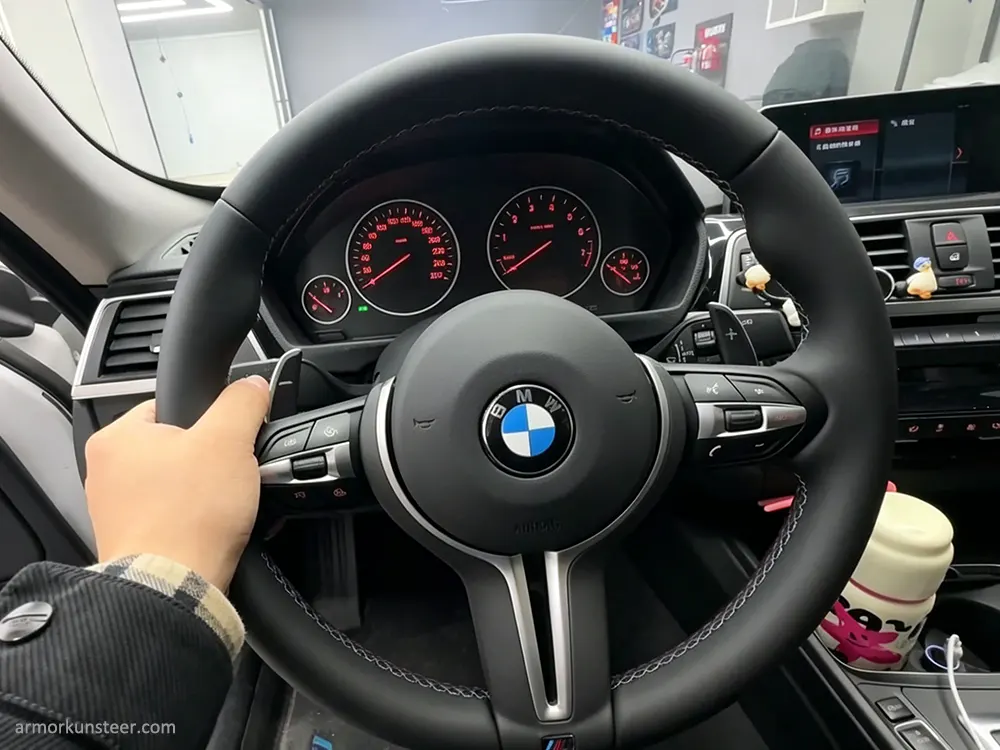
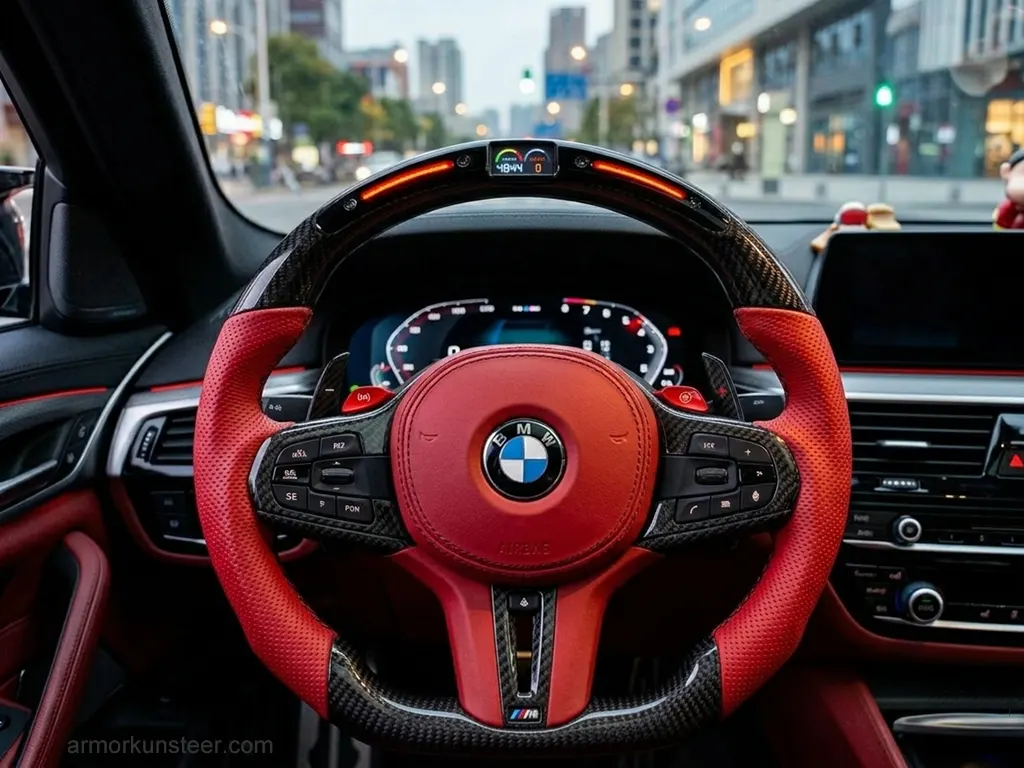
BMW M Sport Performance models
PORSCHE 911 GT3 & GT Turbo variants
Mercedes-AMG performance vehicles
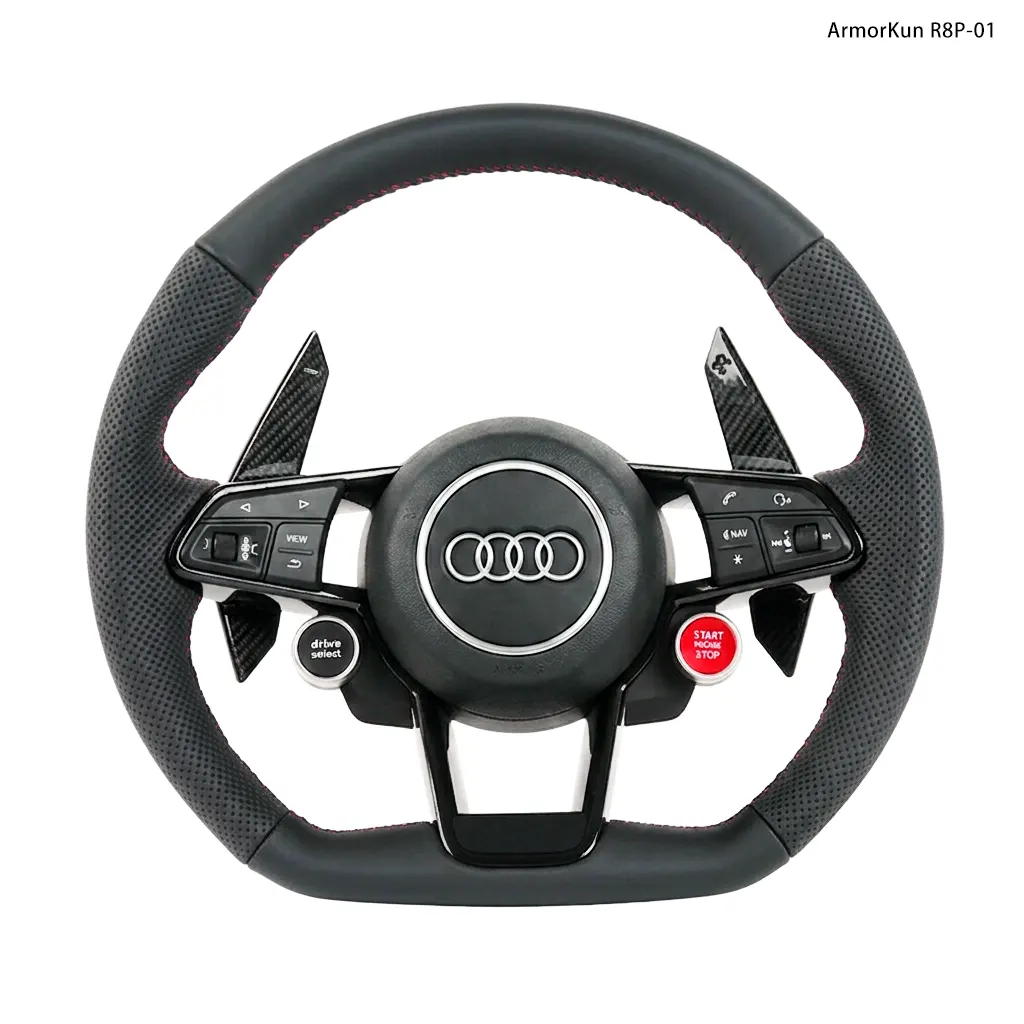
Audi RS models
The trouble is that many suppliers make things too easy on the market.
Carbon fiber is not the best material, by itself.
A substandard carbon steering wheel with low-strength resin, failed to properly cure or finished inconsistently will have a poor performance compared to a high quality leather steering wheel.
Quality of material is all that matters.
Why Carbon Fiber Steering Wheels Are Becoming Popular
There are some practical reasons why carbon fiber steering wheels are booming.
1. Reduce ‘Weight’ and increase ‘Response’.Minimize ‘Weight’ and speed up ‘Response’.
The steering wheel is an element of driver control interface. If the difference in weight between each individual steering wheel is small, that doesn’t mean it’s not something that performance enthusiasts take time to do.
It is made with a light carbon fibre construction, which has a smaller rotational inertia and helps to create a steeper steering feel.
It’s more prominent in track vehicles where drivers appreciate quick feedback.
2. Better Heat Resistance
Leather has excellent tactile properties, but direct sunlight can heat dark leather surfaces significantly.
Carbon fiber composites generally maintain structural stability across wider temperature ranges. This makes carbon fiber attractive for vehicles exposed to aggressive driving environments.
However, the surface temperature depends heavily on coating, color, and UV protection treatment.
3. Motorsport-Inspired Appearance
This is the emotional side of the purchase.
Drivers are not only buying performance. They are buying a connection to racing technology.
The visible carbon weave immediately communicates:
lightweight engineering
racing heritage
premium customization
modern automotive design
This explains why carbon fiber has expanded from race cars into luxury vehicles.
Carbon Fiber vs Leather Steering Wheels Comparison Table
Feature
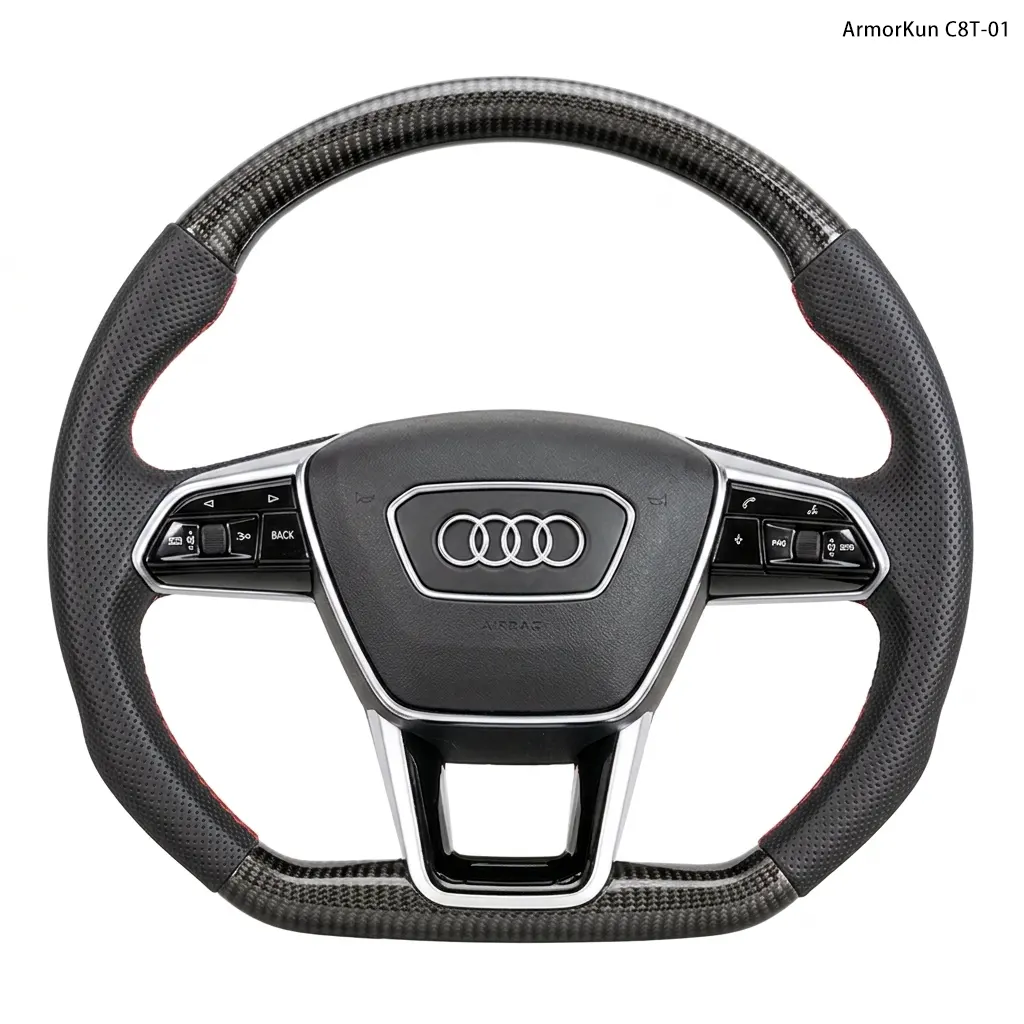
Carbon Fiber Steering Wheel
Leather Steering Wheel
Main Advantage
Lightweight performance appearance
Premium comfort and traditional luxury feel
Material Structure
Carbon composite reinforced structure
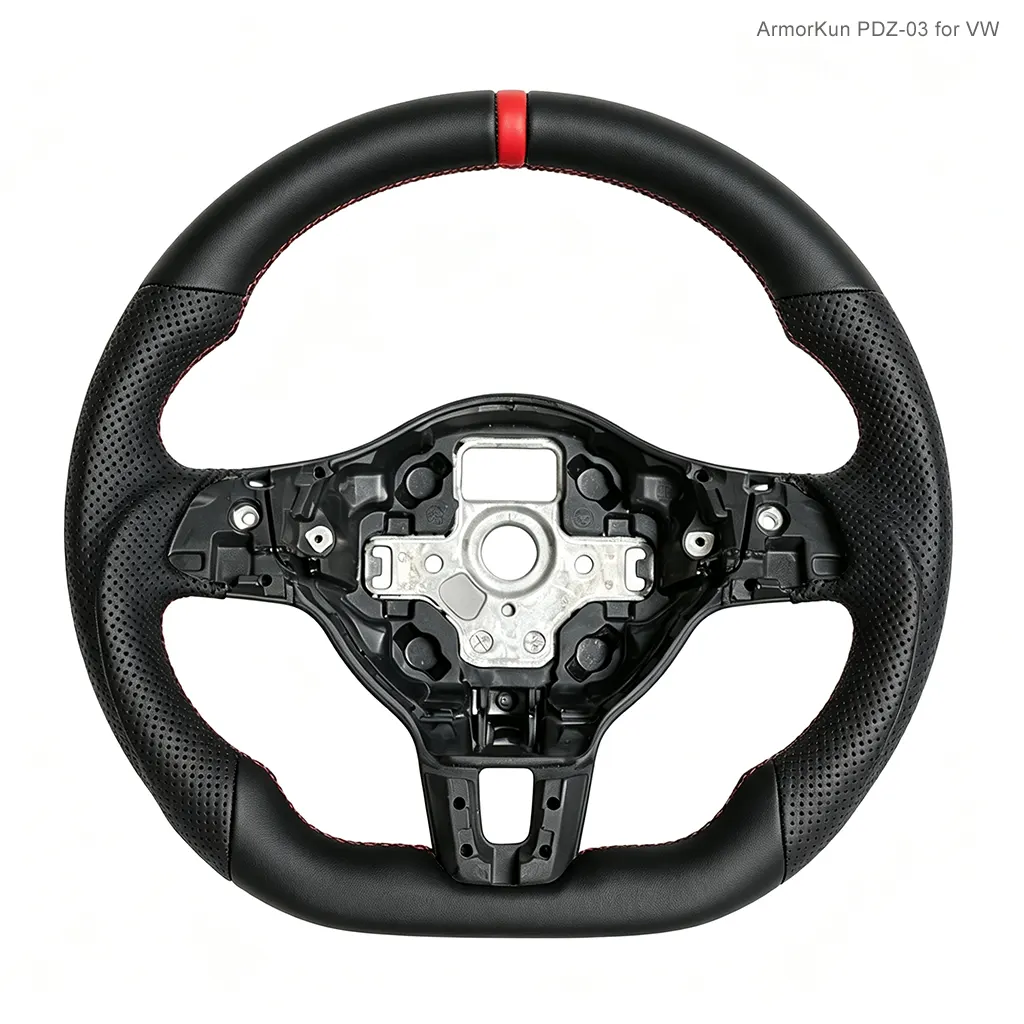
Leather wrapped around internal frame
Weight Potential
Lower depending on construction
Usually heavier
Driving Feel
More motorsport-oriented
Softer and more comfortable
Heat Performance
High composite stability
Can become hot under sunlight
Customization Options
Carbon patterns, LED displays, paddle extensions
Leather color, stitching, perforation
Typical Users
Performance owners, tuners, collectors
Luxury drivers, daily commuters
Maintenance
Requires careful coating protection
Requires leather conditioning
The Hidden Cost Difference: Carbon Fiber Is Not Always Cheaper
Many buyers assume carbon fiber is simply an expensive visual upgrade.
That is incomplete.
The manufacturing process involves:
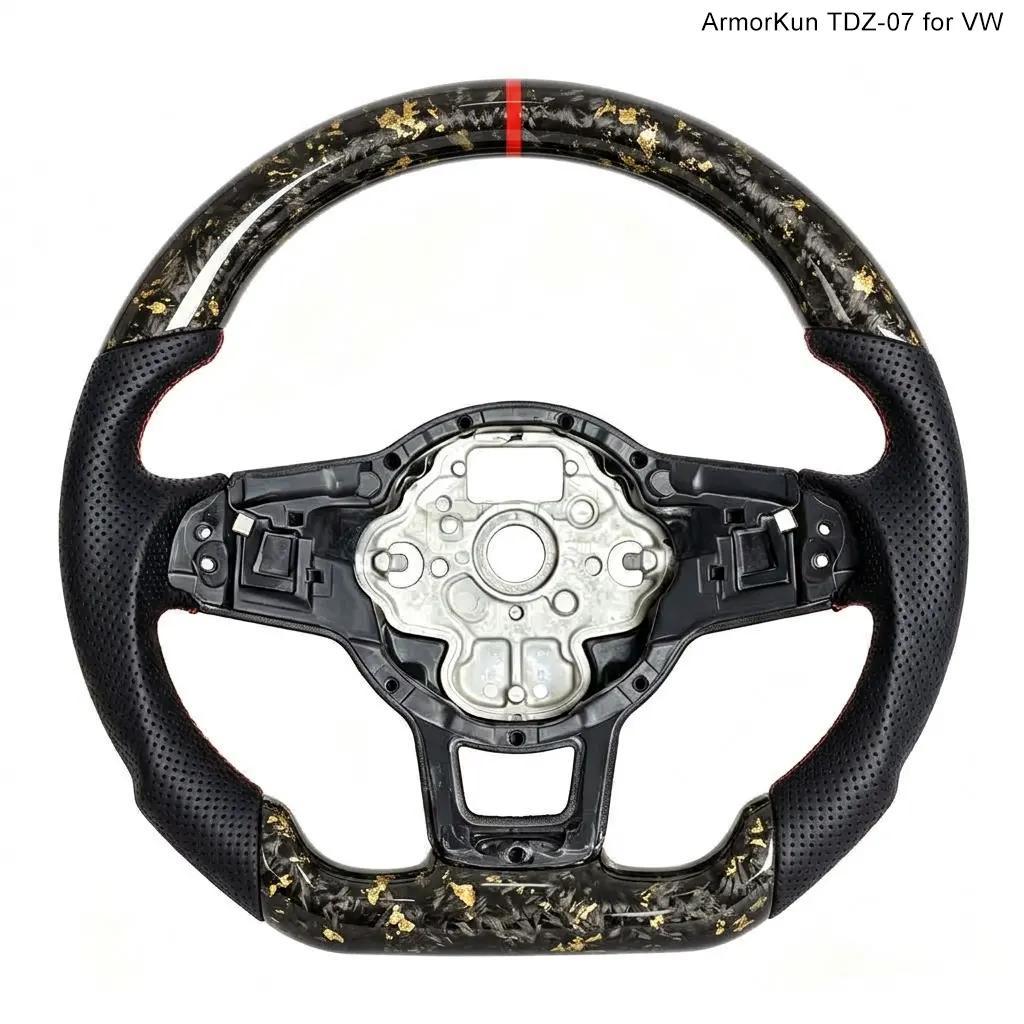
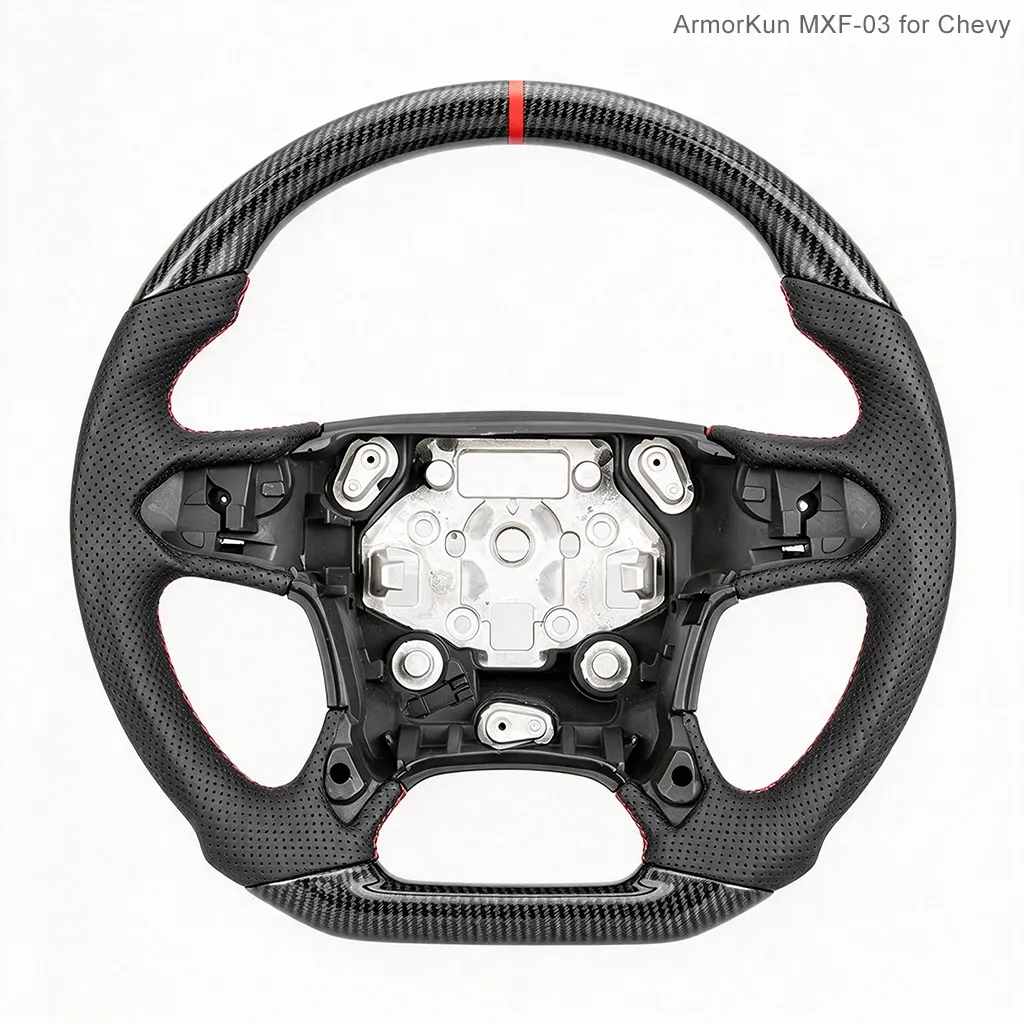
carbon fiber layering
vacuum forming
resin curing
surface polishing
UV-resistant coating
precision electronics integration
A high grade custom carbon fiber steering wheel can be rejected anywhere from several hundred dollars to more than a thousand and a half dollars because of the features it may contain, how it is manufactured and whether it will fit into the vehicle.
While a leather replacement wheel is an economical choice, high end leather wheels can also be premium priced, complete with Nappa leather, Alcantara inserts, heating, and OEM electronics.
The pertinent question is not:
“Which material costs less?”
The better question is:
“Which material matches the driver’s expectations?”
Automotive Design is Transitioning to Composites – Real Market Evidence
The car sector has already been a long time committed to lightweight composite materials.
For instance, the BMW Group has made enormous investments in the development and use of carbon fiber in its cars, e.g. BMW i3 and BMW 7 Series carbon chassis parts. The company’s use of carbon composites in the early days proved their potential to enter consumer cars.
In the same way, both the aviation and motorsport industries have demonstrated benefits of using composite.Both the aviation and motorsport industries have shown benefits in using composite where stiffness, weight saving and durability are critical.
It’s not a trend where all leather parts are replaced.
It is about creating more performance-focused interiors.
The Future of Steering Wheel Design
The next generation of steering wheels will likely combine multiple technologies:
carbon fiber structures
integrated LED displays
capacitive touch controls
heating systems
customizable shift indicators
recycled composite materials
Modern steering wheels are becoming electronic command centers rather than simple mechanical controls.
Research from the National Highway Traffic Safety Administration shows how steering systems remain closely connected with vehicle safety technologies, driver interaction, and advanced vehicle controls.
The future steering wheel will probably not be 100% carbon fiber or 100% leather.
It will be hybrid.
Frequently Asked Questions
Now, between leather or carbon fiber steering wheel, which has the stronger, more durable alternative?
The carbon fibre steering wheels are ultra light and stiff steering wheels, constructed to be utilized in performance vehicles and feature a lighter, stiffer and cleverly designed racer’s appearance than a leather encased steering wheel. Leafers are still the best for comfort, warmth and are the best option for those who want luxury while driving every day.
Should carbon fibre steering wheels be invested?
Carbon fiber steering wheels are great for vehicle lovers, who choose to customize their vehicle, enjoy straight-line racing, want to make their vehicle lighter, and want their interior to look nicer, and especially for those who want to install a custom steering wheel, especially sports steering wheels, such as the BMW M, Porsche GT, Mercedes-AMG and Audi RS.
So, what is the difference between a carbon fibre steering wheel vs a leather steering wheel?
This is because carbon fiber steering wheels don’t tend to warp, fade or change color like leather skins and can be expected to last for longer lengths of time and require maintenance from time to time.
Can I replace my leather steering wheel with carbon fibre steering wheel?
If the aftermarket steering wheel fits on the platform, has an airbag and wiring harness and the multi-function controls etc. then a carbon fibre aftermarket wheel can be fitted in place of a leather wheel.
So what’s the reason for the use of carbon fiber and leather in luxury cars?
In high-end cars, the combination of carbon fiber and leather is used due to the complementary properties they bring: lightweight, performance, stylish and comfortable, with leather providing elegant, tactile finish and true luxury.
Upgrade Your Steering Wheel With Performance Engineering.
There’s no really winning or losing in the leather vs carbon fiber steering wheel debate, it’s merely a choice.
It’s all about knowing the reason behind buying the item.
Leather is traditional luxury.
Carbon fiber is the state of the art in performance engineering.
The aftermarket steering wheel is an option that vehicle owners, dealerships, and specialist steering wheel customization companies are looking at when they are trying to create the final result of their vehicle’s steering wheel, which depends on the materials, crafting techniques, electronics integration, and vehicle compatibility.
The steering wheel is the first object that drivers interact with.
The experience of the future is now becoming lighter, smarter and more personal.
Leo Wu Industrial Design Manager 10+ Years in Automotive Steering Wheel Design Expertise: carbon fiber, Nappa leather, OEM development, performance steering wheels
Over 10 years of experience in steering wheel development, premium materials and OEM manufacturing, Leo Wu is an automotive interior expert. Strictly cooperates with ArmorKun production teams, applies performance and focuses on steering wheel design and construction, leather processing and high-level function integration, in luxury cars and sports vehicles.












 English
 German
 French
 Italian
 Dutch
Dutch Russian
 Polish
 Spanish
 Arabic
 Japanese
 Korean