Top Custom Steering Wheel Manufacturers: A Complete Guide for Global Automotive Buyers
Reviewed by ArmorKun Engineering Team
When selecting the perfect custom steering wheel manufacturer, the price is not the only factor to consider. This guide looks at the capabilities of the suppliers, and the manufacturing processes, materials used, certifications, and why the global automotive buyer chooses to work with Chinese factories.
The selection of custom steering wheel manufacturers is never just based on price, nor exclusively on capacity. Global automotive manufacturers never just go for the capacity or the price of a manufacturer of car steering wheels. A professional buyer needs to measure the engineering capability, material knowledge, consistency in quality, export work experience and ability to handle product development over an extended period of years with the supplier.
The harsh reality is that:
There are numerous factories that will make a steering wheel sample.
Much fewer can be dependable on repeatability at scale.
We’ve heard many buyers make expensive errors based on an attractive quotation and choosing their supplier based on price alone. It might look great in the model, but issues with production can be costly later such as inconsistent carbon fiber patterns, loose stitching, incorrect selection of the buttons, leather wrapping problems or slow delivery.
So, what makes a custom steering wheel company different from a basic aftermarket company?
It all comes down to the manufacturing depth.
Why global brands choose China for custom steering wheel manufacturing?
China has established one of the world’s biggest auto manufacturing zones which boasts well-developed supply chains, experienced workforce, modern processing machinery and high export experience.
China continues to be a key worldwide parts manufacturing hub as the country has a tightly-knit automotive component supply chain and manufacturing capabilities, according to data from the International Trade Administration.
This ecosystem brings several benefits to the table when it comes to custom steering wheel production:
Automotive grade materials are available
The skilled leather and carbon fiber artisans
Development models that are flexible OEM/ODM
Faster prototype development
Competitive manufacturing costs
Strong export logistics infrastructure
But cost is not the only reason
The deeper advantage is customization capability.
Modern automotive buyers are not simply purchasing replacement steering wheels. They are developing products with specific brand identities:
A supplier that only copies existing designs may struggle.
A manufacturer with engineering experience can adapt.
2. Material Expertise
Materials define both appearance and performance.
Common steering wheel materials include:
Material
Application
Advantages
Carbon Fiber
Performance steering wheels
Lightweight, racing appearance, high stiffness
Nappa Leather
Luxury steering wheels
Premium feel, soft texture
Alcantara
Racing applications
High grip, motorsport style
Genuine Leather
Daily vehicles
Durability and comfort
Aluminum Alloy
Paddle shifters and trims
Strength and premium appearance
Carbon fiber production requires technical control.
A poor resin choice, incorrect curing temperature or polishing can cause damage to the end product.
A professional manufacturer understands that carbon fiber is not just a visual pattern.
It is a manufacturing process.
3. OEM/ODM Support
Global buyers often need customization rather than standard products.
OEM/ODM support may include:
Custom logo integration
New steering wheel designs
Material combinations
LED indicators
Paddle shifter designs
Packaging customization
Private labeling
This capability allows automotive brands and distributors to create unique product lines.
4. Quality Certification and Testing
Professional buyers should ask suppliers about:
ISO 9001 quality management systems
Material inspection procedures
Production inspection records
Product testing processes
Export documentation
The International Organization for Standardization (ISO) states that ISO 9001 is a standard that’s based on quality management processes that are controlled and consistent, aiding organizations be more reliable and satisfy their customers.
Certification does not mean perfection.
But the absence of any quality system is a warning sign.
5. Export Experience
International automotive buyers face additional challenges:
Shipping protection
Customs documentation
Regional requirements
Communication efficiency
After-sales support
A factory experienced with international customers understands these details.
A local workshop may not.
Key Factors to Evaluate Before Choosing a Supplier
Evaluation Factor
Questions Buyers Should Ask
Manufacturing Capability
Can the supplier handle prototypes and mass production?
Material Expertise
Does the factory work with carbon fiber, leather, and Alcantara?
OEM/ODM Support
Can they create customized designs?
Quality System
Do they have inspection procedures and certifications?
Export Experience
Have they worked with overseas automotive companies?
Top Custom Steering Wheel Manufacturers in China
The Chinese market includes many steering wheel suppliers, but their capabilities vary significantly.
Below are examples of supplier categories global buyers commonly evaluate:
Manufacturer Type
Location
Main Products
Strength
Specialized aftermarket steering wheel factory
Guangdong, China
Carbon fiber, leather, LED steering wheels
Strong customization ability
Automotive interior component manufacturer
Zhejiang, China
OEM-style steering wheels and trims
Production scale
Performance modification supplier
Jiangsu, China
Racing steering wheels, accessories
Flexible designs
When selecting a manufacturer, buyers should focus less on company rankings and more on:
Relevant vehicle experience
Previous export projects
Production consistency
Customization capability
The “largest factory” is not always the best partner.
How ArmorKun Became a Trusted Global Steering Wheel Manufacturer
ArmorKun was built around a simple idea:
Custom steering wheels should combine engineering accuracy with personal design.
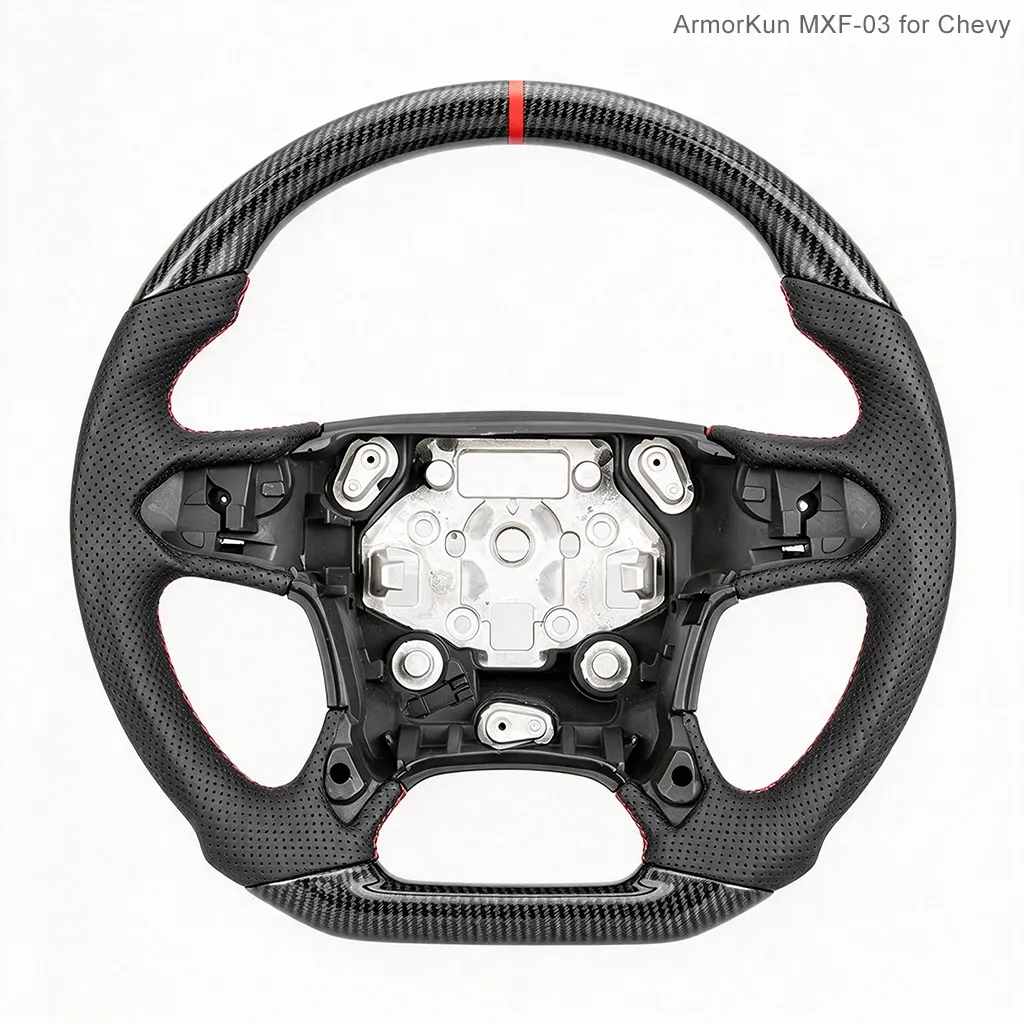
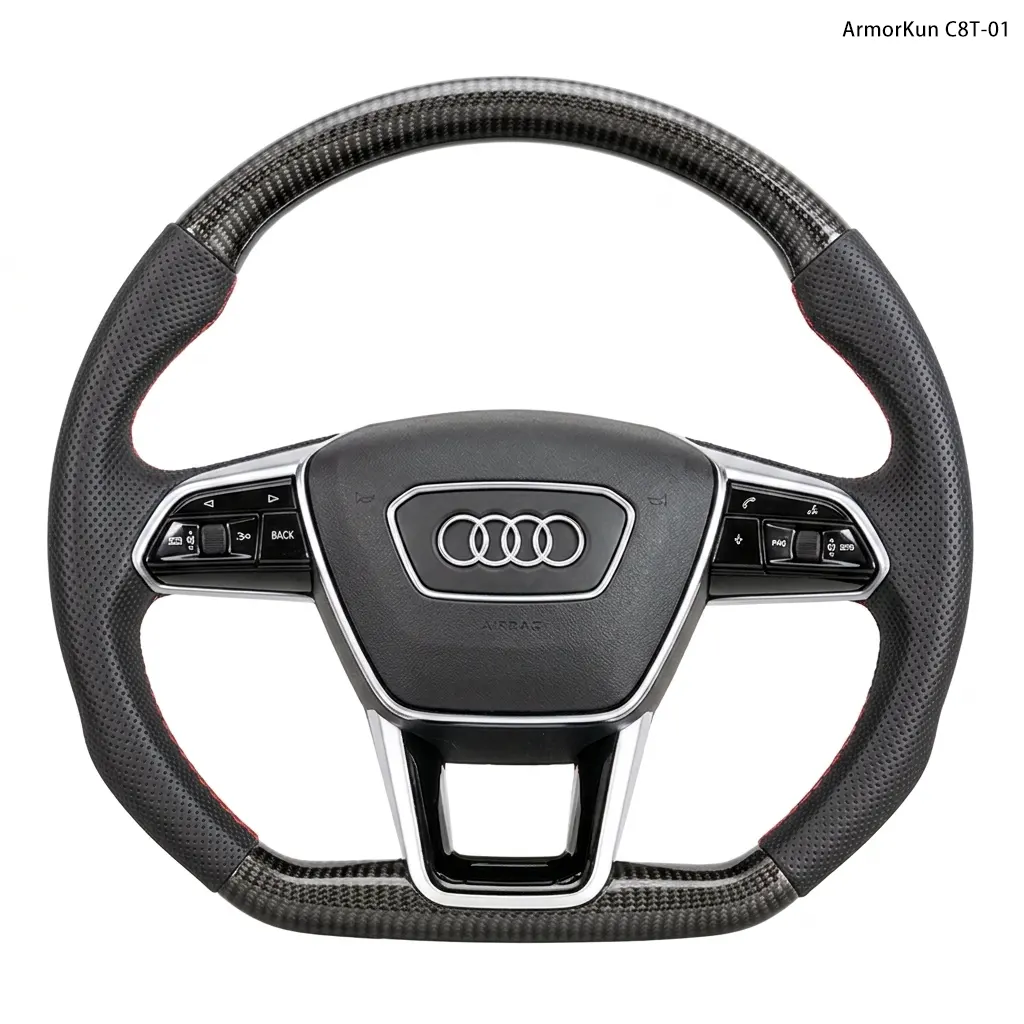
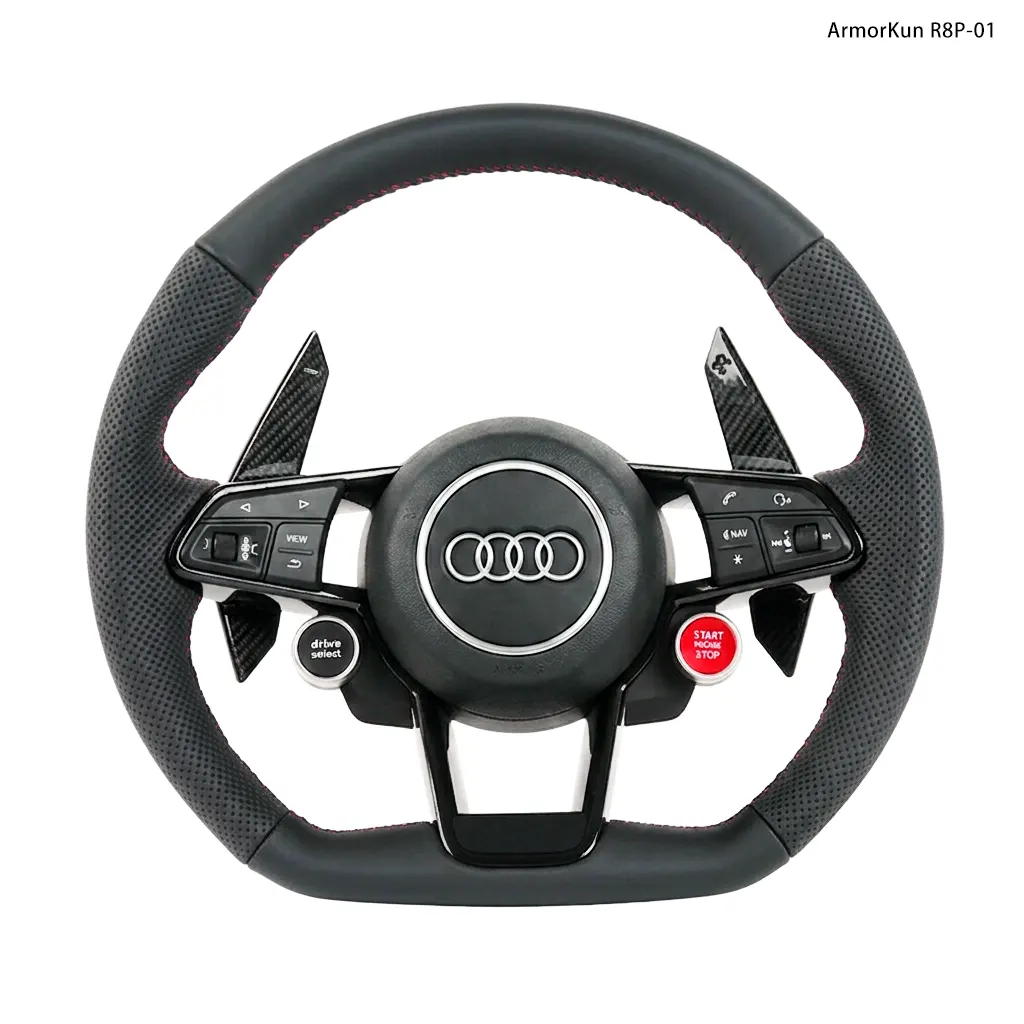
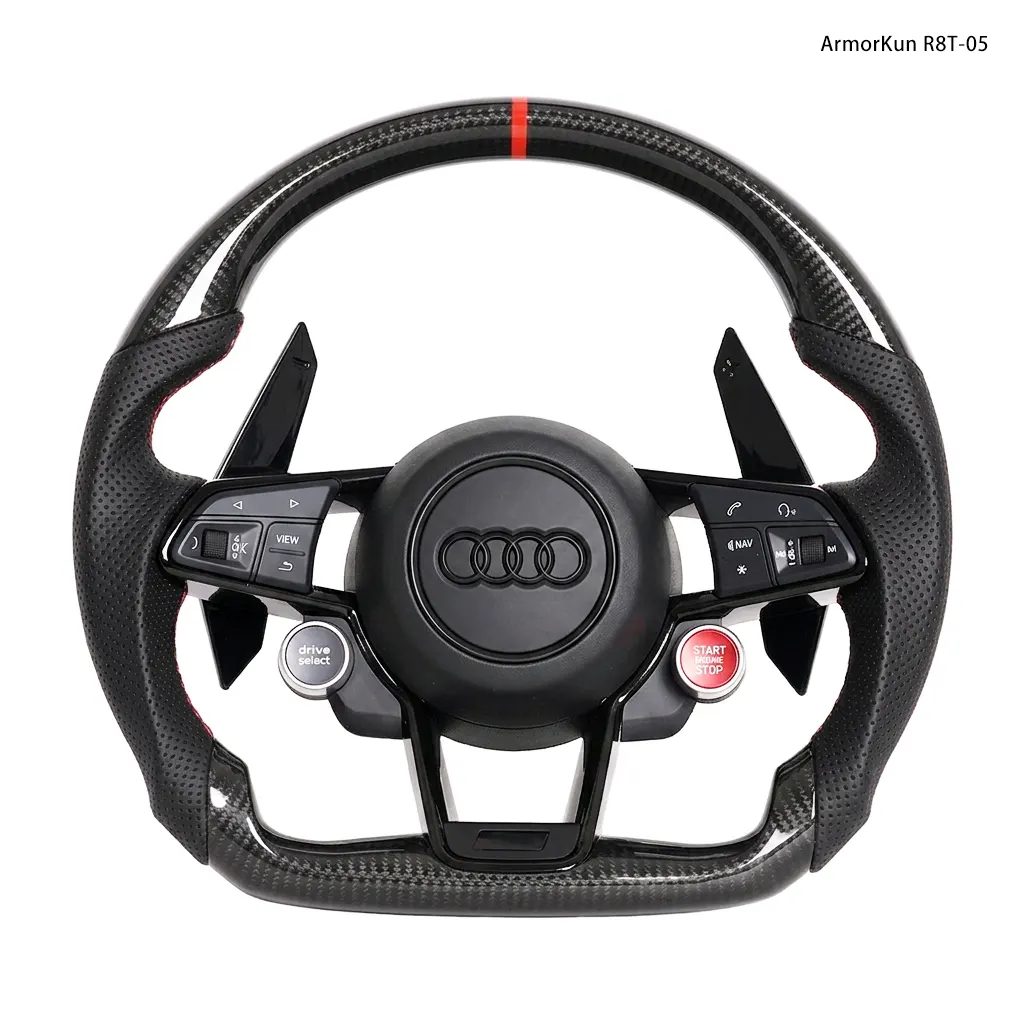
Instead of producing only standard replacement wheels, ArmorKun focuses on customized solutions for global automotive enthusiasts, distributors, and brands.
The manufacturing approach includes:
Vehicle compatibility analysis
Customized design development
Material selection
Prototype approval
Production inspection
International shipment support
Projects include steering wheels designed for:
BMW
Mercedes-Benz
Audi
Porsche
Toyota
A successful supplier relationship is not created by one order.
It is created when every future order maintains the same quality standard.
Custom Steering Wheel Manufacturing Process
A professional production workflow typically includes:
1
Customer requirement analysis
2
Vehicle compatibility confirmation
3
3D design development
4
Material selection
5
Prototype production
6
Sample approval
7
Production preparation
8
Carbon fiber or leather processing
9
Electronic component installation
10
Final quality inspection
Each step influences the final driving experience.
A steering wheel is a component drivers physically interact with every second.
Discover minor flaws.
Frequently Asked Questions
What is a custom steering wheel manufacturer?
A Custom Steering Wheel Manufacturer is a specific automotive supplier that creates customized steering wheels to conform to vehicle compatibility, customer specifications, materials and branding requirements. These manufacturers supply everything from carbon fiber steering wheels, leather enhancements, as well as OEM replacement parts and aftermarket performance designs.
What’s the most effective method to select the most effective custom steering wheel supplier?
By analyzing the manufacturing ability, customization experience, quality control systems, material expertise, export track record, and previous automotive projects, the best custom steering wheel supplier is chosen. Purchasers should check samples (also production process and technical support) prior to entering into extended collaboration.
Why automotive buyers around the world should opt for Chinese Steering Wheel manufacturers?
The automotive, which is one of the major and most popular industrial sectors globally, is a business worth considering the Chinese Steering wheel manufacturers, for their competitive manufacturing cost, well-established automotive supply chain, OEM/ODM service flexibility, craftsmanship and rich experience in exporting custom-made steering wheel parts to overseas market.
Which types of vehicles can you fit an aftermarket steering wheel to?
Depending on the fitment requirements, aftermarket steering wheels can be created for BMW Models (M-Series), Mercedes-AMG Vehicles, Audi RS Vehicles, Porsche (911 Platform), Toyota Land Cruiser or other performance or luxury vehicles.
How much does the carbon fiber cost for custom steering wheel?
The cost of a custom carbon fiber steering wheel is quite pricey and differs depending on the vehicle type, carbon fiber materials, electronics, LED features, paddle shifter and the complexity of the customization. It can cost roughly $300 upwards of $1500 or more. The three types of premium designs, forged carbon, display or heating, are more expensive.
Choose a Manufacturing Partner, NOT Just A Supplier.
It appears easy to the layman until they start looking at the industry of custom steering wheels.
It is not.
There are engineering decisions, materials, production control and manufacturing experience behind every premium steering wheel.
The automotive buyer “knows her type” and the supplier does not necessarily need to be the cheapest one.
It is the one which can keep the same quality from the first prototype to the thousandth unit.
When creating a bespoke steering wheel product range or looking for an expert OEM/ODM manufacturing partner, reach out to ArmorKun to explore your project needs and production possibilities.
Leo Wu Industrial Design Manager 10+ Years in Automotive Steering Wheel Design Expertise: carbon fiber, Nappa leather, OEM development, performance steering wheels
Over 10 years of experience in steering wheel development, premium materials and OEM manufacturing, Leo Wu is an automotive interior expert. Strictly cooperates with ArmorKun production teams, applies performance and focuses on steering wheel design and construction, leather processing and high-level function integration, in luxury cars and sports vehicles.









 English
 German
 French
 Italian
 Dutch
Dutch Russian
 Polish
 Spanish
 Arabic
 Japanese
 Korean