Where to Find Reliable Aftermarket Steering Wheel Manufacturers
Reviewed by ArmorKun Engineering Team
With aftermarket steering wheel manufacturers, it's more than just a matter of catalogs and prices. This guide outlines the ways in which customers can assess factories, check product quality, and prevent sourcing errors at affordable costs.
It’s easy to find an aftermarket steering wheel supplier. The right manufacturer is not found. You can find hundreds of aftermarket steering wheel suppliers, trading companies, distributors and factories that will supply you with custom steering wheels, wholesale pricing, oem quality steering wheels or products shipped all over the world. The issue is there is no universal formula for these businesses; and the distinction can go unnoticed until you’ve paid for samples, ordered products or had them delivered to your vehicles, but none were the same as the vehicles your customers drove.
Then, where does an automotive aftermarket distributor, retailer, repair shop or brand begin?
We recommend looking beyond the catalog. A reliable manufacturer should be evaluated through its manufacturing capability, product engineering, vehicle fitment knowledge, material control, quality inspection, customization process, and ability to support repeat orders.
The market is large enough to justify that level of scrutiny. SEMA reported that U.S. consumers spent approximately $52.65 billion accessorizing and modifying their vehicles in 2024. That opens the door for steering wheel enterprises, but likewise opens up a lot open for rookie suppliers.
What Are The Expectations From Aftermarket Steering Wheel Manufacturers?
The real manufacturer would be able to tell you the way a steering wheel progresses from design into finished product.
That sounds obvious. It isn’t.
When we evaluate a potential supplier, we look for evidence of actual production rather than simply a large online catalog. A manufacturer should be able to discuss structural components, rim construction, leather or Alcantara wrapping, carbon fiber processing, stitching, paddle-shifter integration, button compatibility, electronic components, assembly, and final inspection with specific technical answers.
A factory should also understand that an aftermarket steering wheel is not simply a cosmetic accessory.
It interfaces with the driver’s hands, vehicle controls, electronics, and potentially the original restraint system. NHTSA has issued numerous warnings to consumers about hazardous modifications to steering wheels and airbags, such as an alert in 2024 about aftermarket steering wheel decorations becoming airbag “projectiles.
That is why the manufacturer-selection-process is significant.
How to Find a Reliable Steering Wheel Manufacturer
We would start with six questions.
First: Does the company actually manufacture steering wheels?
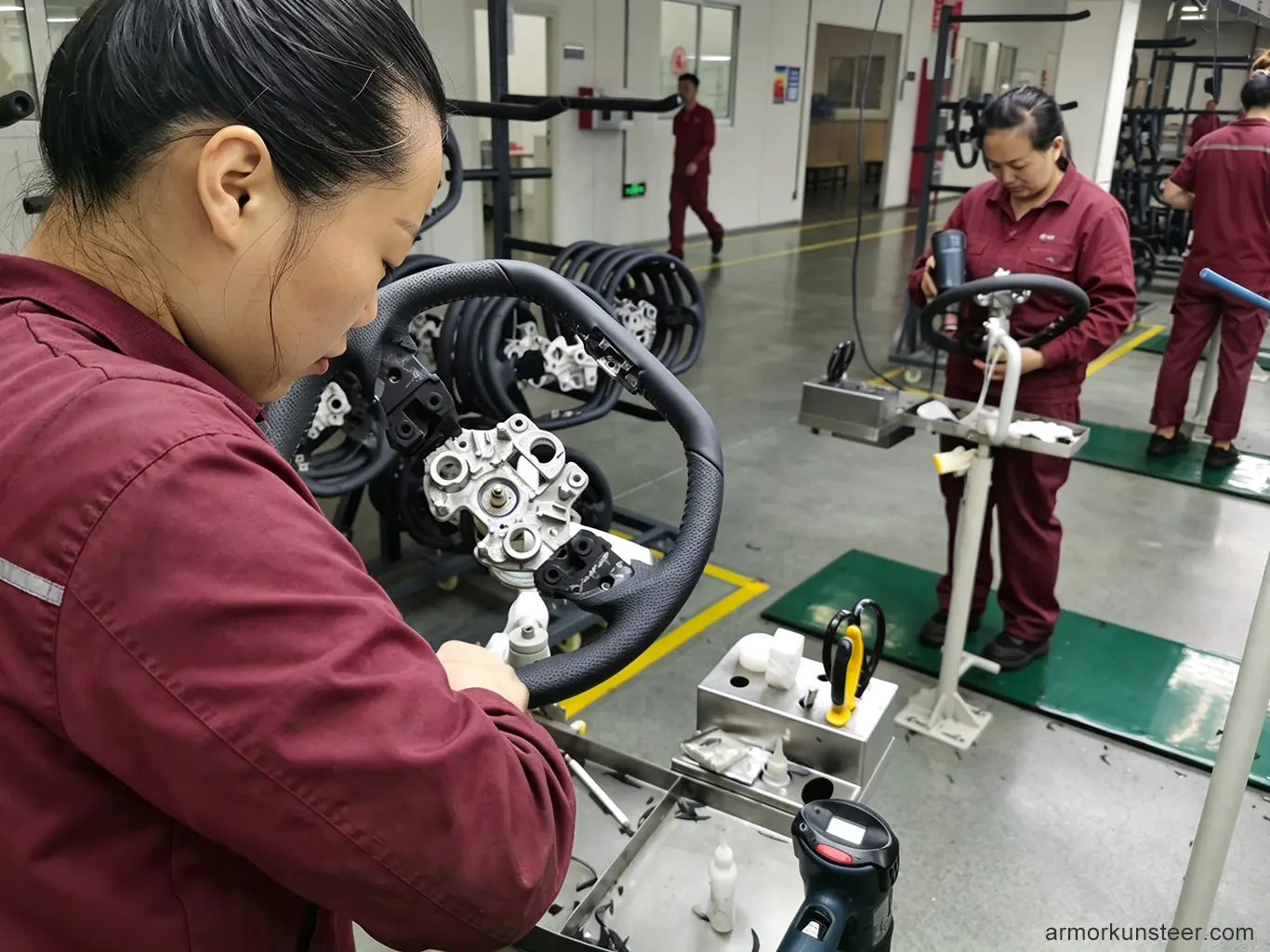
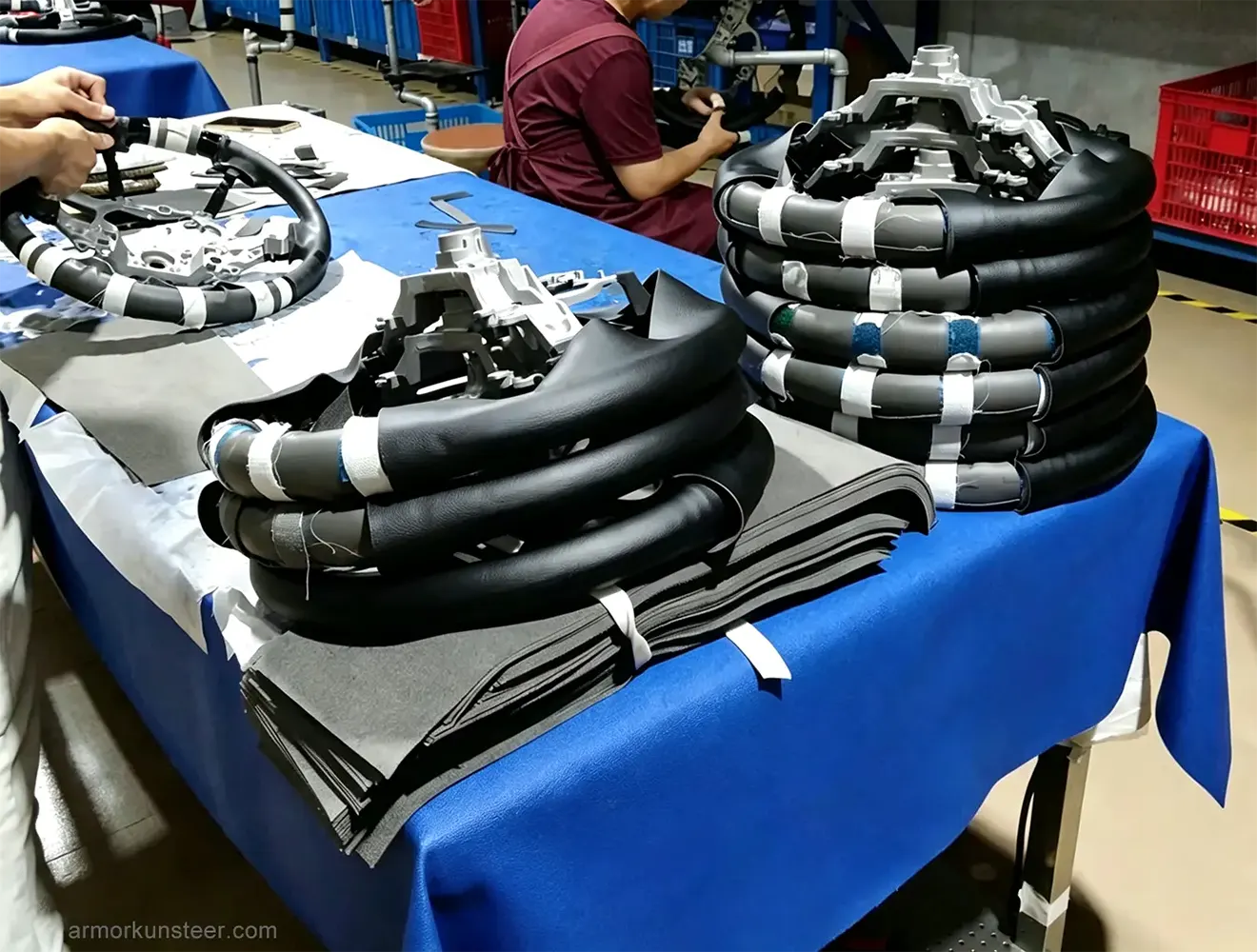
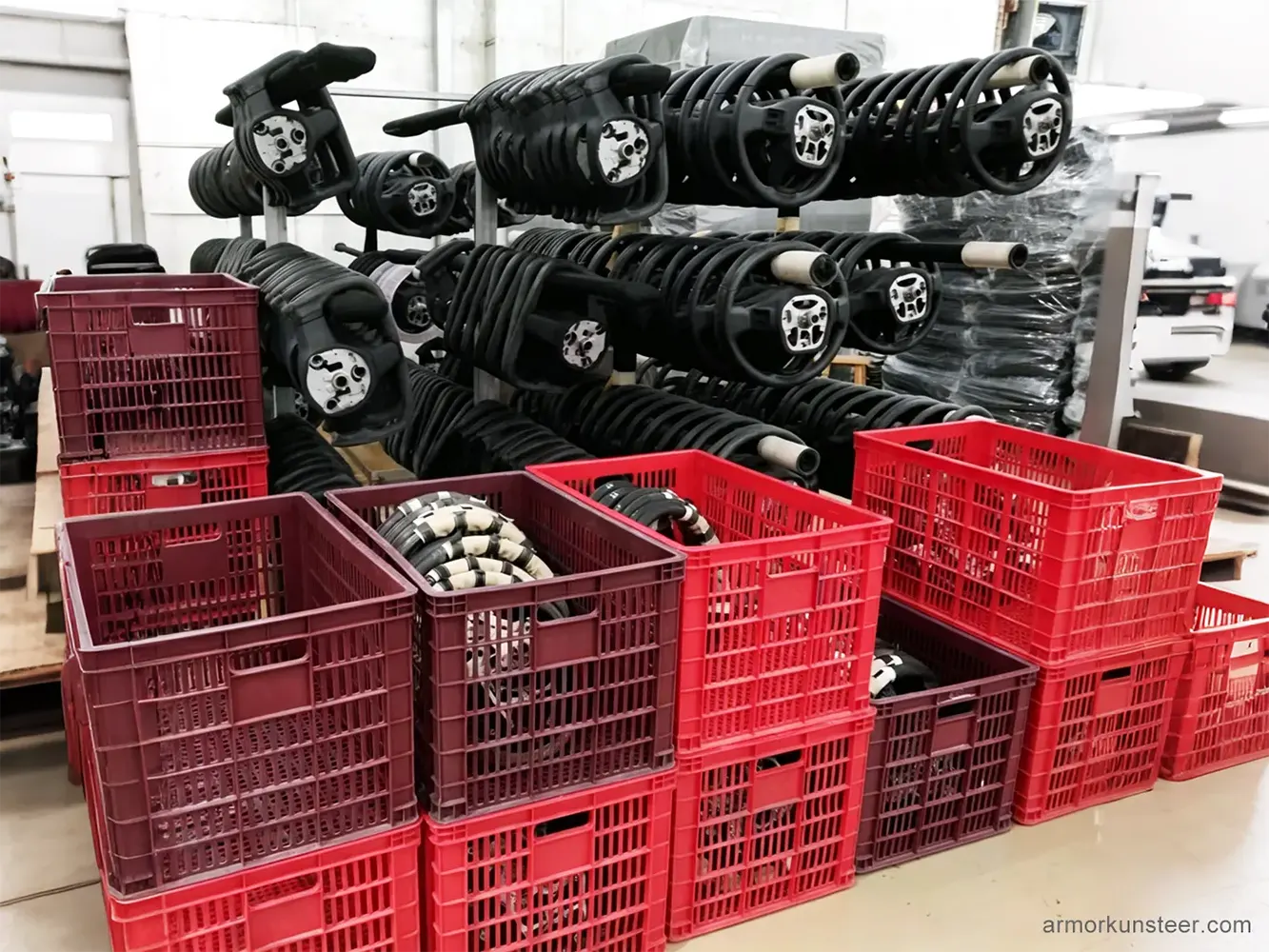
Ask for photographs or videos of its production facility, assembly areas, machining equipment, wrapping processes, inspection stations, and finished-product storage. A polished website proves very little.
Second: Can it explain its fitment process?
A serious manufacturer should understand that “fits BMW” is not sufficient information. BMW vehicles can use different generations, chassis codes, steering-wheel designs, button configurations, paddle systems, wiring arrangements, and airbag modules.
Third: Can it produce samples before a production order?
A sample is not merely a purchasing formality. It lets you evaluate dimensions, grip thickness, stitching, material quality, spoke alignment, button positioning, paddle operation, packaging, and overall finish.
Fourth: What can actually be customized?
Ask whether customization includes rim shape, diameter, flat-bottom design, leather type, Alcantara, carbon fiber, stitching color, center marker, paddle shifters, trim, buttons, heating, LED displays, and packaging.
Fifth: How is quality controlled?
The supplier should be able to explain inspection procedures rather than simply saying “QC checked.”
Sixth: Can it support repeat orders?
Your first sample may look excellent. The real test comes six months later when you reorder 50, 100, or 500 units.
Aftermarket Steering Wheel Factory vs. Trading Company
This distinction matters more than many first-time buyers realize.
A trading company can sometimes offer a broad catalog because it sources products from multiple factories. That can be convenient, especially when a buyer wants several unrelated automotive products.
But for a business specializing in steering wheels, direct factory communication can provide advantages in customization, technical clarification, sample development, production changes, and quality feedback.
We would not automatically reject trading companies. That would be too simplistic.
Instead, ask who actually manufactures the product.
If a supplier cannot answer that question clearly, the sourcing risk is higher. You may be dealing with an intermediary whose technical knowledge depends entirely on another factory.
For custom steering wheels, that extra communication layer can become expensive.
What to Check Before Choosing Custom Steering Wheel Manufacturers
Price comes later.
The first comparison should be technical.
Evaluation Factor
What Buyers Should Check
Why It Matters
Manufacturing capability
Production equipment, assembly, finishing, inspection
Indicates whether the supplier controls production
Allows buyers to verify products before bulk orders
MOQ
Minimum order for standard and customized products
Directly affects inventory risk
Packaging
Individual protection, cartons, labeling
Reduces shipping damage and supports resale
Production capacity
Equipment, workforce and monthly output
Important for repeat and larger orders
After-sales support
Defect handling and technical communication
Protects long-term customer relationships
A manufacturer that is slightly more expensive but substantially better at these ten points may be the cheaper supplier in the long run.
Why?
Because defective inventory has a price too.
Why Fitment Should Be a Manufacturer Selection Criterion
This is where many online supplier comparisons become superficial.
A steering wheel is not universal simply because its diameter looks correct.
For instance, a steering wheel project for Mercedes-Benz may vary from car to car, from C-Class to E-Class, S-Class to GLE, etc. Some factors that could impact compatibility include the model year, steering-wheel era, button layout, paddle system and original wheel design.
It is the same on BMW, Audi, Porsche, MINI, Toyota, Lexus, Nissan and VW applications.
We advise providing a photograph of the original steering wheel and a vehicle model and year, chassis details if available, when confirming fitment.
That extra information can prevent an expensive mistake.
A manufacturer that asks for these details is usually showing more technical discipline than one that immediately says, “Yes, it fits.”
Materials Matter More Than Product Photos
Product photography can hide a lot.
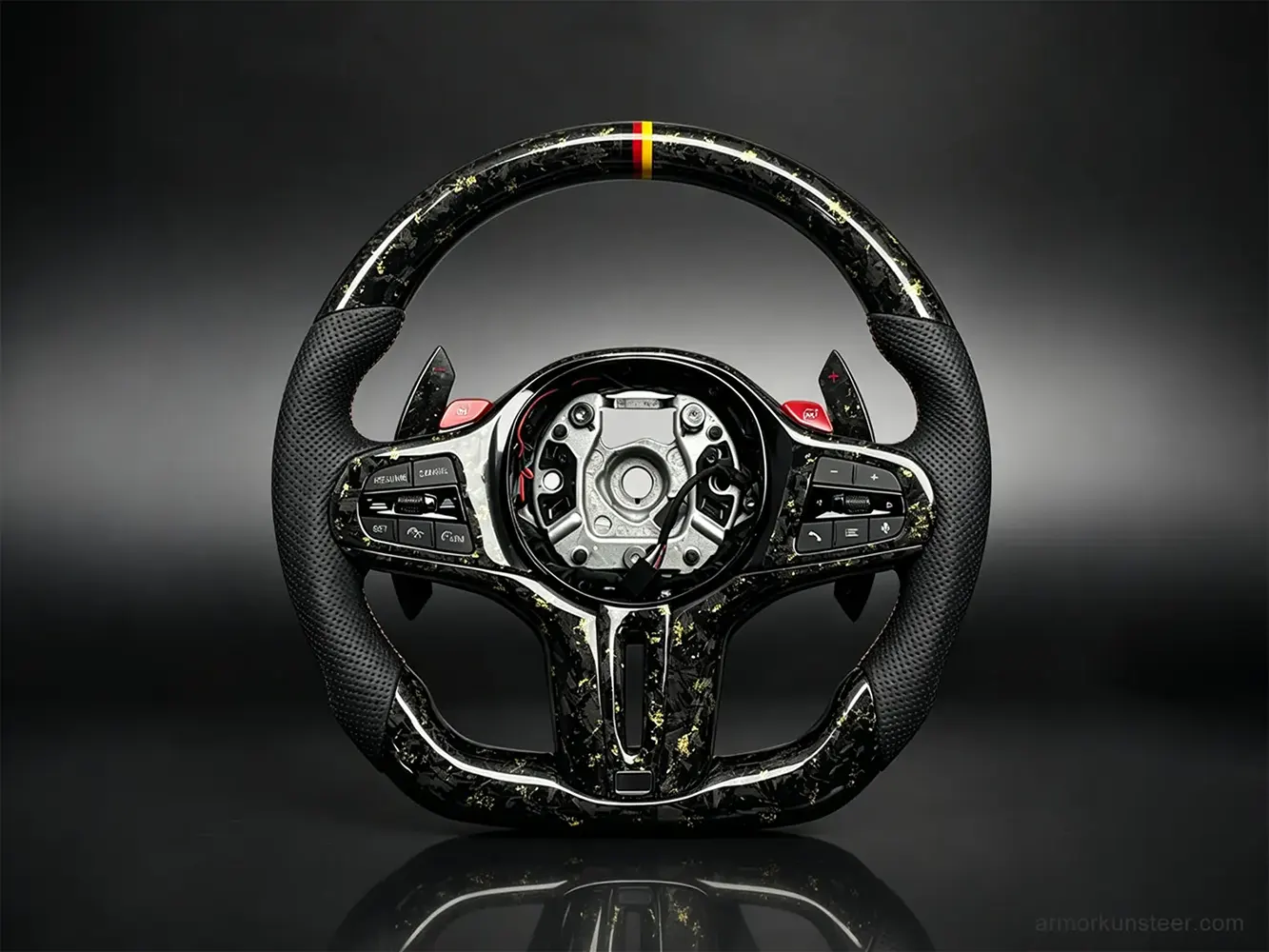
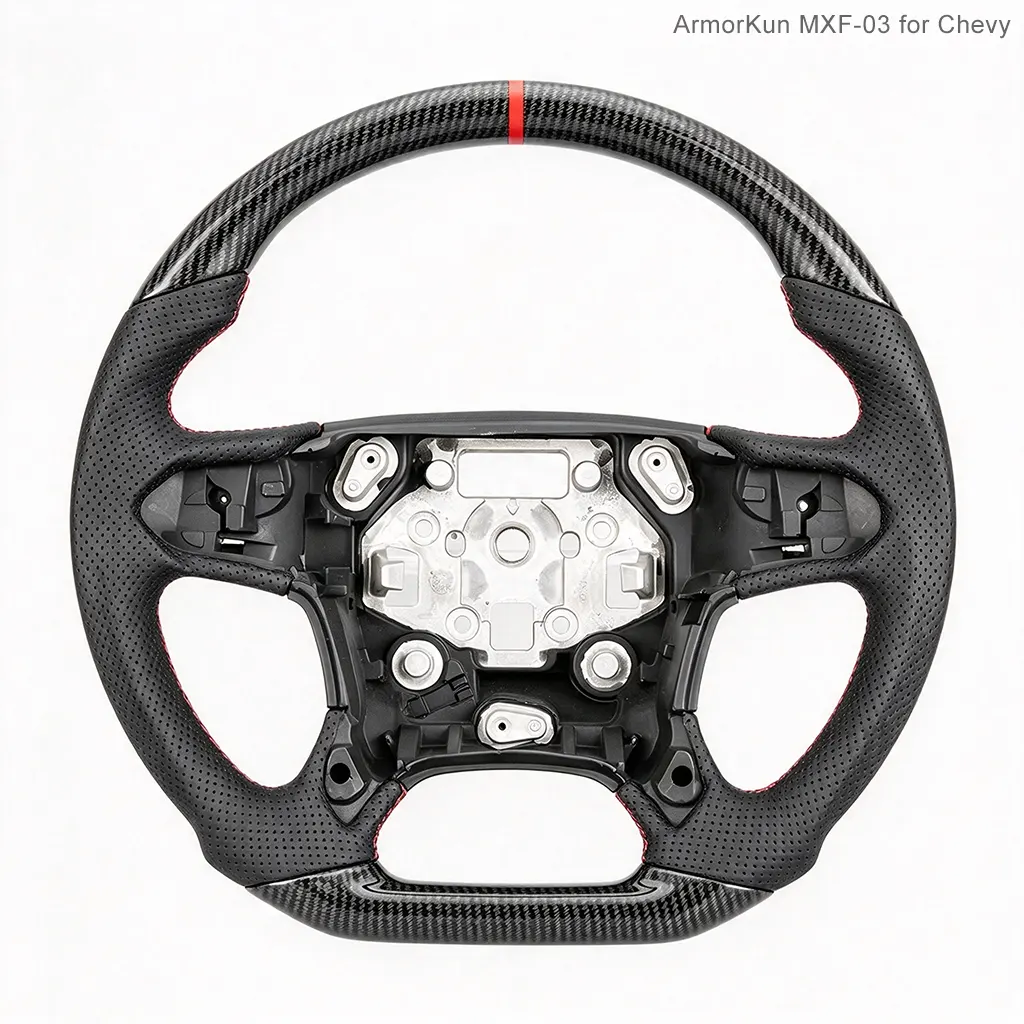
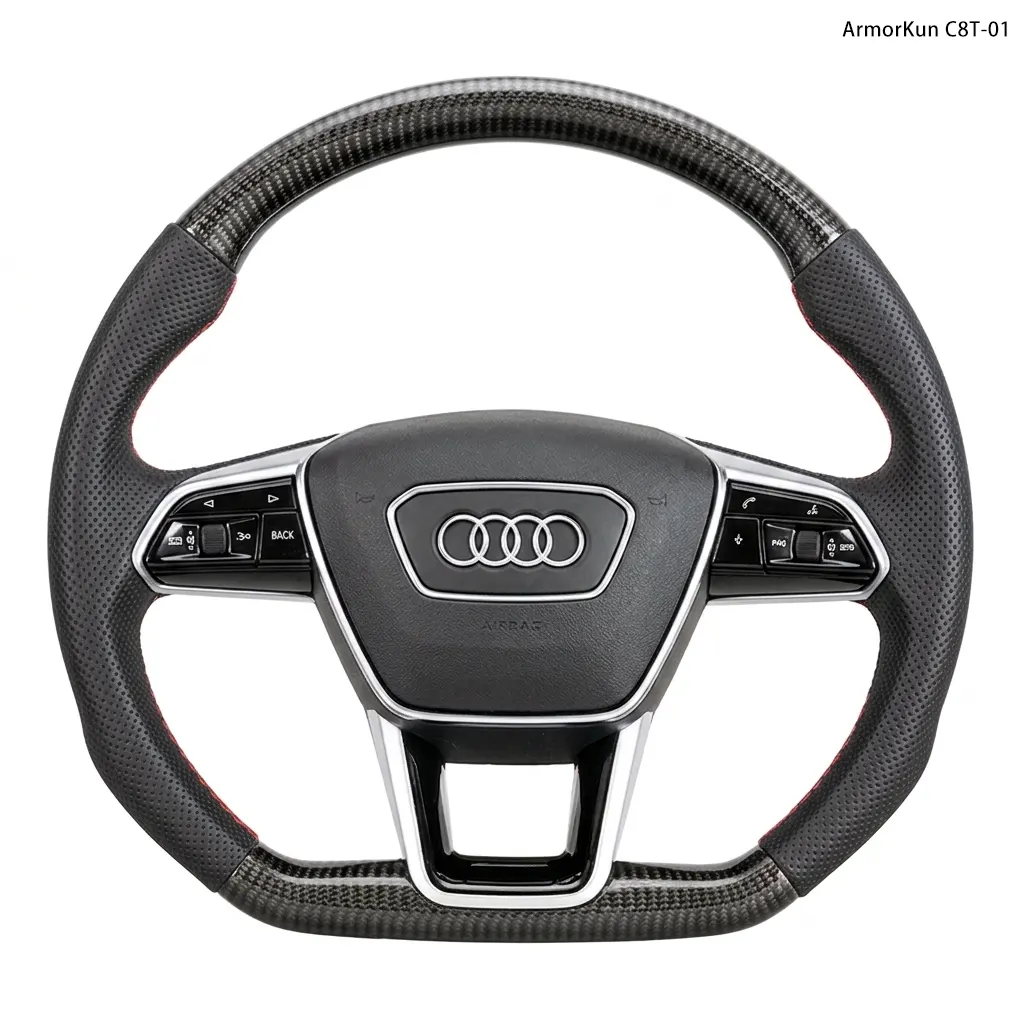
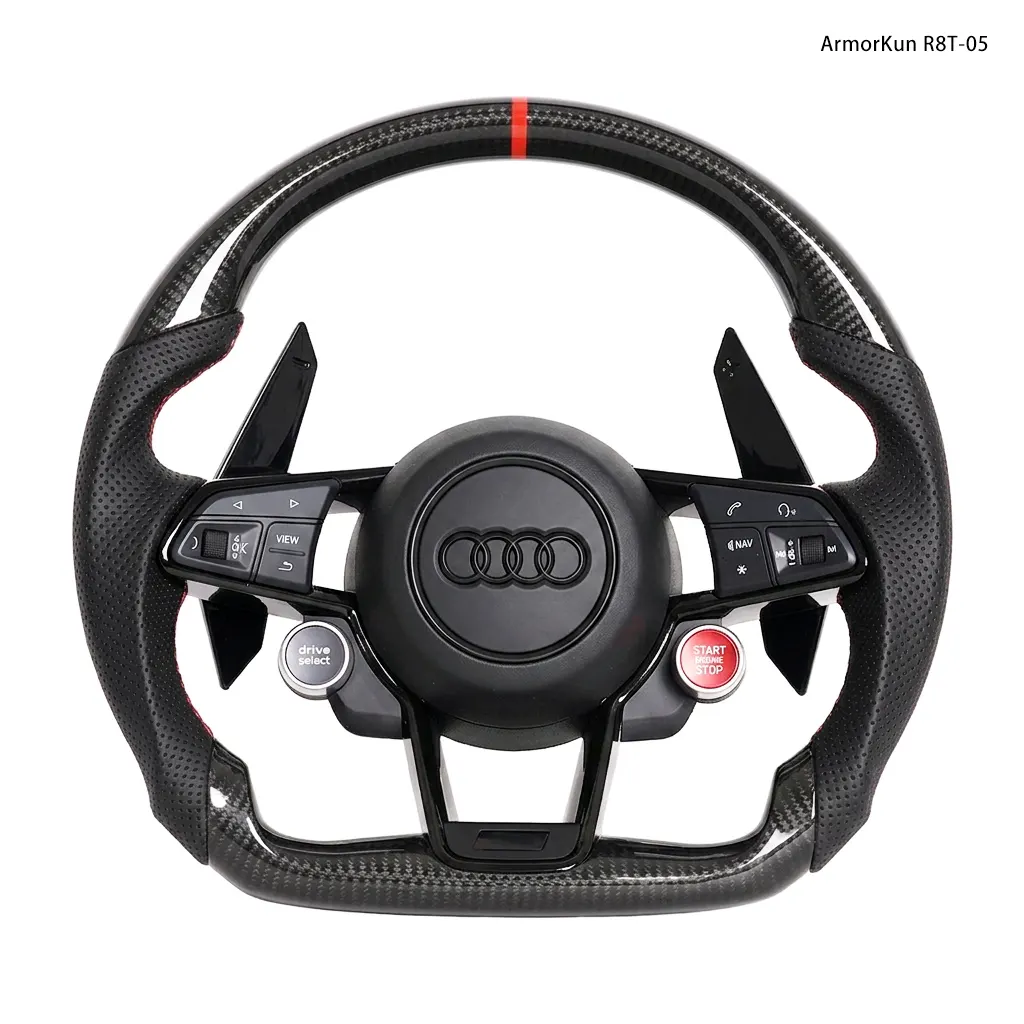
Carbon fiber may look impressive in a studio photograph, while differences in weave, surface finish, resin quality, panel alignment, and edge finishing become obvious in person.
The same applies to leather.
The supplier should not use general terms like “premium leather” to identify the type of leather. When purchasing an Alcantara-style product, it’s important to note that the material can be Alcantara, or a product that mimics it but isn’t considered Alcantara.
And then there is stitching.
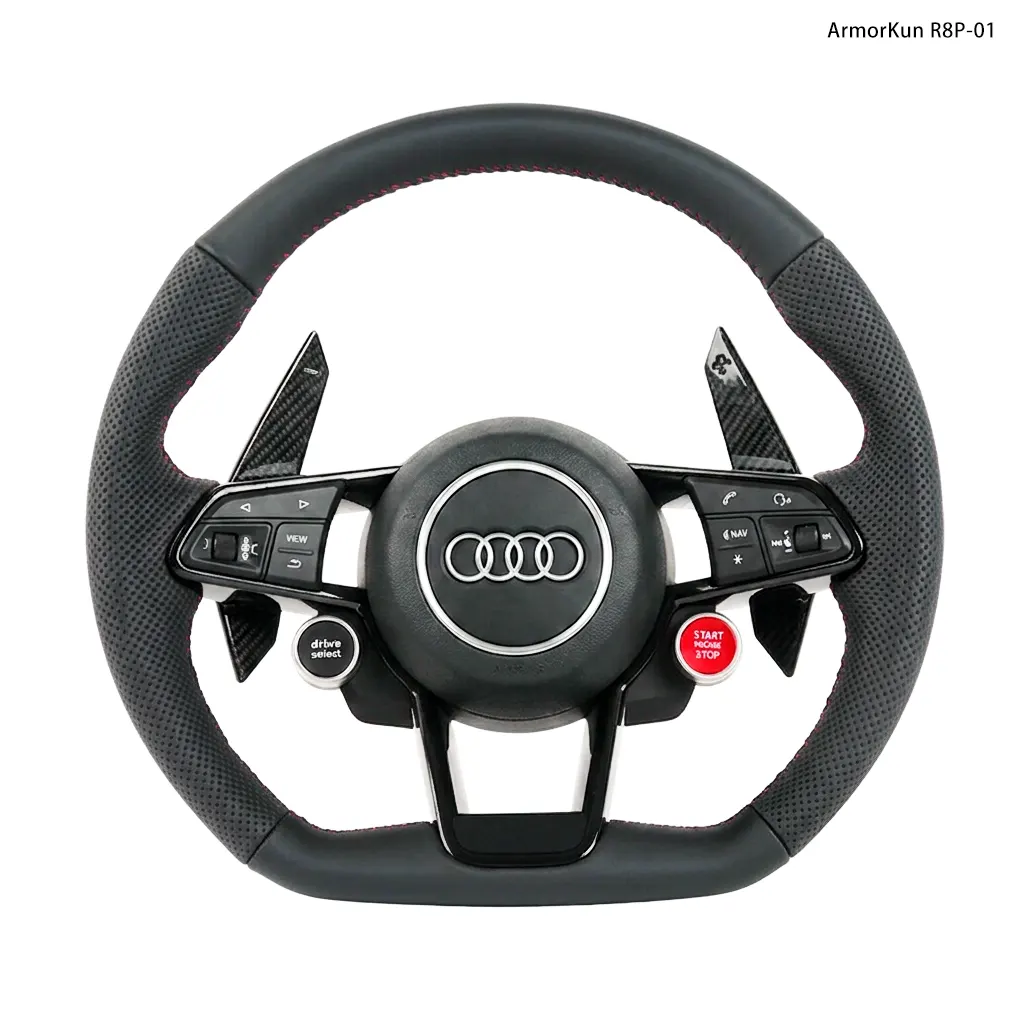
Small inconsistencies around the 12 o’clock marker, spoke transitions, seam alignment, or perforated leather sections can make a supposedly premium steering wheel look inexpensive.
We always recommend evaluating a physical sample before approving a new product line.
Safety and Compliance Cannot Be an Afterthought
This deserves a separate section because the steering wheel sits next to one of the vehicle’s most important restraint components.
NHTSA states that changes to a steering wheel or airbag system can affect vehicle compliance and safety. Its guidance also emphasizes that modifications involving steering wheels and airbags require appropriate care and manufacturer information.
There is an important distinction here.
A custom steering wheel shouldn’t be considered a glue-on decal that covers any airbag cover. In May 2024, NHTSA expressly stated that some aftermarket steering wheel decals can come off during airbag deployment, resulting in serious injuries.
The simple answer for commercial buyers is to inquire at the manufacturer of how its products are engineered around the original systems of the vehicle, what parts are left in place, what installation details are included and what the customer is responsible for while fitting the systems in place.
Never choose a supplier purely because its product is cheap.
What Does a Good Aftermarket Steering Wheel Supplier Offer?
A reliable supplier should offer more than a product catalog.
For a growing automotive aftermarket business, we would look for four layers of support.
Product selection. The supplier should cover popular vehicle platforms while also offering differentiated designs rather than dozens of near-identical products.
Customization. A manufacturer should be able to modify materials, colors, stitching, trim, grip design, center markers, paddle shifters, and other agreed specifications.
Technical communication. Questions about vehicle fitment should receive specific answers rather than generic statements.
Production consistency. The second order should look like the first order unless the specification has changed.
That final point is frequently underestimated.
A supplier who can make one beautiful sample is not necessarily a reliable production partner.
How Much Should You Compare Price?
We would not start with price.
Instead, calculate the landed cost.
If the steering wheel is priced at $180 and you factor in the international freight, customs, damaged steering wheels, replacement parts, inspection costs, repackaging, and customer returns, the cost will add up dramatically.
At the other end of the scale, a $210 product may have lower defects and a more precise fitment information that create better margins.
From its 2024 industry research, SEMA found that over 50 percent of aftermarket manufacturers responded with price increases and almost 90 percent saw rising supplier costs as a significant factor.
So buyers should request a complete quotation covering:
Unit price
MOQ
Sample cost
Sample lead time
Production lead time
Packaging
Shipping terms
Customization charges
Tooling or development charges
Replacement policy
Payment terms
Then compare suppliers using the same specification.
Otherwise, you are not comparing prices.
You are comparing different products.
Where Can You Find Aftermarket Steering Wheel Manufacturers?
There are several practical sourcing channels.
Manufacturer websites are useful when you already know the type of product you need. Look for factory information, production capabilities, technical documentation, product development examples, and clear contact information.
Automotive trade shows can be more helpful, if you’re involved in multiple companies and desire to meet them all within a short period of time. To give perspective on the size of the automotive specialty-equipment supply chain, over 2,400 exhibitors and more than 160,000 attendees came to the 2024 SEMA Show from 140 countries.
Industry directories and sourcing platforms will help for initial discovery but we would not consider platform profiles as manufacturer capabilities.
Word of mouth from distributors and installers can also be helpful as they are already dealing with the hands-on aspects of fitment, defect, warranty and delivery performance.
Most effective sourcing technique typically uses multiple channels.
A Practical Shortlist for Wholesale Buyers
Once you have identified several aftermarket steering wheel manufacturers, reduce the list to three to five candidates.
Then send every candidate the same RFQ.
Include:
Vehicle makes and models
Model years
Estimated monthly quantity
Preferred steering-wheel designs
Materials
Customization requirements
Target market
Packaging requirements
Sample requirements
Required delivery schedule
Now compare the responses
Not just the prices
Look at how precisely each manufacturer answers technical questions. A detailed response often tells you more than a beautifully designed website.
It is typically best to begin with a small sample order, rather than taking a potentially big mixed inventory order, when launching a new automotive brand or contending in an online reseller.
Questions to Ask Before Placing Your First Order
There is a bewildering amount of issues that can arise during a short supplier interview.
Ask:
Are you the manufacturer or a trading company?
Where are your steering wheels produced?
Which vehicle platforms do you currently support?
Can you provide samples before bulk production?
What is your standard MOQ?
Which components can be customized?
How do you verify vehicle fitment?
What quality inspections are performed before shipment?
What happens if a batch contains defective products?
Can you maintain the same specifications for repeat orders?
A supplier that answers these questions clearly has already passed an important first test.
FAQs
What are aftermarket steering wheel manufacturers?
Aftermarket steering wheel manufacturers are the companies that are responsible for manufacturing and designing replacement or customized steering wheels for vehicles that aren’t part of the original dealership’s supply chain. They produce full wheels or bespoke parts for vehicles ranging from various trim levels, jigsaw shapes, materials and electronics, through to performance based designs.
Where to find a reputable aftermarket steering wheel manufacturer?
The most effective method for identifying a reliable steering wheel manufacturer is to check out their manufacturing capability, product development history, fitment experience, quality control, prototype process, customization capabilities, capacity and after-sales service. Buyers should always ask for technical information and physical samples before basing their purchase on an online catalog, photograph or low quotation.
What’s the difference between a steering wheel manufacturer and a supplier?
A supplier may manufacture products or resell products provided by another company, or a steering wheel manufacturer may control some or all of the design, production, assembly and quality inspection of the product. The difference is relevant because if a product can be made directly, it can be easier to customise, communicate technically, control quality and quickly introduce repeat orders.
What questions do I need to ask an after market steering wheel manufacturer?
The following questions need to be addressed by the buyer: MOQ, sample availability, production lead time, vehicle fitment, material, customization, quality inspection, packaging, defect handling, consistency of repeat orders. If using a vehicle specific steering wheel: Give exact model, year, chassis info (if available) and pictures of original steering wheel to minimize compatibility mistakes.
But are aftermarket steering wheels safe?
Modifying a steering wheel can affect the restraint and airbag system of a car; therefore, an aftermarket steering wheel needs to be carefully evaluated. NHTSA has cautioned that airbag or steering wheel modifications made incorrectly can pose safety problems for the vehicle, and has asked consumers to consult with qualified installers or manufacturers that are equipped with the proper product and installation information.
Is it better to purchase directly from a steering wheel factory?
When customers require customization, technical support, product development or repeat production, they may benefit from direct purchases from a steering wheel factory. But it is not always best to use direct sourcing and the manufacturer will still have to produce good and consistent quality goods, correct fitment data, sufficient capacity, and professional communication.
The Real Test Is the Second Order
This is a rule we have for judging manufacturers: don’t assess a factory based on one’s initial sample.
The first: designed to impress.
The 2nd order shows the supplier.
Are the stitches even? Is the carbon panel axis in line? Will the same leather be used? Are the dimensions in tolerance? Are the correct components installed? Is the manufacturer responsive when a problem is evident?
It’s not about whether a supplier has 500 products available on their website, it’s about those questions.
According to SEMA’s 2025 research, the U.S. automotive specialty-equipment market generated $52.65 billion in consumer spending for 2024. Of course, there’s no money to be made in the cheapest steering wheel, but there is opportunity for businesses to be rewarded when the opportunity presents itself.
The more effective way for distributors, repair dealers, automotive manufacturers and resellers is to establish a relationship with the manufacturer whose supplier is based on fitment accuracy, product differentiation, consistent manufacturing, customization capability and repeat production.
If you’re shopping for custom or aftermarket steering wheels, ArmorKun can offer you product solutions for various vehicle platforms, materials, designs and customization needs. When sharing details of the vehicle models, target quantity, materials of choice and any other steering-wheel references, we can help guide you to the right product direction as well as the sampling plan.
Leo Wu Industrial Design Manager 10+ Years in Automotive Steering Wheel Design Expertise: carbon fiber, Nappa leather, OEM development, performance steering wheels
Over 10 years of experience in steering wheel development, premium materials and OEM manufacturing, Leo Wu is an automotive interior expert. Strictly cooperates with ArmorKun production teams, applies performance and focuses on steering wheel design and construction, leather processing and high-level function integration, in luxury cars and sports vehicles.







 English
 German
 French
 Italian
 Dutch
 Russian
 Polish
 Spanish
 Arabic
 Japanese
 Korean