Armorkunのエンジニアに話しかけてください
年中無休24時間体制のサポート
プロジェクトの詳細をお知らせいただければ、弊社のチームが約20分以内に明確な見積もりと実践的な提案をご提示いたします。
プロジェクトの詳細をお知らせいただければ、弊社のチームが約20分以内に明確な見積もりと実践的な提案をご提示いたします。

ArmorKunエンジニアリングチームによるレビュー
Heated steering wheels are now an option for many vehicles, including those that aren't factory-installed. This guide covers the engineering, compatibility, wiring, expenses and possible surprises associated with a successful heated steering wheel retrofit.
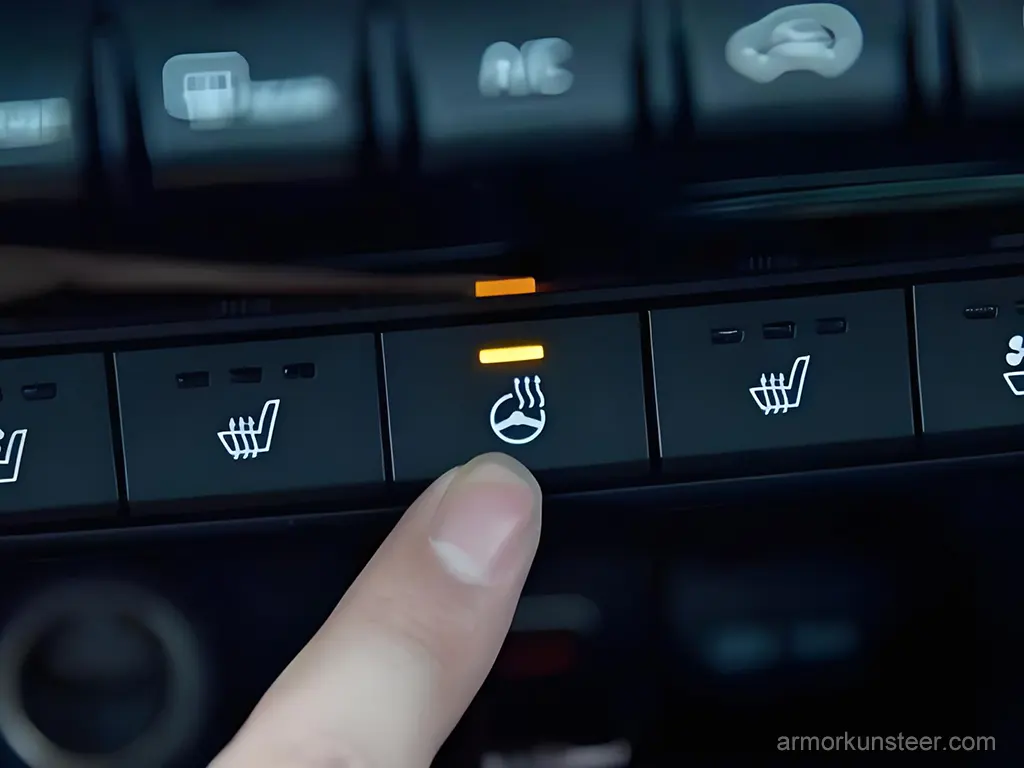
We’ve seen hundreds of steering wheel upgrades in the last decade and this fallacy never goes away – it’s as if they think you can just replace the old steering wheel with a new one. It rarely is. Modern cars are connected with steering controls via CAN Bus, LIN communication, steering angle sensors, body control module (BCM), airbags, clocksprings, and software coding. If you do not have one part the heating function is basically useless. It will just be a costly decoration.
So can you put a steering wheel in a car?
Yes you can do this provided the cars electrical system’s able to handle a heated steering wheel.
Many installers advertise every heated steering wheel conversion kit as “plug-and-play.” I disagree. That’s marketing language, not engineering language.
A genuine heated steering wheel retrofit typically falls into three categories:
| Retrofit Type | Difficulty | Typical Cost | Reliability | Best For |
|---|---|---|---|---|
| OEM heated steering wheel upgrade | 高い | $800–$2,500 | 素晴らしい | Vehicles already supporting factory options |
| Aftermarket heated steering wheel | 中くらい | $400–$1,500 | Good | Older vehicles without factory support |
| Universal heating element installation | 中~高 | $150–$600 | Fair | Budget projects and classic cars |
The difference between success and failure almost always comes down to electronics—not leather or carbon fiber.
I learned this after seeing retrofit shops replace perfectly good steering wheels, only to discover that the vehicle lacked the required Body Control Module configuration. The wheel heated perfectly on the workbench. Inside the vehicle? Nothing happened.
That isn’t unusual.
Vehicle manufacturers develop a steering wheel as a smart module instead of a mechanical piece.
A modern heated steering system commonly includes:
Without one or more of these components your retrofit heated steering wheel project instantly becomes more difficult.
Most of the newer GM platforms tend to have greater retrofit potential, as do the BMW F-Series, メルセデス・ベンツ W213, アウディ B9, ポルシェ 992, and トヨタ Land Cruiser 300.
Older economy vehicles frequently do not.
Short answer.
OEM isn’t automatically better.
People often assume an OEM heated steering wheel upgrade is always the safest choice. Mechanically, that’s true. Financially, not necessarily.
| 要素 | OEM Retrofit | Aftermarket Heated Steering Wheel |
|---|---|---|
| Factory appearance | 素晴らしい | Excellent to Very Good |
| Integration | Full | Depends on vehicle |
| Software coding | Usually required | Sometimes avoided |
| 料金 | より高い | より低い |
| Custom materials | 限定 | 広範囲にわたる |
| Carbon fiber options | レア | 一般 |
| Installation complexity | 高い | 中くらい |
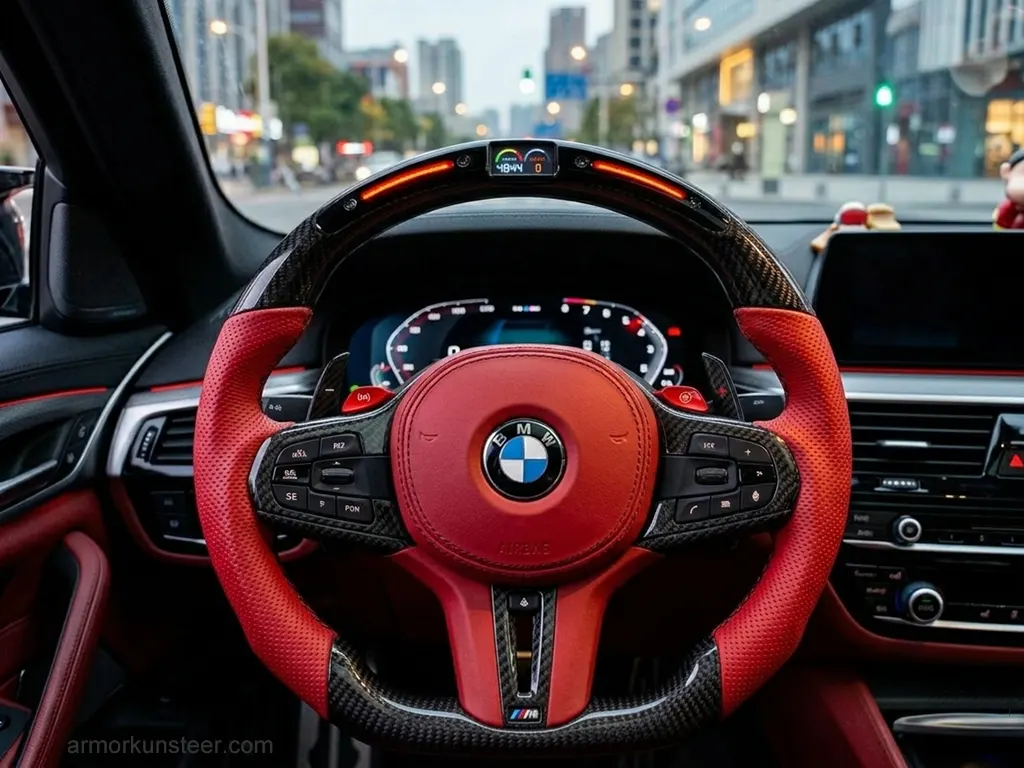
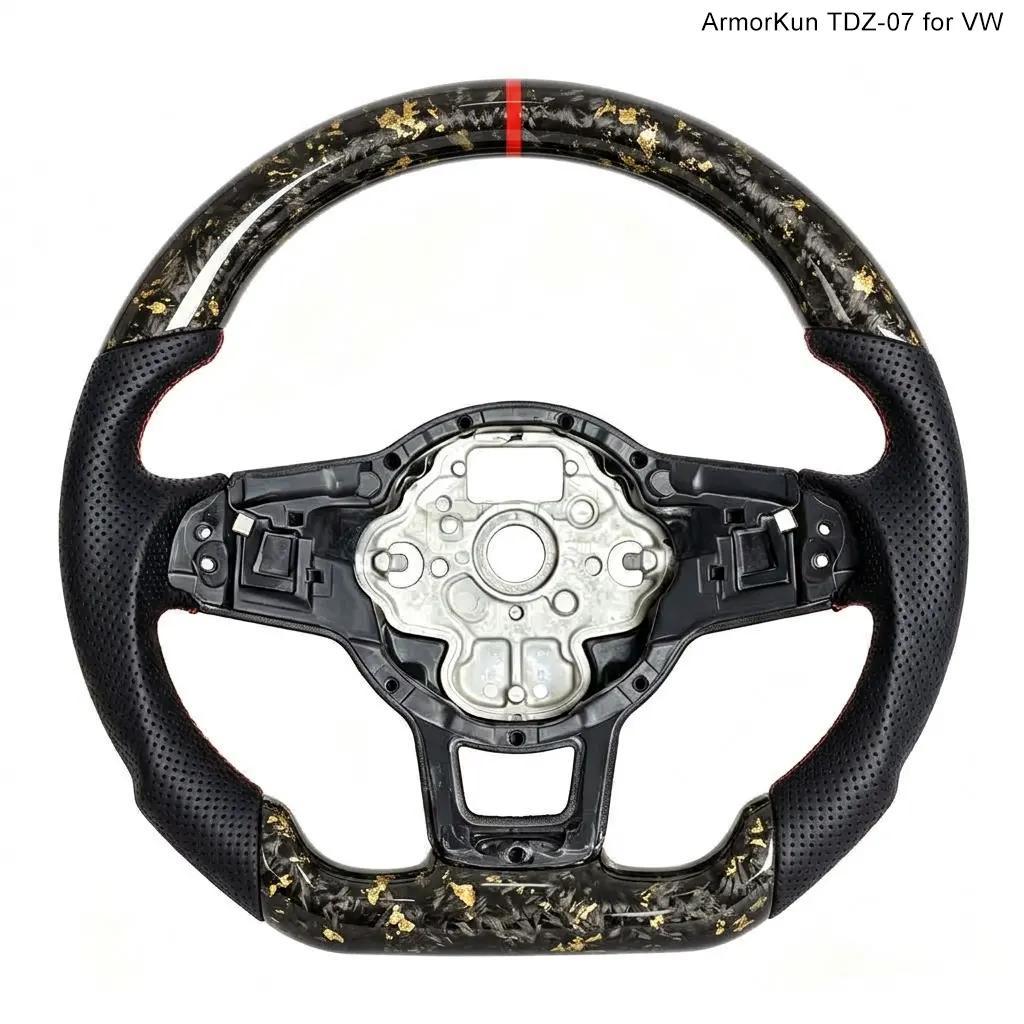
These are now using forged carbon fiber, Nappa leather, Alcantara and LED shift indicators and integrated heating elements that are now comparable to factory-installed.
But the question isn’t OEM vs. aftermarket.
It’s whether your vehicle can support either solution without electrical compromises.
Here’s the uncomfortable truth.
The steering wheel itself is rarely the problem.
The wiring is.
Most failed installations happen because installers underestimate the heated steering wheel wiring harness requirements.
Heating elements typically draw between 30W and 60W depending on ambient temperature control and resistance values.
That current must safely pass through:
Vehicles without factory heating often lack the necessary conductors inside the clock spring altogether.
Installing a heated wheel onto a non-heated clock spring almost guarantees failure.
This surprised many technicians.
The global semiconductor shortage was affecting cars from General Motors, including those for 2022-2023 which were being shipped with heated steering wheels but no heated steering wheels. GM finally launched an official Heated Steering Wheel Retrofit Program to replace the steering wheel assemblies as they became available. The program included several Cadillac, Chevrolet and GMC and Buick models retrofitted by the dealers, and it shows that even the manufacturer has a structured retrofit procedure and not just a simple software install. GM’s customer satisfaction program provides replacement steering wheel assemblies for eligible vehicles, the official NHTSA service bulletin said. (NHTSA)
That tells us something important.
Even OEM engineers consider steering wheel heating a system—not merely a steering wheel.
People usually ask for installation steps.
I think they should ask different questions first.
Only after those answers are known should installation begin.
A simplified workflow looks like this:
Skipping software coding is often why heating never activates.
Pricing varies dramatically.
| Component | Typical Price (USD) |
|---|---|
| ヒーテッドステアリングホイール | $300–$1,200 |
| Clock spring | $120–$600 |
| Wiring harness | $50–$250 |
| Control module | $80–$350 |
| Switch assembly | $30–$180 |
| Coding | $100–$400 |
| Professional installation | $250–$800 |
Complete projects typically range between $900 and $2,500 depending on vehicle complexity.
Luxury German vehicles usually sit at the upper end.
Experience matters.
Not because removing an airbag is especially difficult, but because diagnosing communication faults requires manufacturer-level diagnostic software.
The biggest mistakes include:
We’ve seen projects delayed for weeks because one connector had two fewer pins than expected.
That’s all it took.
Yes. Most cars can have a heated steering wheel added if they have compatible steering electronics, wiring, clock spring, control modules and software. Some versions require replacement of the hardware and others are more complex and involve extensive changes to the electric wiring and programming of the ECU to ensure the unit works correctly to heat the vehicle.
A heated steering wheel retrofit is the process of installing compatible steering wheel heating hardware, electrical components, wiring and factory software calibration to achieve the same level of heating performance as a vehicle shipped with a factory-installed steering wheel heating system.
Yes. It is possible to build a high-quality aftermarket heated steering wheel that is just as reliable as the factory wheels, if it features automotive-grade heated elements, good leather or carbon fibre, good insulation and is professionally installed with quality electrical components.
Usually, yes. Many vehicles will need the additional hardware and parts necessary for the heated steering wheel conversion kit, although a steering wheel conversion kit includes the major hardware that needs to be installed.
Installation times of 4-8 hours are typical for most professional installations, depending on vehicle architecture, electrical complexity, program requirements, and replacement of additional components, such as the BCM and/or steering column wiring.
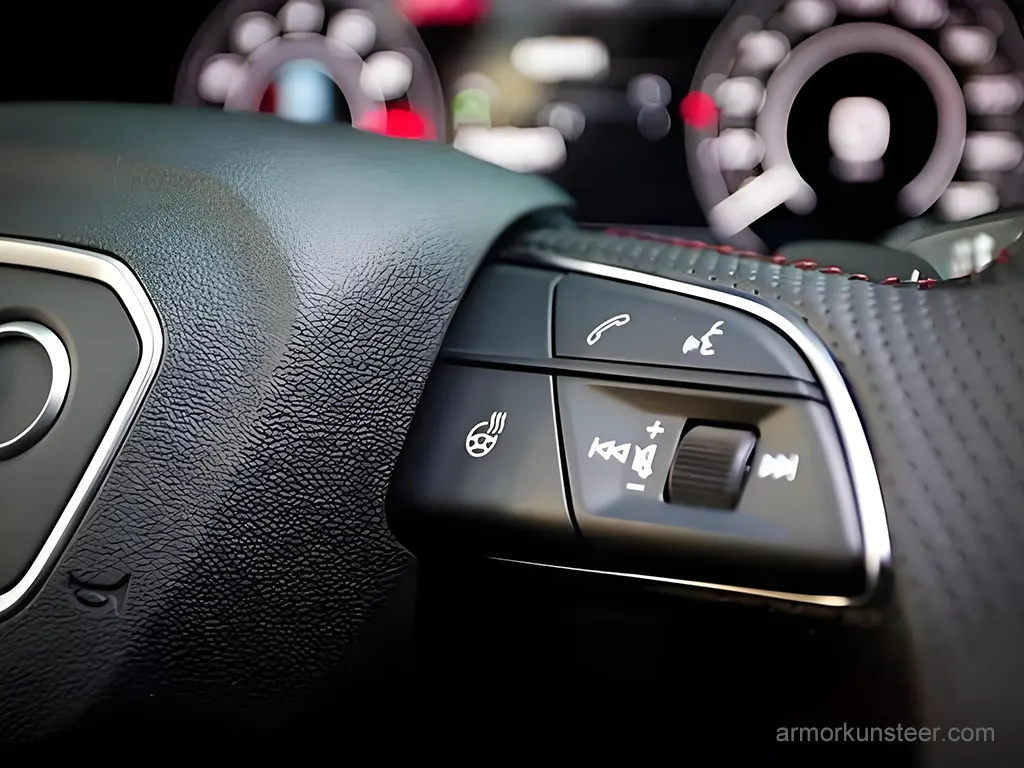
I don’t believe that the primary issue of finding a heated steering wheel is any longer around.
The real challenge is comprehending all that lies behind it.
If you want to switch to a heated steering wheel, don’t pick leather, carbon fiber or price, but vehicle compatibility instead. Once you have the electrical architecture set, you can make an easy engineering decision between OEM heated steering wheel or high quality aftermarket heated steering wheel without having to guess at all the costs.

レオ・ウー
インダストリアルデザインマネージャー
自動車用ステアリングホイール設計における10年以上の経験
専門分野:カーボンファイバー、ナッパレザー、OEM開発、高性能ステアリングホイール
ステアリングホイールの開発、高級素材、OEM製造において10年以上の経験を持つレオ・ウーは、自動車内装のエキスパートです。アーマークンの製造チームと緊密に連携し、高級車やスポーツカー向けに、ステアリングホイールのデザインと構造、皮革加工、高度な機能統合に重点を置き、性能向上に取り組んでいます。
ステアリングホイールエンジニアにお問い合わせください




どのステアリングホイールがあなたの車に適合するかわかりませんか?
当社の自動車エンジニアは、生産前に互換性を確認するお手伝いをいたします。
 English English
 German
 French
 Italian
 Dutch
Dutch Russian
 Polish
 Spanish
 Arabic
 Japanese
 Korean