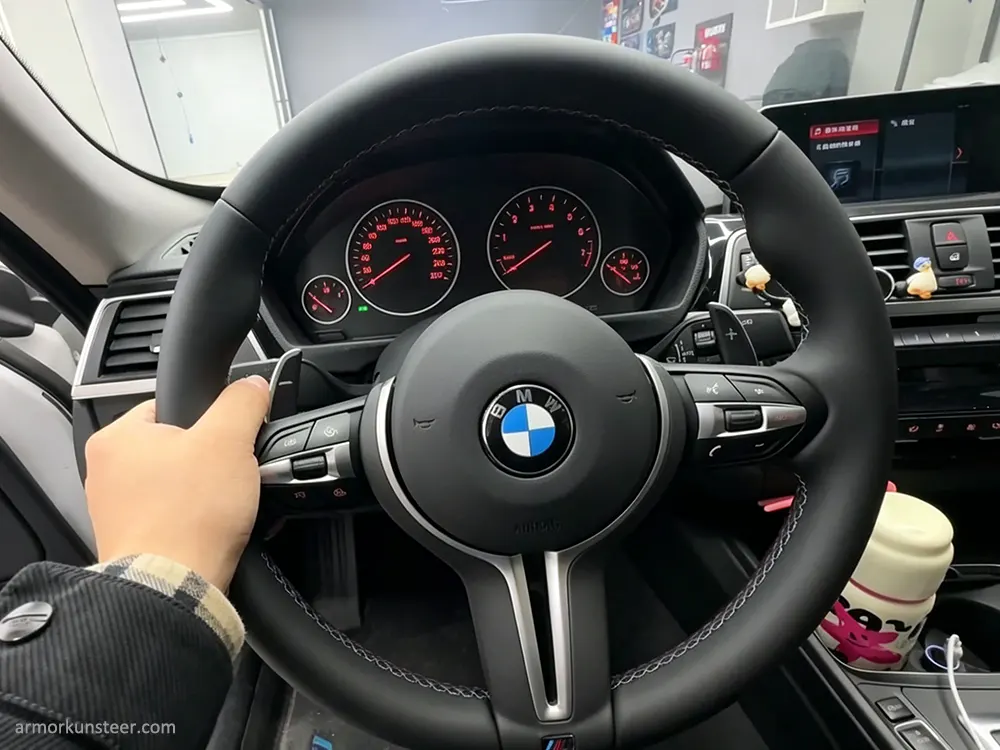
This write-up is accompanied by a video that shows how to install an aftermarket steering wheel, in this case the installation of a stock leather steering wheel from Armorkun on a BMW M3-Type. The inclusion of actual leather accents not only adds the car’s visual flair, but is also a perfect match for the BMW M3-Type’s inherent luxury styling. Additionally, the booklet handsomely details the method of switching out the usual gear selector for Armorkun’s gear-shift buttons, and this method is also light years ahead by adding a cruise control feature.
Key Insights
- A car’s interior can undergo a dramatic transformation with an aftermarket steering wheel in just a matter of minutes.
- Disconnecting the battery is important to prevent accidental airbag deployment and other safety precautions are important.
- To install the new steering wheel, you need to remove the previous wheel and install a new wheel with a special car-specific hub adapter.
- The Armorkun steering wheel stands out for its quality and style, including its authentic leather exterior.
Preliminary Preparation and Safety Precautions
| Step | Action | Details/Notes |
|---|
| 1 | Disconnect Power: Shut off the gas and set the parking brake—the most important precaution is to disconnected the negative terminal of the vehicle’s battery. | This is important to prevent accidental deployment as a result of a short circuit during disassembly, which could result in injury to the operator. |
| 2 | Tool Preparation:socket set and release tool | 16mm or 17mm socket (for the steering column bolt), and a 10mm socket (for the battery). Use a flathead screwdriver or an Allen wrench (to remove the airbag clips). |
| 3 | Lock the steering wheel | Before attempting to unscrew the mounting bolt, lock the steering wheel to ensure it won’t turn. |
Detailed Breakdown-How to Install An Aftermarket Steering Wheel
Step 1. Battery Disconnection
- An important safety precaution for not setting off the airbag system.
- Wait a few minutes after disconnecting to make certain that the system is de-activated.
- The second step is to remove the Steering Wheel Cover.
Step 2. Remove the Steering Wheel Cover
Lift and remove upper and lower covers of steering column using a pry tool or flathead screwdriver. Usually the covers are held in place by clips; they can be removed by firmly pulling or gently using a knife inside the lower edge of the cover to break the seal (do not damage the clips!);
Step 3. Release the Inflatable Side Window.
Turn the steering wheel 90° left or right to reveal the airbag’s retaining hooks on the reverse side of the steering wheel. Use a flathead screwdriver to gently insert the prying into the two hooks and, when you hear two distinct “clicking” sounds, the upper and lower clips will disengage, permitting the removal of the airbag module.
Note:
Please do not deconnect any of the connecting wires on the airbag during this procedure, and don’t do it when the electrical system is operating. After disconnecting the airbag plug, place the airbag module in a safe and secure location.
Step 4. Remove the Old Steering Gear.
- To remove the retaining bolt in the center of the steering wheel, use a 16mm socket.
- The steering wheel doesn’t usually come off automatically once the bolt is removed so at this point you need to install a steering wheel puller tool to take off the steering wheel. Apply equal tension to remove the steering wheel from the steering shaft by turning the puller’s screw.
- After you separate the two wires, remove the original steering wheel by disconnecting the main wiring harness plug.
Step 5: Pour New Steering Wheel
Fit the aftermarket steering wheel in the alignment position on the steering shaft as shown by the alignment mark. Be sure the threaded joining with the steering shaft is secure and then tighten the screws.
Step 6. Connect the Wiring Harness and Adapt the Paddle Shifter.
The new steering wheel’s wiring harness is usually wired directly to the original vehicle, if it was fitted with paddle shifters.
If the original car does not have paddle shifters (such as the lower-trim configuration in a steering wheel upgrade to an M3), the correct signal wire for the paddle shifters needs to be wired-in by itself. Insert the wire into the designated slot on the respective plug (e.g. third slot from position 1), using a TE terminal (or “DuPont connector”). Next, take the wire through steering column cover and run it down to the vicinity of the lower end of the passenger-side glove compartment to connect them.
Step 7: Reassembly and Testing
Hook the main steering wheel harness and airbag connector (black). Place the airbag module on top of and press firmly to hold the airbag module. Lastly, attach the two decorative covers (top and bottom).
Programming, Coding and Post-Calibration
Once the physical installation is complete, there should be software-level activation and calibration; otherwise the functions of the new steering wheel will not work properly:
Step 1: VO Code and Coding Activation:
Special codes are added with professional diagnostic equipment (e.g. E-SYS, ISTA, etc.) to the vehicle (e.g. 2TB, 544) and removed to the vehicle (e.g. 205). Once saved, these changes need to be programmed into certain modules—like the ICM and Kombi—to enable functions like cruise control, Sport+ mode and paddle shifters. For some vehicles with high-spec steering wheels that rely on the same factory communication system, the vehicles may just need to be activated with the vehicle software after connecting the wire from the steering wheel.
step 2: Sensor reset and alignment
After installation, the steering angle sensor value should be reset with the diagnostic tool, otherwise, the ESP warning light will be activated. A 4-wheel alignment and re-calibration of the power steering assist curve are highly recommended to make sure that the steering geometry parameters are fully original to factory specifications and to gain the handling potential of the upgraded steering wheel.
Core Concepts
| Term | Header |
|---|
| Aftermarket Steering Wheel | It is a steering wheel that is not provided by the car company, generally for style or performance purposes. |
| Clock Spring | Precision electromechanical interface installed on top of the steering column, with a flat ribbon (coiled, flexible in technical usage) to provide continuous electrical contact between airbag, horn and paddle shifter and all the way around the steering wheel. |
| Airbag Deployment | The sudden inflation of the airbag system in case of collision, which can be dangerous if triggered accidentally during maintenance. |
| Spacer | A component used to adjust the position of the steering wheel on the hub adapter for proper fitment. |
| Diagnostic Interface & Coding Tools | The digital key required to integrate the new hardware into the vehicle’s architecture, using the OBD port to update the FA with the correct VO codes and code modules like the ICM, thereby activating M1/M2 presets and paddle shift functionality so the wheel operates as a fully functional control interface rather than a static accessory. |
| Steering Angle Sensor | The DSC system’s primary reference point integrated within the column assembly, which tracks the steering zero position and requires a mandatory reset procedure after installation to prevent erroneous ESP interventions during straight-line driving or unintended power restrictions in track modes. |
Installing an aftermarket steering wheel offers several advantages
- Comfort and luxury: Provides a comfortable and luxurious experience for the occupants.
- Aesthetics: Provides good appearance by using genuine leather materials etc.
- Improved Feel: Many aftermarket wheels provide better grip or ergonomic design.
- Quick Installation: Simple and can be done with simple tools in a short time.
- Safety: Safety precautions (battery disconnection, etc.) are taken for a secure and safe upgrade.
Suggested guidelines for Buyers and Installers
- Always disconnect the battery before beginning to remove or install the steering wheel to prevent accidents, related to airbag activation.
- Make sure that the hub adapter fits your vehicle model.
- Assure the steering wheel and wheels are aligned when installing to ensure there are no steering problems.
- Test all electrical components, especially the horn, after installation.
- Try to match the interior accessories going with the steering wheel, like gear knobs, for a unified style.
| Component/Tool | Purpose |
|---|
| 10mm Socket Wrench | To disconnect the negative terminal of the vehicle battery. |
| Spline Screwdrivers | To remove the airbag retaining clips and decorative cover screws located on the back of the steering wheel. |
| Flathead Screwdriver | To pry open the clips securing the upper and lower steering column trim covers, as well as to assist in releasing the metal hooks that retain the airbag module. |
| 16mm Socket + Ratchet Wrench | Used to loosen the large retaining nut located at the center of the steering wheel. |
| Steering Wheel Puller | By rotating the lead screw to apply uniform pulling force, this tool safely separates the steering wheel from the steering column splines; under no circumstances should a hammer be used to forcibly strike the wheel. |
| Preset Torque Wrench | To tighten the central mounting bolt when installing a new steering wheel. |
| ENET Data Cable | It connects the vehicle’s OBD port to a laptop, providing a high-speed data transmission channel that serves as the physical medium for flashing FA files and performing coding operations. |
| Diagnostic and Programming Equipment | A laptop running ESYS or ISTA+ software. |
Conclusion
Using a stylish Armorkun leather steering wheel as our centerpiece, this guide walks you through a precise seven-step process designed specifically for the BMW M3 series. We’re here to show you how to swap in an aftermarket wheel safely and efficiently, ensuring your car’s SRS system stays completely secure throughout the upgrade. By sticking to the safety protocols and installation steps outlined here, any car enthusiast can give their interior a serious facelift in no time. We’ve also thrown in some pro tips on swapping the shift knob, highlighting just how far you can take your personalized cockpit setup. With a huge range of wheel styles and accessories available, plus global shipping that brings them right to your door, these upgrades are more accessible and appealing than ever for drivers around the world.














 English
 German
 French
 Italian
 Dutch
Dutch Russian
 Polish
 Spanish
 Arabic
 Japanese
 Korean