Assistance 24h/24 et 7j/7, 365j/an Partagez les détails de votre projet et notre équipe vous répondra dans une vingtaine de minutes avec un devis clair et des suggestions pratiques.
Mise en œuvre réussie de contrôleurs de direction multifonctions dans les véhicules de flotte
Examiné par l'équipe d'ingénierie d'ArmorKun
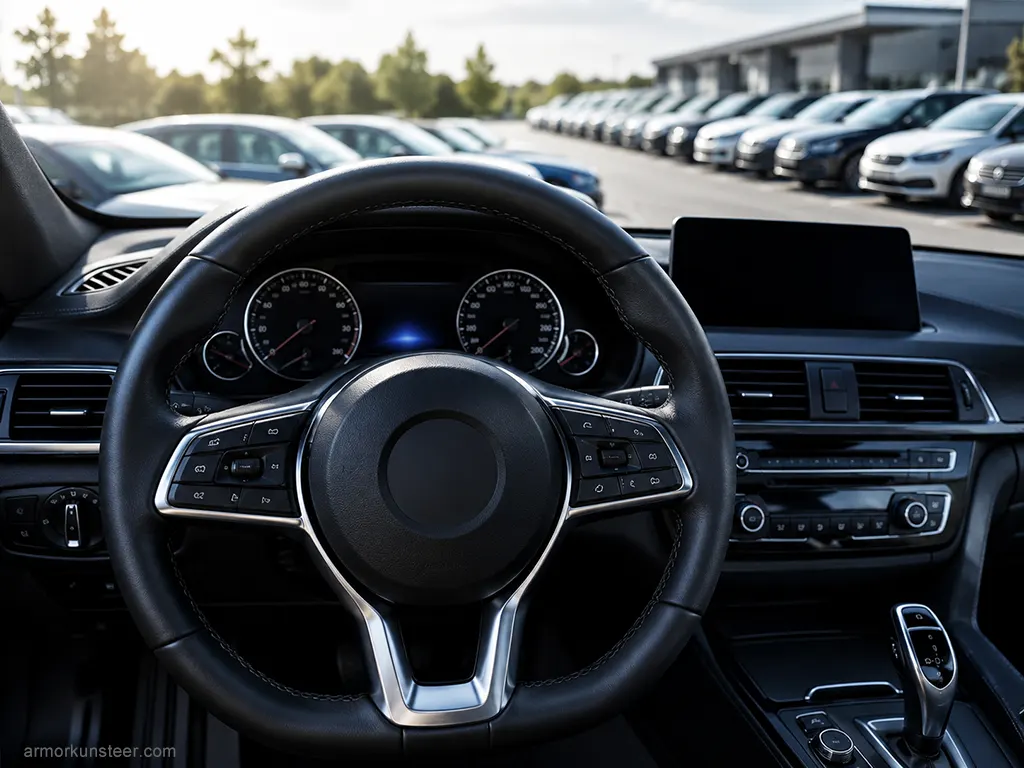
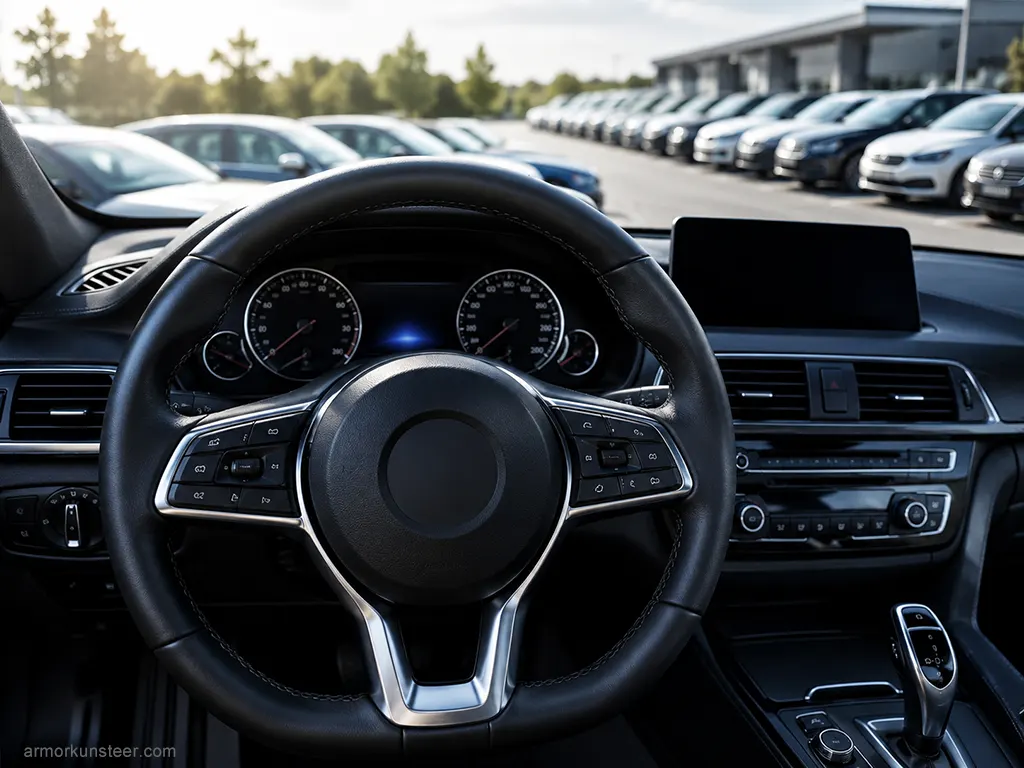
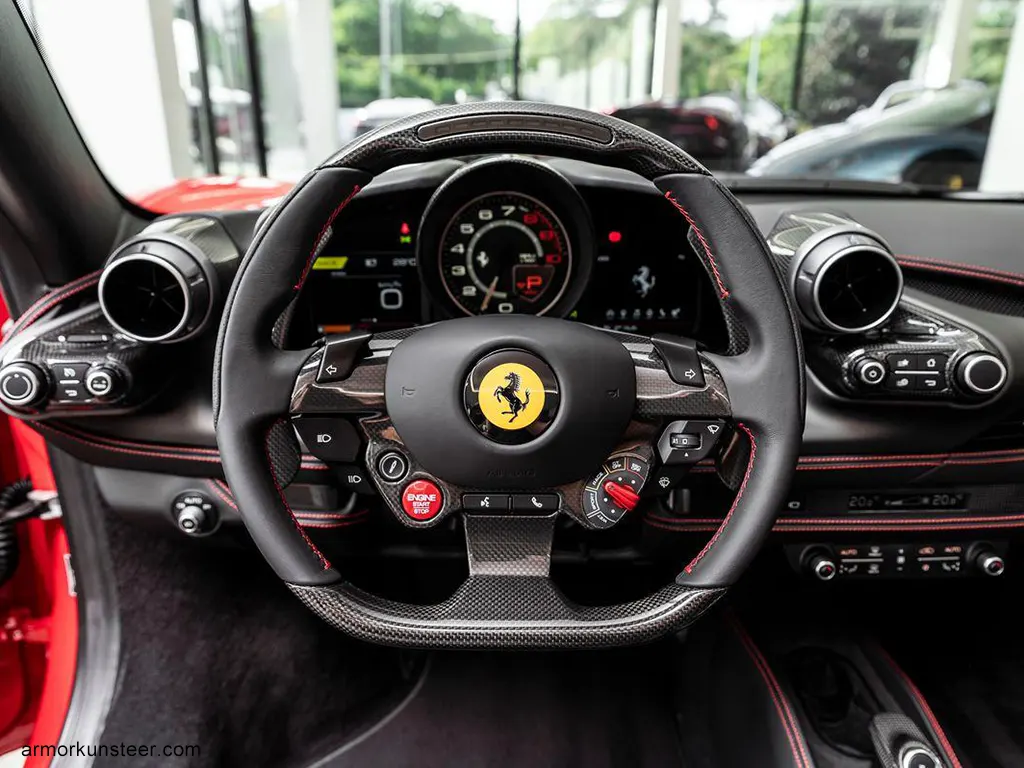
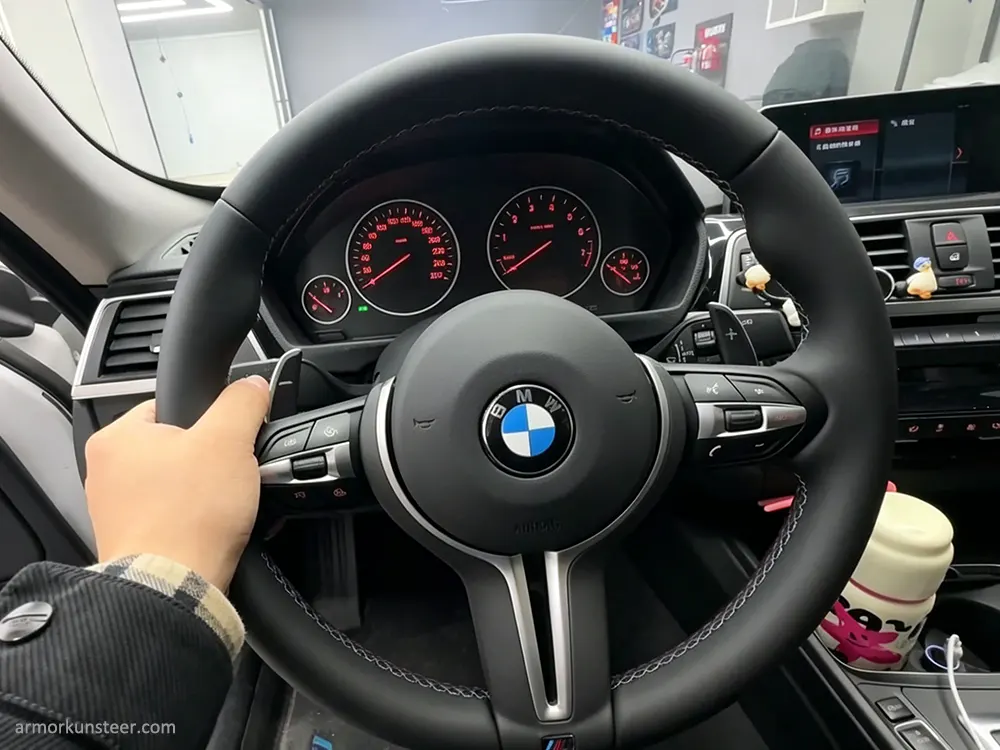
Les gestionnaires de flottes constatent que les commandes au volant ne sont plus un luxe. Correctement mises en œuvre, les commandes multifonctions au volant réduisent les distractions du conducteur, améliorent l'efficacité opérationnelle et génèrent des économies substantielles à long terme.
That sounds absurd until you spend time inside a commercial fleet operation where drivers enter and exit vehicles dozens of times per week, frequently interact with navigation systems, answer dispatch calls, adjust audio settings, and operate increasingly complex vehicle interfaces while moving through congested urban environments.
Why should a rental fleet care about steering wheel buttons?
Because every second a driver’s hand leaves the wheel introduces friction. Friction creates distraction. Distraction creates incidents. And incidents create costs.
I have seen fleet managers obsess over fuel cards, telematics subscriptions, and tire procurement contracts while ignoring one of the most visible driver interfaces in the entire vehicle: the steering wheel itself.
The hard truth? There are still plenty of fleet operators who see multi-function steering wheels as an extra feature. They are not.
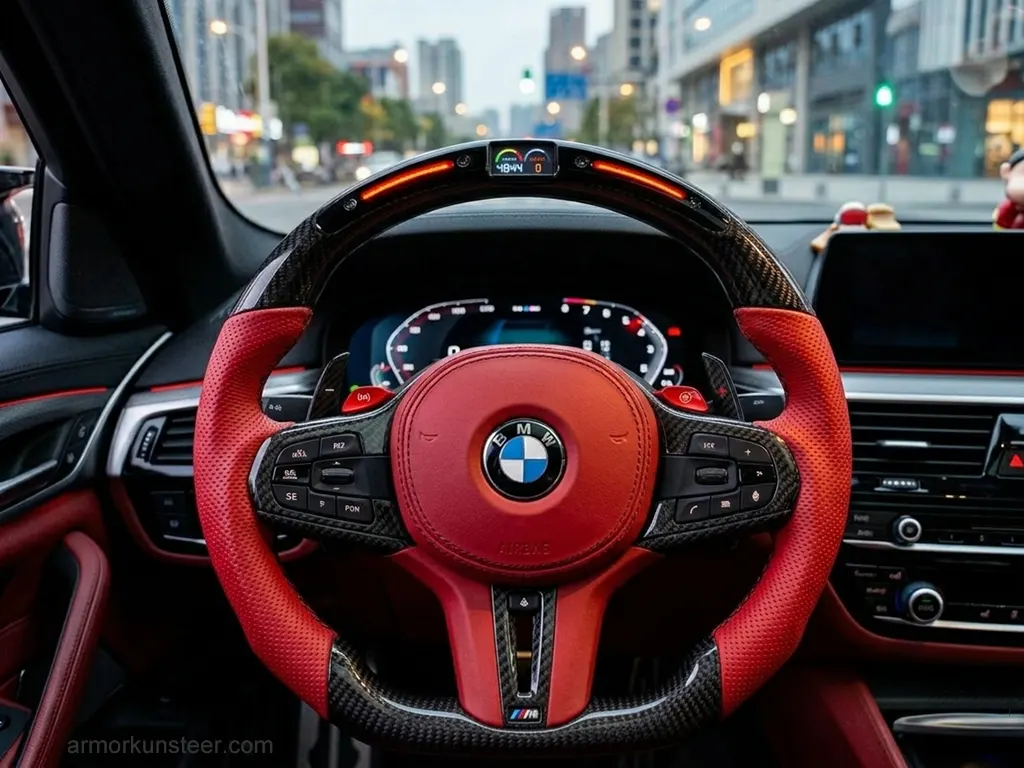
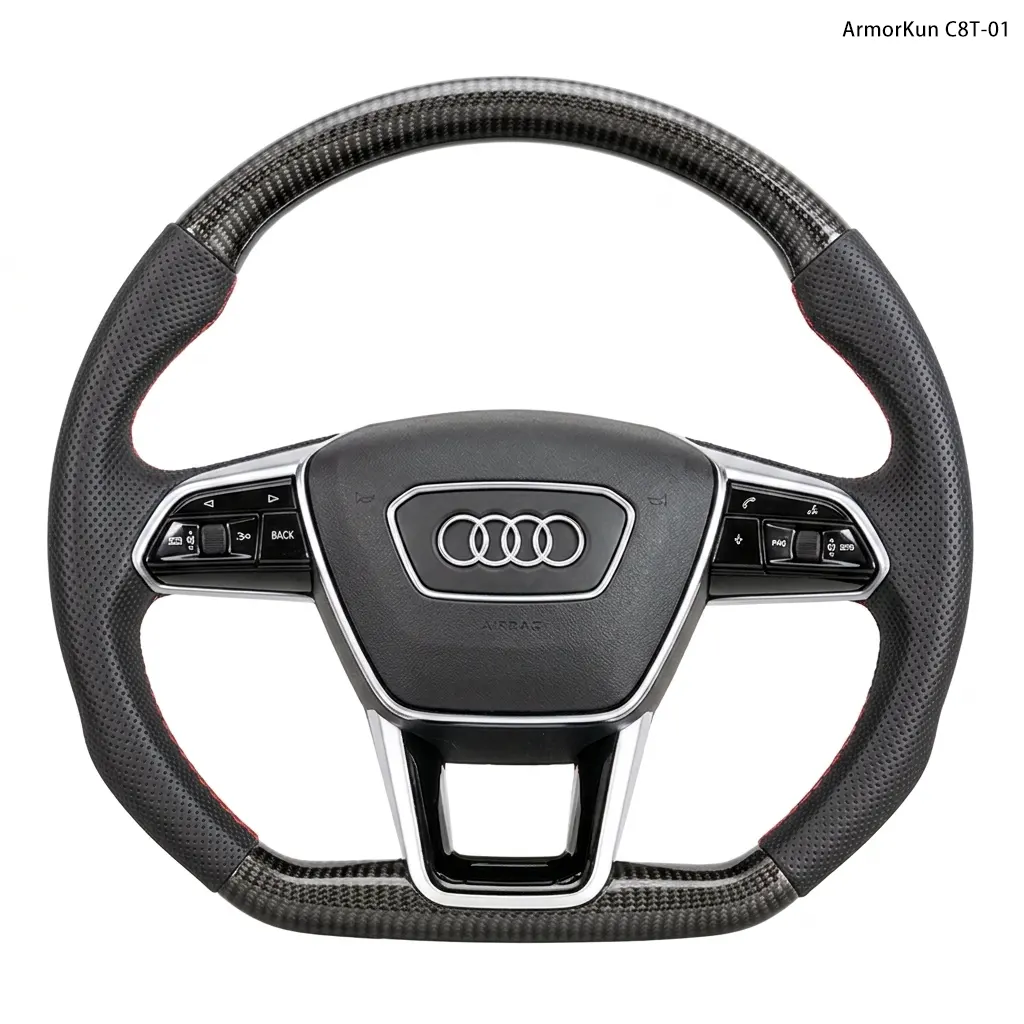
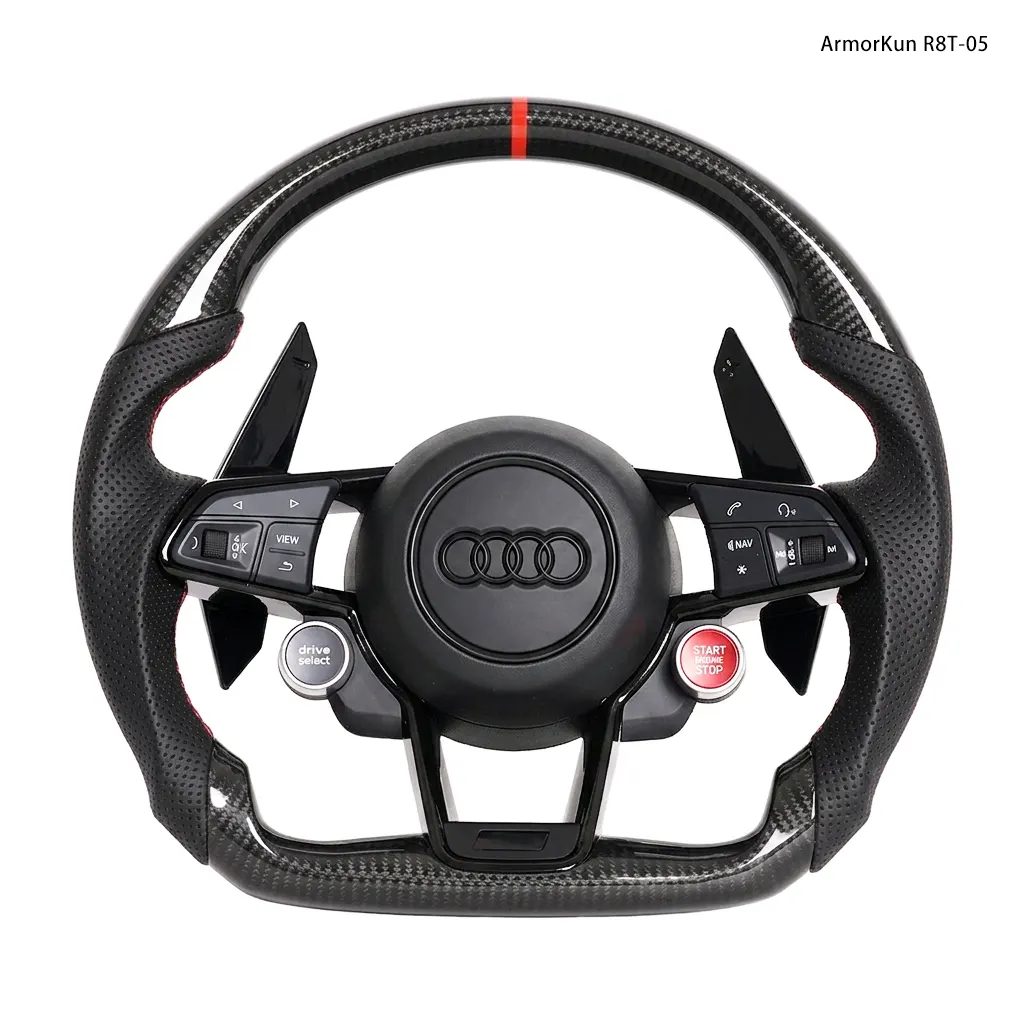
In the case of BMW, Mercedes-Benz and Audi fleets, the steering wheel controls are no longer a commonplace instrument, but rather one used for daily business.
Consider the numbers. The National Highway Traffic Safety Administration reports that there were 3,208 distracted driving deaths and over 315,000 injuries in 2024 in the United States. The agency also says some 8% of fatal crashes were caused by distracted drivers. (NHTSA)
As a fleet manager considers technology investments, minimizing driver distraction should be important.
And yet many aftermarket upgrade discussions focus almost entirely on appearance.
That is backwards.
The Fleet Industry’s Shift Toward Integrated Driver Controls
Ten years ago, steering wheel upgrades were largely enthusiast purchases.
Today, they are becoming operational infrastructure.
A growing number of rental companies, executive transportation providers, and vehicle subscription businesses are retrofitting older vehicles with enhanced control interfaces. The objective is simple: reduce driver workload while maintaining compatibility with modern communication and navigation systems.
In one recent project, Armorkun supplied aftermarket steering wheels for a UK-based rental operator running mixed fleets of BMW, Mercedes-Benz, and Audi vehicles. The primary goal was not aesthetics.
It was standardization.
Drivers moving between vehicle brands encountered different infotainment layouts, call controls, and menu structures. Multi-function steering wheel integration helped create a more consistent user experience across the fleet.
Consistency matters.
A driver who spends less time searching for controls spends more time watching the road.
What Multi-Function Steering Controllers Actually Do
Many decision-makers misunderstand the scope of modern fleet vehicle steering wheel controls.
These systems commonly integrate:
Audio volume adjustment
Telephone answering and call termination
Voice command activation
Adaptive cruise control settings
Driver information display navigation
Lane assistance interaction
Media source selection
Telematics interface commands
The result is a reduction in dashboard interaction.
Not elimination.
Reduction.
That distinction matters because no technology completely removes distraction risk.
Comparing Traditional vs Multi-Function Fleet Steering Systems
Fonctionnalité
Standard Steering Wheel
Multi-Function Steering Controller
Contrôle audio
Dashboard Access Required
Steering Wheel Access
Phone Management
Touchscreen Interaction
Thumb-Controlled Buttons
Navigation Menus
Center Console
Steering Wheel Interface
Driver Training Time
Higher
Lower
Fleet Standardization
Limité
Amélioré
Retrofit Compatibility
Faible
Moderate to High
Driver Satisfaction
Variable
Typically Higher
BMW, Mercedes-Benz, and Audi: Different Challenges, Different Solutions
Not all retrofits are equal.
I often get the comment from fleet managers “It’s just a steering wheel.
That saying typically is used a few seconds before an expensive integrating blunder.
Steering Wheel Controls for BMW Fleet
Understanding and handling CAN and electronic module compatibility is often a challenge on BMW platforms.
The integration of multi-function steering wheel in a vehicle like F30, G20, F10 and G30 will often require both software programming and hardware installation.
Button functionality and software layer become unpredictable.
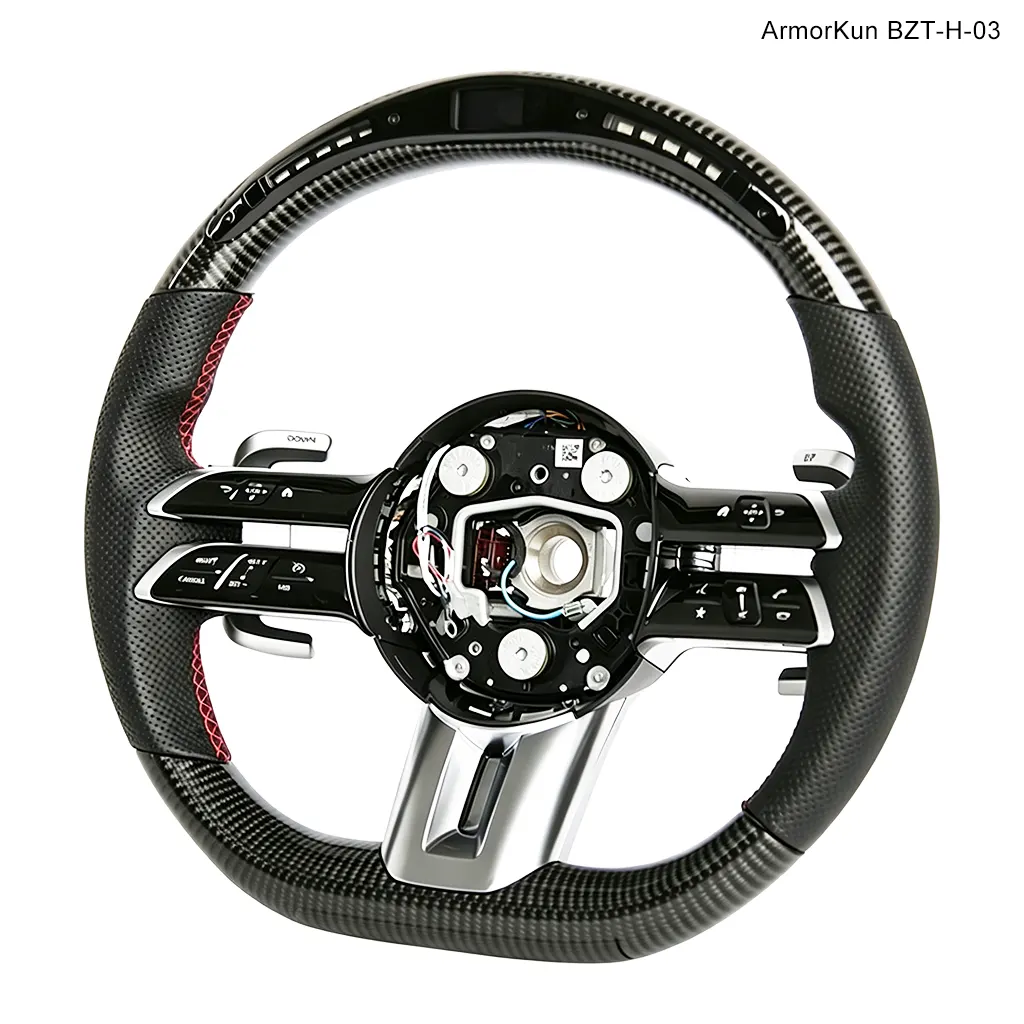
Steering wheel module, clocksprings and control unit compatibility check may be required for models in the W205, W213, C257 and X253 platforms.
Many retrofit failures originate from mismatched electronic components rather than poor installation quality.
Audi Steering Wheel Controller Installation
Audi systems often involve extensive integration with virtual cockpit environments and MMI interfaces.
On platforms such as B9 A4, C8 A6, and D5 Q8, steering wheel controls interact closely with digital display systems.
That creates additional functionality.
It also creates additional validation requirements.
The Economics Nobody Talks About
Small investments compound.
Fleet operators understand this principle better than most industries.
A steering wheel upgrade costing several hundred dollars per vehicle appears expensive when viewed in isolation.
Viewed across a three-year fleet cycle?
Different story.
Consider these operational factors:
Cost Driver
Potential Fleet Impact
Driver Familiarization
Reduced onboarding time
Distraction Events
Lower incident exposure
Vehicle Retention
Improved driver acceptance
Resale Appeal
Increased vehicle attractiveness
Brand Perception
Enhanced customer experience
This is particularly relevant for rental companies.
Customers increasingly expect premium control interfaces regardless of vehicle age.
The expectation gap continues to grow.
The stakes are getting higher, as Connected Vehicles become a reality
Software is transforming all.
A recent Reuters analysis of connected vehicle policy developments reports an emergence of vehicle data, digital systems and connected control architectures moving to the forefront of regulators and automotive manufacturers interest. Vehicle interfaces are no longer a standalone hardware solution but rather a key element of a wider mobility ecosystem.(Reuters)
That trend directly affects fleet vehicle control system implementation.
A steering wheel is no longer simply a steering wheel.
Step 3: Confirm CAN-bus communication requirements.
Step 4: Conduct pilot deployment on 3–5 vehicles.
Step 5: Collect driver feedback before fleet-wide rollout.
Simple?
On paper.
In reality, most implementation failures occur because organizations skip Step 1 and jump directly to purchasing.
That mistake becomes expensive very quickly.
The Safety Argument Is Becoming Harder to Ignore
Here is the uncomfortable reality.
Data on safety from the last few years shows that distracted driving resulted in more than 315,000 injuries in 2024 and there are still more than 3,000 workplace transportation deaths in the United States annually. Employer-focused guidance from the CDC continues to say that in-vehicle distractions are a significant workplace transportation risk. (crashstats.nhtsa.dot.gov)
Is it possible for multi-functional steering controls to remove distractions?
No.
Are they able to limit the need to touch dashboards, touch screens, and handheld devices?
Absolutely.
Steering wheel integration is becoming a more and more accepted measure of safety for People’s Carriers than a mere fancy design.
FAQ
In Fleet Vehicles, what are Multi-Function Steering Controllers for?
Multi-Function Steering Controllers in Fleet Vehicle are systems which integrate audio and phone control, navigation, cruise control and vehicle information into a single controller mounted on the steering wheel that allows the driver to operate them while keeping hands on the steering wheel. The primary applications are for enhanced safety, efficiency and driver interaction with vehicle systems.
In addition to convenience, they can help ensure uniform driver experiences in multi-brand fleets and minimize the reliance on center console controls.
Do steering wheel fleet upgrades by aftermarket manufacturers work?
When designed for specific vehicle platforms, they are compatible with electronic components, and installed with correct coding and calibration, aftermarket steering wheel fleet upgrades are reliable. It is more important to the reliability of the system that it is integrated well than whether it’s OEM or aftermarket.
Typical errors are caused by incompatible control modules, unsupported software versions and incorrect wiring configuration.
What are the best applications for multi-function steering wheel integration in the fleet?
Multi-function steering wheel integration is ideal for fleet vehicles that undergo frequent driver changes, renting, executive transportation applications, and corporate mobility programs. Focusing on intuitive controls and a low driver learning curve are important features in these environments.
Fleets such as BMW, Mercedes-Benz and Audi have the highest value due to the wide range of electronic integration capabilities.
Are multi function steering wheels safer in the fleet?
A multi-function steering wheel helps to make fleets safer because drivers have less need to touch dashboards, touchscreens and mobile devices while they’re driving. It doesn’t prevent distraction but it can help to maintain “hands to the wheel” and “eyes to the road.”
Best safety results seem to be when paired with telematics monitoring and driver training.
What are some factors that fleet managers should consider prior to installation?
The following specifications should be considered before installation: Fleet managers should assess the compatibility of the vehicle chassis, electronic module requirements, CAN-bus integration, code coding requirements and the technical support provided by the supplier. These factors help to determine the success of the retrofit and its long-term reliability.
Many implementation issues can be avoided by conducting a compatibility audit prior to purchase.
Ready to Upgrade Your Fleet?
Before you start shopping for the hardware, you should first understand compatibility, integration needs, and long term objectives before making the decision to upgrade your steering wheel fleet.
Armorkun assists fleet operators with the implementation of multi-function steering controllers that meet today’s fleet management goals, driver safety needs and emerging connected vehicle technologies. Call our team to talk through your fleet configuration and determine the best retrofit option for your fleet.
Leo Wu Responsable du design industriel Plus de 10 ans d'expérience dans la conception de volants automobiles Expertise : fibre de carbone, cuir Nappa, développement OEM, volants de performance
Fort de plus de dix ans d'expérience dans le développement de volants, les matériaux haut de gamme et la fabrication pour équipementiers, Leo Wu est un expert en intérieurs automobiles. Collaborant étroitement avec les équipes de production d'ArmorKun, il met l'accent sur la performance et se concentre sur la conception et la fabrication des volants, le traitement du cuir et l'intégration de fonctionnalités de pointe, pour les voitures de luxe et les véhicules sportifs.







 English
 German
 French
 Italian
 Dutch
Dutch Russian
 Polish
 Spanish
 Arabic
 Japanese
 Korean